Popup Image

Share this powerful gallery of art and climate.

These paintings speak of survival, resistance, and care. Share this page with those who value community, creativity, and climate justice.

How Karnataka’s Kolar Panchayats Passed Key Resolutions to Restore Commons

Kolar district is a border district of Karnataka comprising six taluks and is a district that has more than 3000 lakes in Karnataka state. Being a region entirely dependent on rainfall, this district has seen groundwater levels drop to more than 1600 to 2000 feet over the last two decades due to excessive agricultural dependence and drought. As a result, there has been a severe impact on the health of the district’s people, soil erosion, and soil health has completely deteriorated due to excessive use of chemical fertilizers. The forest area, which was 33% in the 1980s, has now reached only 6%, which is a tragedy for our district.

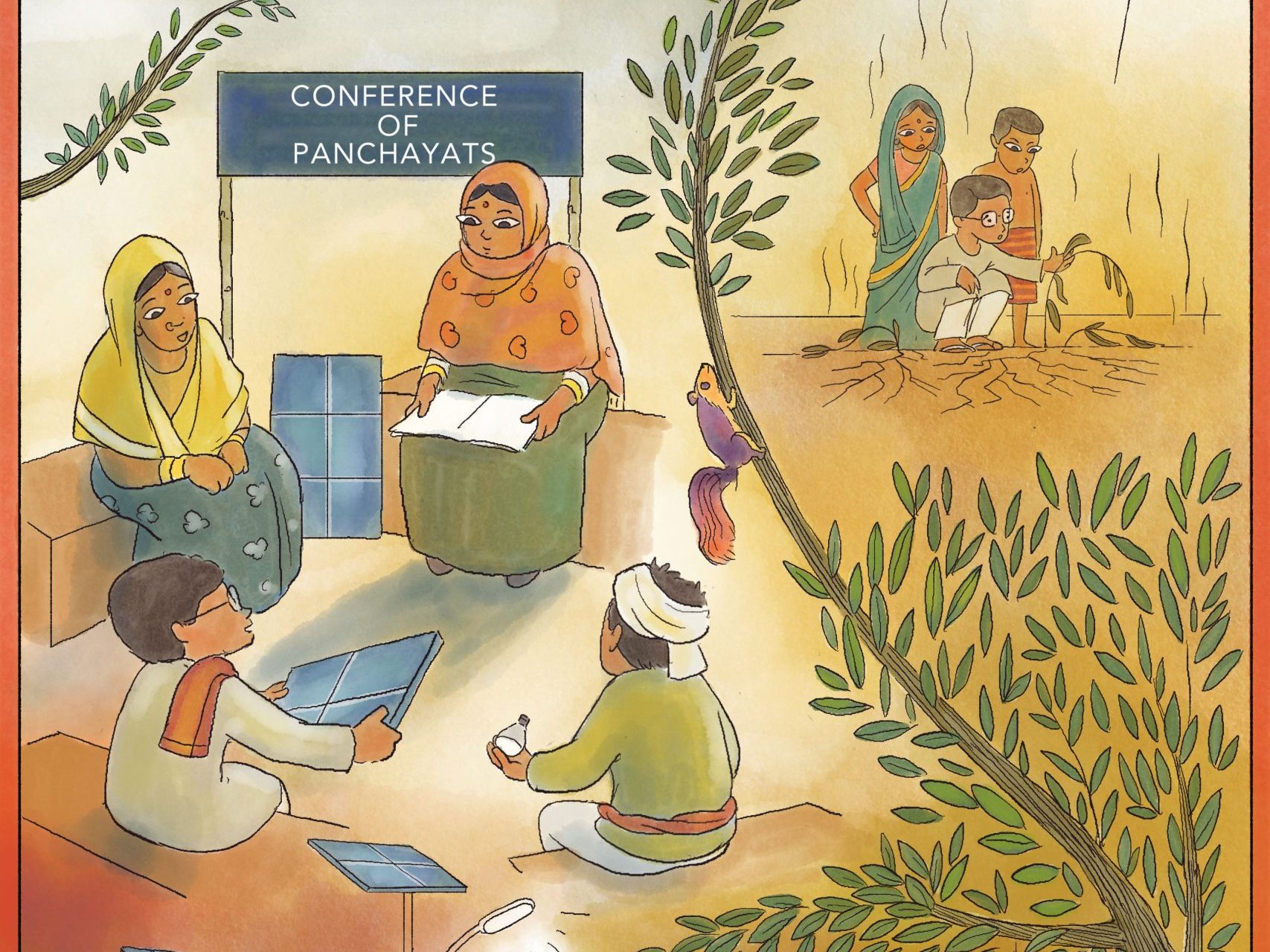
In this context, while discussions on mitigating the effects of climate change are happening at the national and state levels, it is not enough. Our aspiration was to find solutions through Gram Panchayats, which are the grassroots institutions of the constitution, as village governments. In this regard, with the cooperation of Gramvikas and Asar organizations, taluk-level Panchayat Conferences were organized in all six taluks of Kolar district to gather recommendations that would put pressure on the government and district administration regarding the comprehensive development of Kolar district and the prevention of adverse effects of climate change.

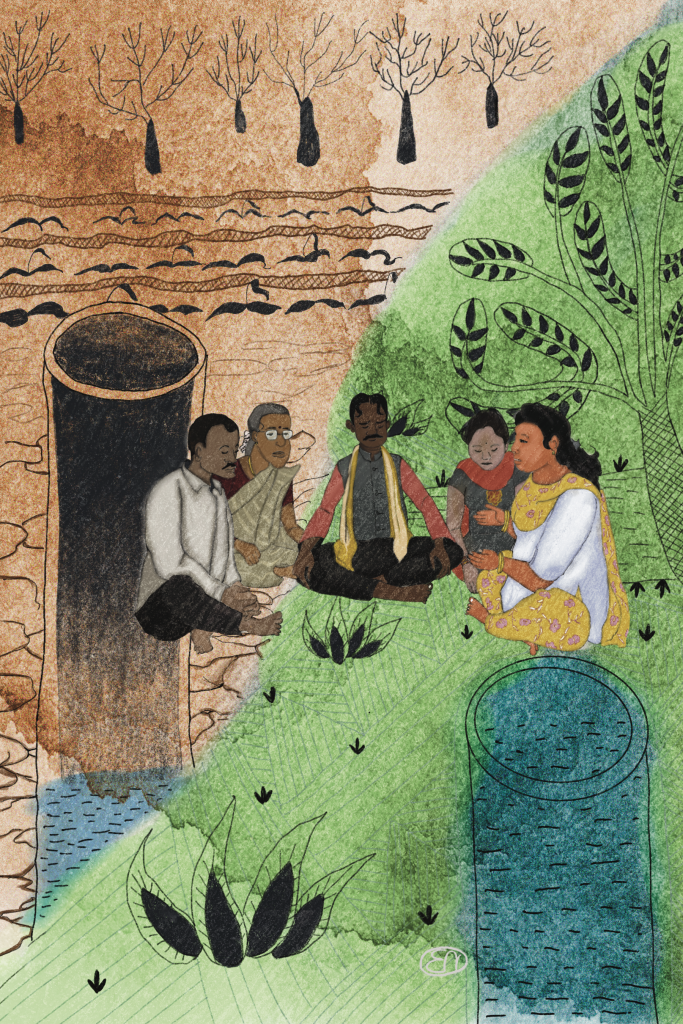
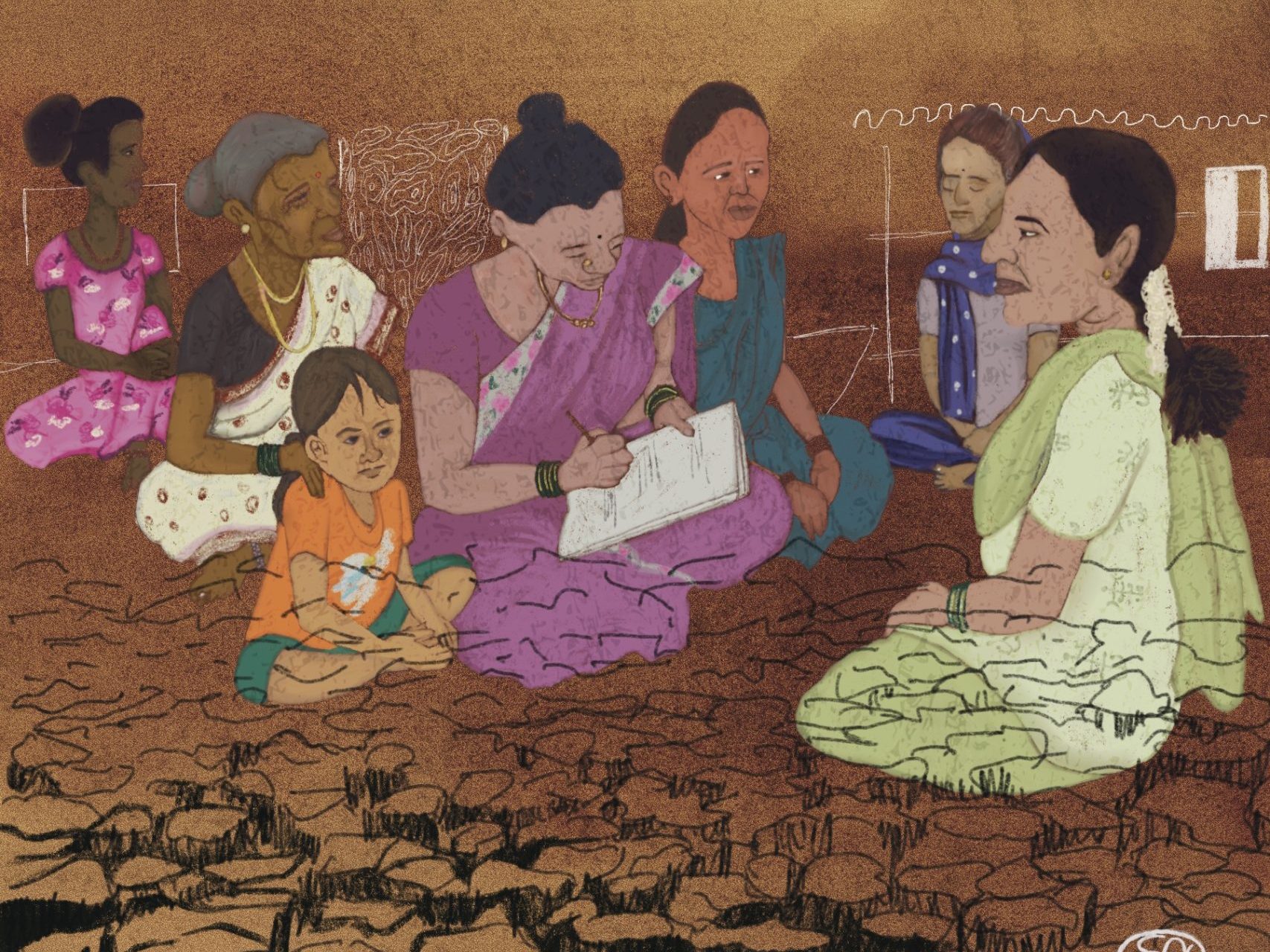
Illustration by: Eisha Nair

In these conferences, identified Gram Panchayat presidents, Panchayat Development Officers, secretaries, along with taluk-level officers and community representatives, listed the problems occurring in agriculture, community health, groundwater, and livelihood activities in that taluk due to climate change. At the same time, through group discussions, a list of activities was prepared regarding activities that the community should undertake at the panchayat level and activities that could be undertaken by higher-level departments covering Gram Panchayat, Taluk Panchayat, and Zilla Panchayat scope.

While considering real local problems, along with solutions that could be implemented at their level, guideline regulations that should be implemented at the government level were documented.

Along with this, workshops were conducted for media representatives working in the district to understand the adverse effects of climate change, and their opinions were collected.

Thus, the recommendations collected from the six taluk workshops and media workshops were compiled, and a report of the district-level Panchayat Conference (Conference of Panchayats) held in the presence of the Chief Executive Officer of the Zilla Panchayat was presented with 13 major recommendations and resolutions.

Based on these resolutions, to implement projects in the Kolar district in 2026-27 that emphasize increasing forest area, conservation of water sources, organic farming to improve soil health, conservation of biodiversity and native varieties, and promoting agriculture-based activities, we have started a pressure-building process through 154 Gram Panchayats under the guidance of Asar and Gramvikas organizations on the district administration.

Planting Shade, Rewriting Rules: How Five Panchayats in Jamui Took on Extreme Heat

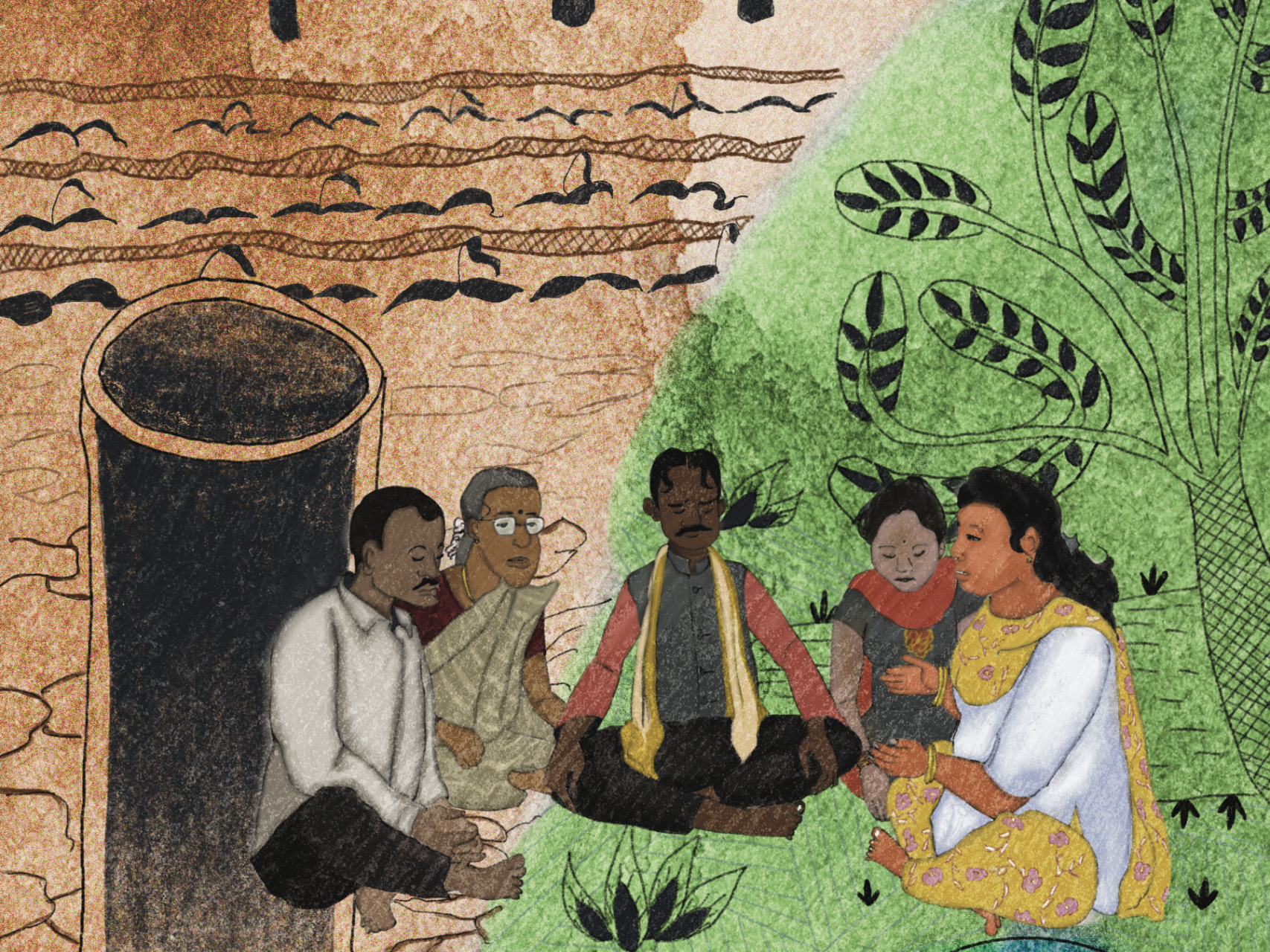
In the semi-arid landscape of Jamui district’s Khaira and Barhat blocks, climate change is felt most sharply in summer. Heatwaves have become longer and more intense, humidity drops drastically, and hot nights offer little relief. For farmers, working outdoors during large parts of the year has become exhausting and sometimes dangerous, directly affecting livelihoods. With little tree cover, cattle, birds and other wildlife also struggle, while shrinking water availability deepens the stress on people and ecosystems alike.

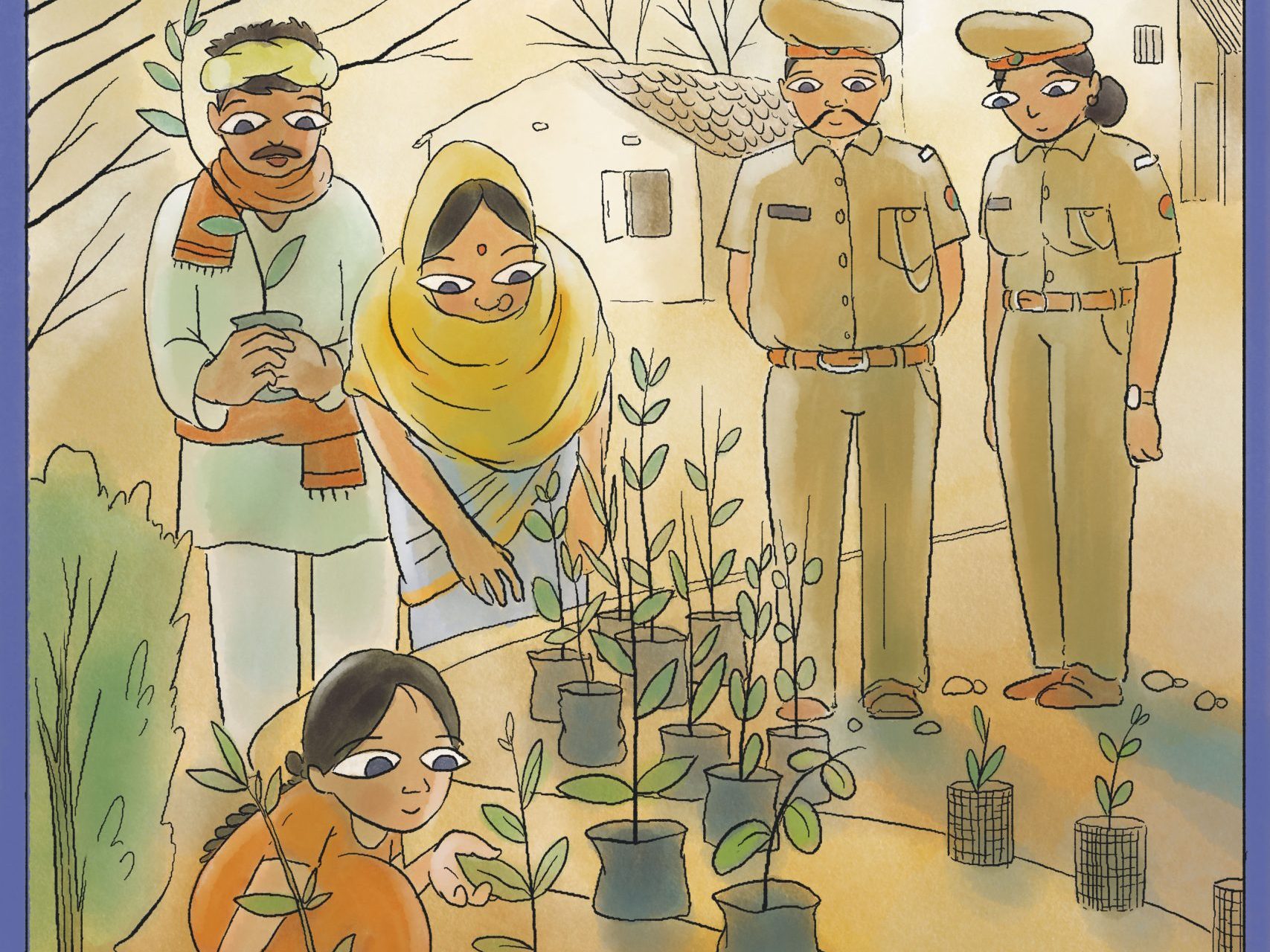
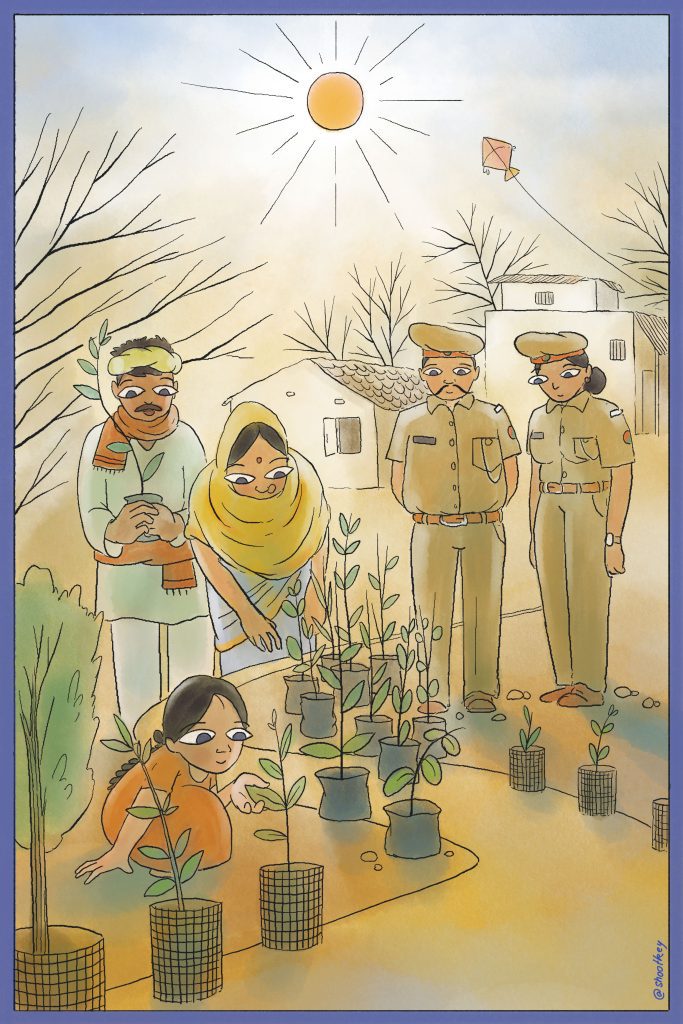
Illustration by: Siddhant Puryakayastha

These shared concerns surfaced during Climate Resilient Panchayat Campaign meetings, as communities worked with their Gram Panchayat Mukhiyas to draft Climate Resilient Panchayat Action Plans. Ten Panchayats raised a common demand: increase green cover to moderate heat and restore balance. Roadside plantations emerged as a practical solution. But when forest officials pointed out that existing rules allowed plantations only along national and state highways, not village roads, the effort seemed to stall.

Instead, Panchayat leaders and community representatives pushed back. They approached senior forest officials and decision-making authorities, arguing that local roads were where shade was needed most. Their persistence paid off. The Forest Department agreed to initiate a process outside its usual mandate, with active support from the CRPC team, Mukhiyas and villagers.

The result was a 58-kilometre-long roadside plantation across five Gram Panchayats in Khaira and Barhat. Every sapling has survived. The landscape has visibly changed, offering shade and cooling where there was none before. Eleven community members have been hired for plant protection work on three-year contracts, earning ₹400 a day, and participation in Panchayat and forest initiatives has grown.

“The climate survivors are becoming climate champions,” says Pradip Kumar Yadav, a CRPC campaigner in Jamui and Nawada. “By drafting their own action plans and engaging the government, communities are proving that bottom-up climate planning is the foundation of real resilience.”

Holding the Rains: How Communities in Garhi Forests Are Restoring Water, Wildlife and Dignity

In the Garhi forests of Bihar, climate stress first showed up as thirst. By the end of November each year, ponds and streams inside the forests would run dry. For forest-dwelling communities, especially women collecting non-timber forest produce, this meant carrying water for days at a time during their stays in the forest. Health and sanitation suffered, particularly for women and children. As soils eroded and rainfall grew more erratic, farming became increasingly risky, while flash floods during intense monsoon spells damaged fields and settlements.

Water scarcity also disrupted fragile ecological balances. With undergrowth disappearing and forest water sources drying up, wild animals began straying into villages and orchards in search of food and water. Communities reported injured cattle, crop damage and even dead wildlife during extreme heat, a sharp break from generations of coexistence.

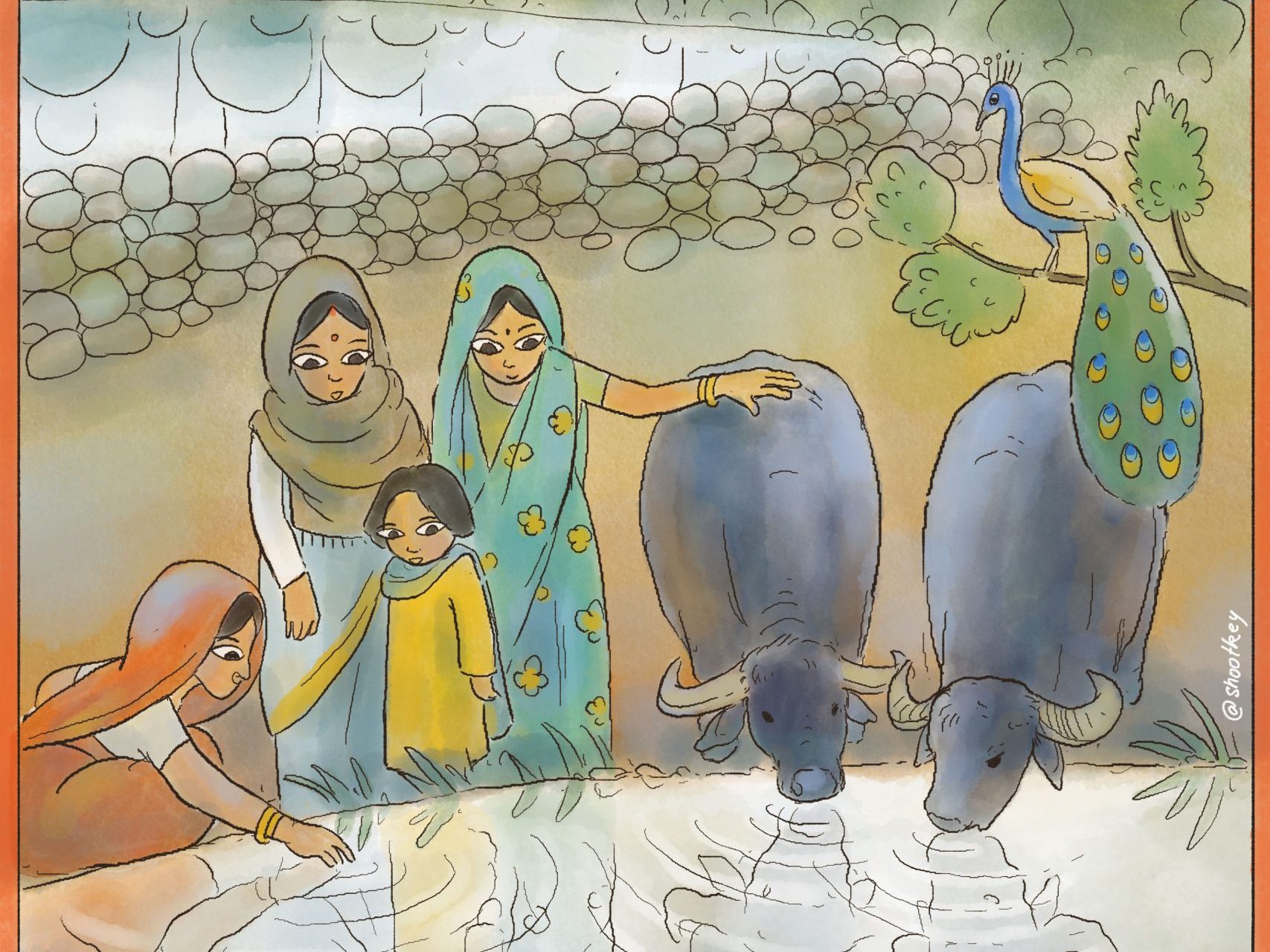
Illustration by: Siddhant Puryakayastha

These concerns surfaced during community listening exercises under the Climate Resilient Panchayat Campaign, led largely by women. With campaign support, they took the issue to the Gram Panchayat Mukhiya and built relationships with forest officials, even collecting and handing over forest tree seeds as a gesture of trust. The problems and solutions were documented in the Climate Resilient Panchayat Action Plan. Community members raised their demands directly with senior forest officials and the state environment minister during the Garhi Birds Festival, and later helped identify sites and volunteer during construction.

Working together, the Forest Department and the community built 45 mud check dams, 90 boulder check dams and three ponds inside the forests. These structures have extended water availability well into the dry season, reduced soil erosion and softened the impact of flash floods. Forest produce has improved, women’s drudgery has eased, and wildlife now finds water and food within the forest again.

“Responding to our application for construction of ponds in the forest areas, the Forest Department has constructed many such structures,” says Pushpa Khairawar, an indigenous community leader. “The water availability has helped trees and plants to grow better and fruit in a healthy way. Forest animals are getting enough food and water inside the forest, and we no longer need to carry water during our stay for collecting forest produce.”

After Sunset, the Village Studies: How Siyari Panchayat Made Climate Action Everyday Governance

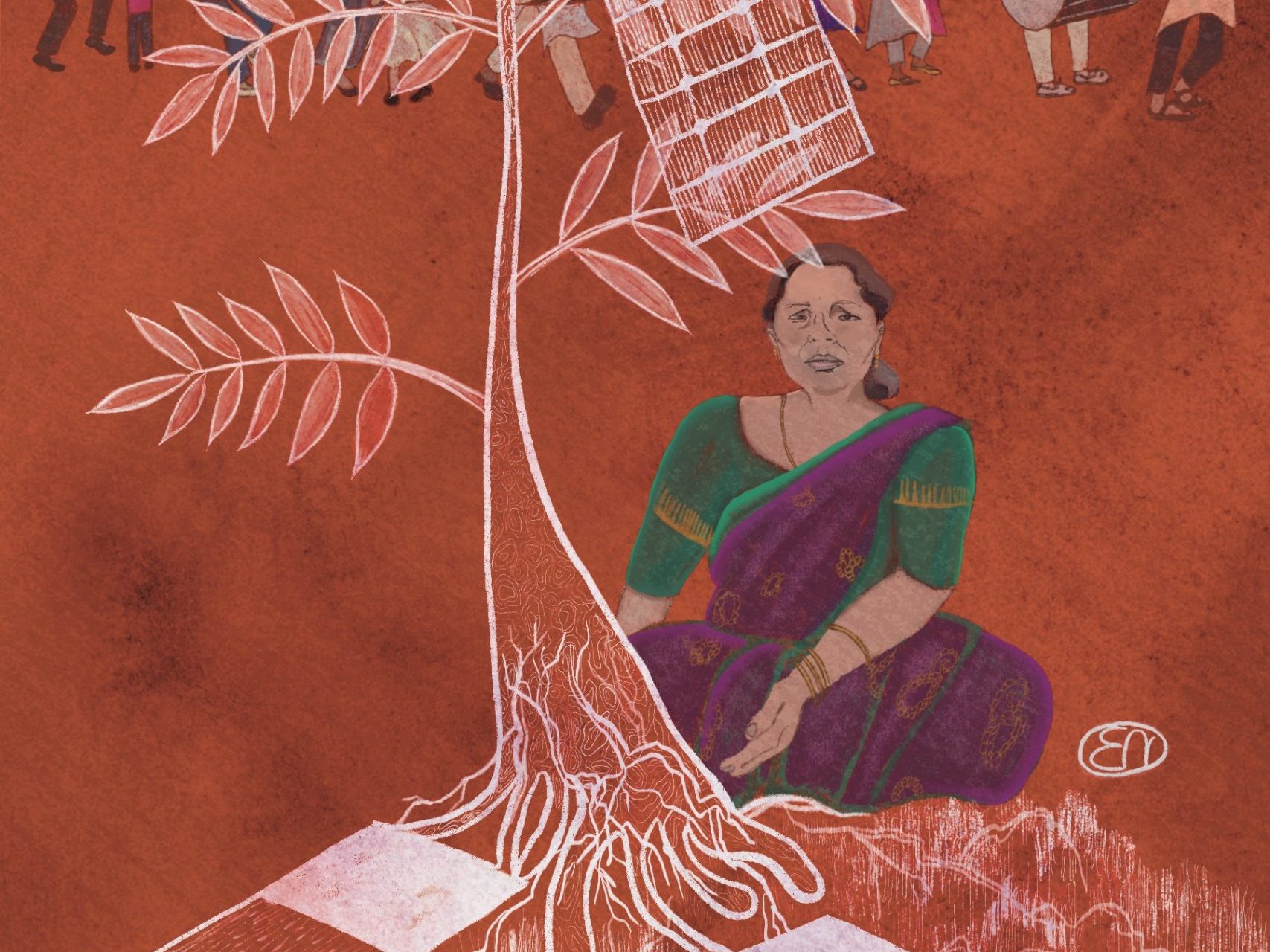
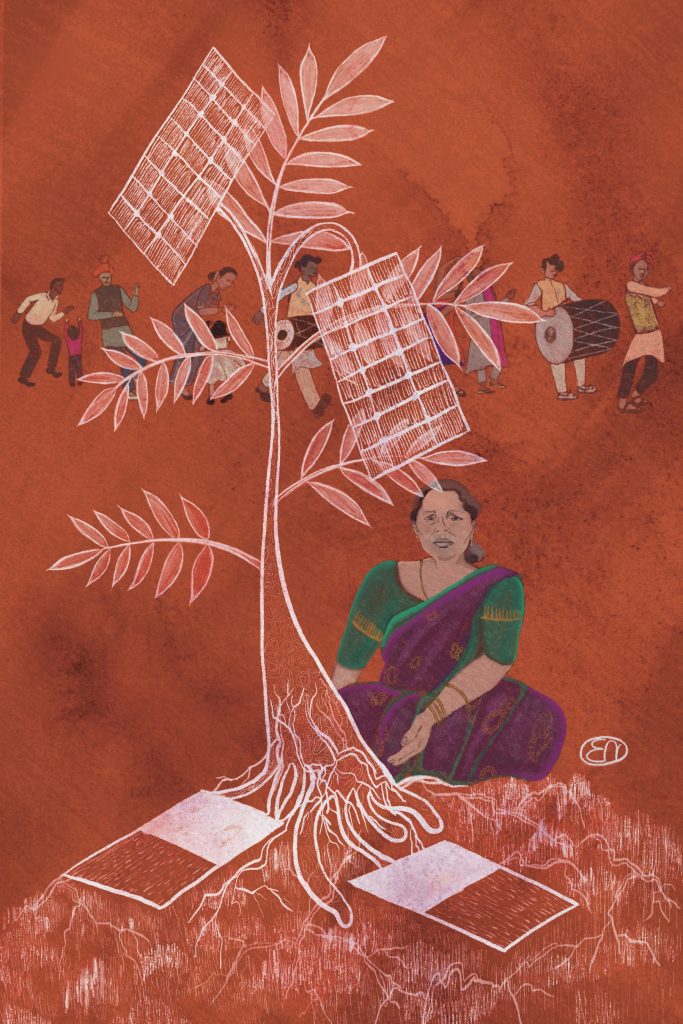
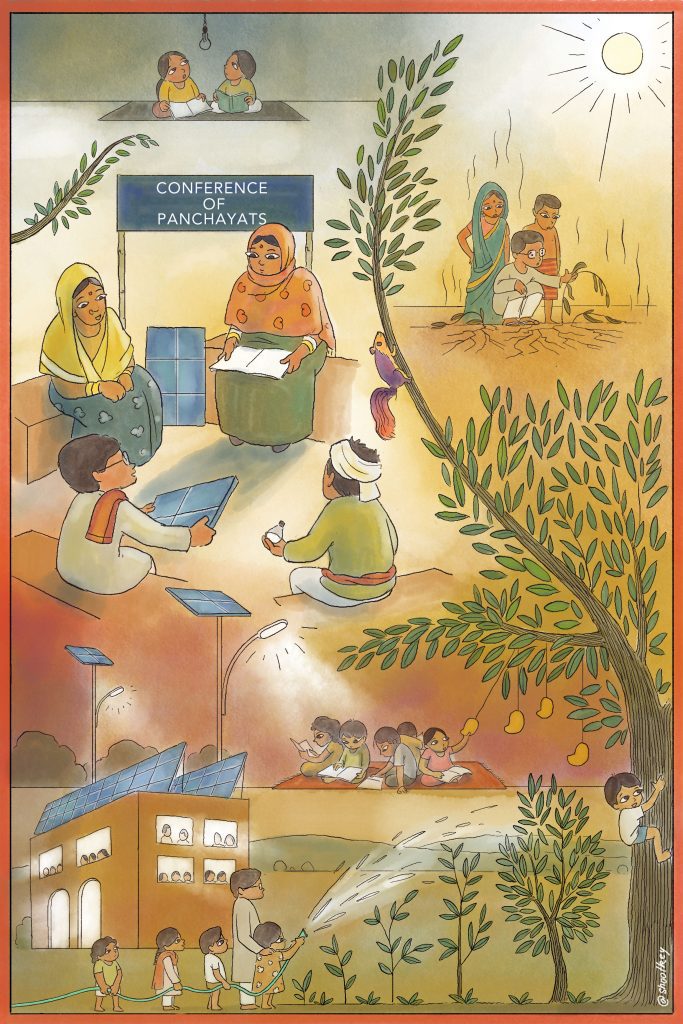
In the Siyari Panchayat of Bokaro’s Gomia block, climate change stopped being an abstract idea when daily life began to fray. Rainfall grew erratic, dry spells lengthened, and farming and forest-based livelihoods came under strain.The strain was most visible in Birhor Tanda, a settlement of the Birhor people, a Particularly Vulnerable Tribal Group, where frequent power cuts after sunset plunged the hamlet into darkness and disrupted children’s education.

For Mukhiya Ramvriksh Murmu, repeated conversations at the Conference of Panchayats helped connect these disruptions to a larger climate crisis and to the need for local, low-carbon responses.

Illustration by: Siddhant Puryakayastha

That realisation reshaped how the Panchayat approached development. With support from ONGC’s CSR programme, Siyari installed 72 solar streetlights, prioritising Birhor Tanda so children could study safely at night. Solar systems were added to schools and community buildings, and a solar-powered lift irrigation pump was set up at the main pond, reducing dependence on unreliable grid electricity and costly diesel. At the same time, the Panchayat mobilised villagers under the Birsa Mango Horticulture Mission, planting 2,880 mango saplings along with 800 other fruit and shade trees. Efforts to strengthen forest-based livelihoods and promote organic farming ran alongside these energy interventions, tying climate action directly to income and food security.

The changes are most visible after sunset. Children now read under solar lights in lanes that were once dark. Farmers have more reliable access to irrigation water, allowing steadier crop planning despite unpredictable rains. New orchards promise future income, while expanding tree cover is slowly improving the local microclimate. Forest-based enterprises, including value-added mahua products, are creating additional livelihood options.

“Conferences of Panchayats showed us that climate change is not tomorrow’s problem, it is today’s reality,” says Ramvriksh Murmu. “If village leaders act with sensitivity and vision, even a small Panchayat can cut carbon, protect livelihoods, and secure a better future for its children.”

When the Lights Went Out: How a Coal-Belt Village in Jharkhand Is Building Its Own Energy Future

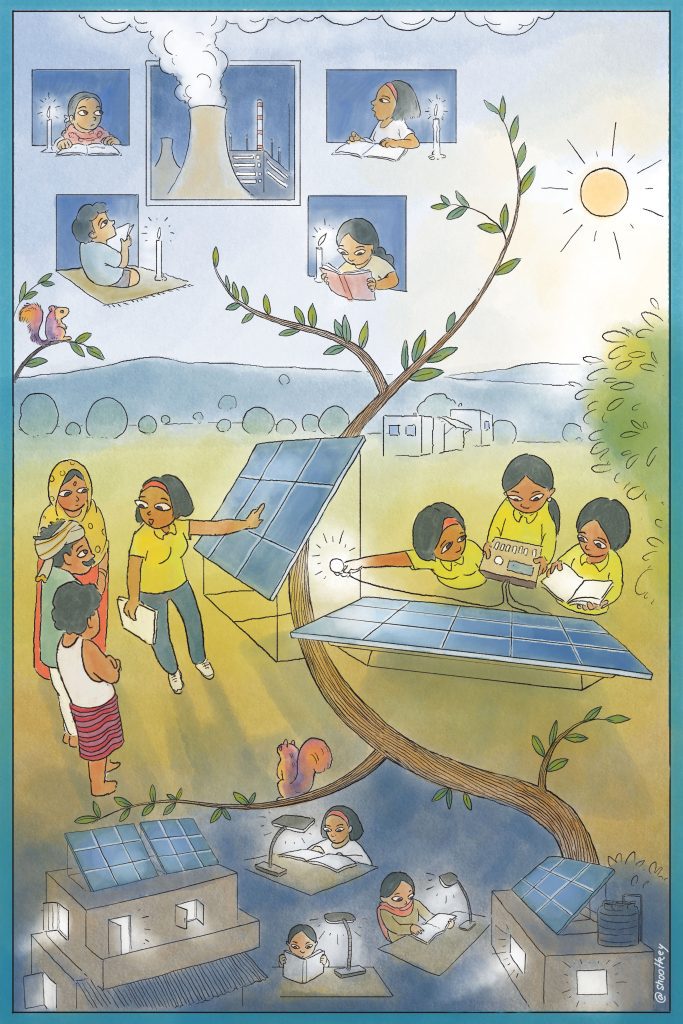
In Dantoo, a coal-belt village in Bokaro district, the climate crisis first revealed itself as darkness. During the 2021 lockdown, households received barely seven to eight hours of erratic electricity a day. Students prepared for online exams by candlelight, even as a coal-fired power plant loomed nearby. Rising heat, unpredictable rainfall and worsening air pollution only deepened the contradiction: a coal district that could not guarantee reliable, clean power to its own people.

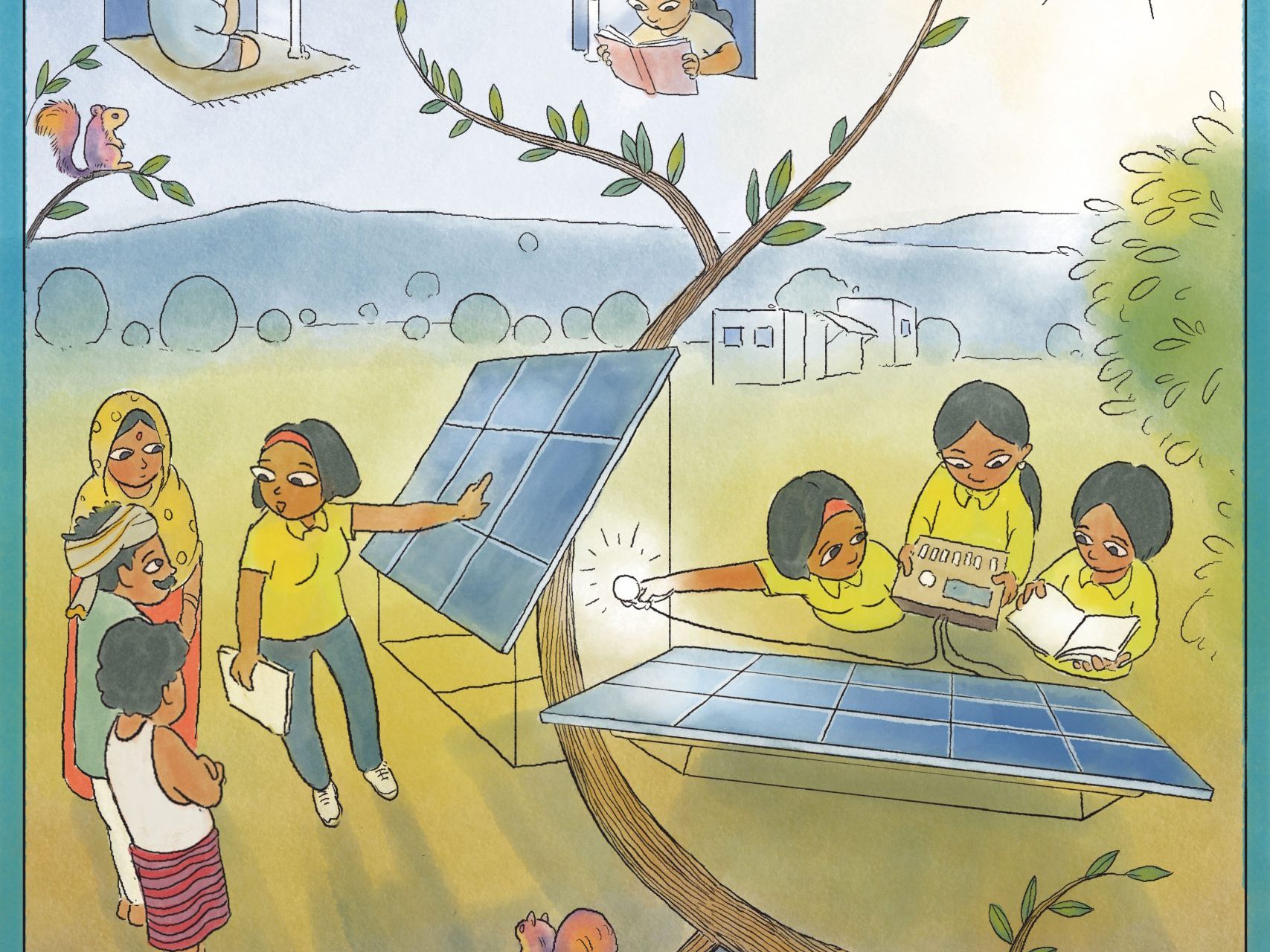
For Aparna Kumari and a small group of teenage girls, this was a turning point. Lessons on climate change and “green skills” learned in school suddenly felt urgent and practical. If waiting for the grid meant remaining trapped between pollution and power cuts, the village would have to find its own solutions.

Illustration by: Siddhant Puryakayastha

The girls began by building confidence through vocational classes in electronics and hardware. They then connected with the National Youth Climate Consortium and a government-backed solar helper training programme at TPSDI Maithon. Returning as “solar-literate” youth, they went door to door, explaining climate change, solar energy and government schemes such as PM Surya Ghar and PM-KUSUM. With growing support from the panchayat, Aparna set an ambitious goal: to turn Dantoo into a solar village.

Today, over 30 women and young people have been trained as solar helpers. Households use solar lights and devices, reducing dependence on kerosene and candles. Several women have secured paid work with solar companies or begun repairing and assembling LED bulbs locally. Just as importantly, the initiative has shifted how the village sees its daughters, as skilled workers and climate leaders.


“Facing constant power cuts in our village, we realised waiting for the grid would not change anything,” says Aparna Kumari. “By learning solar, we are not just bringing light to our homes, we are also creating futures for our daughters.”

People-Powered Energy: How Perinjanam Became Kerala’s Solar Gramam

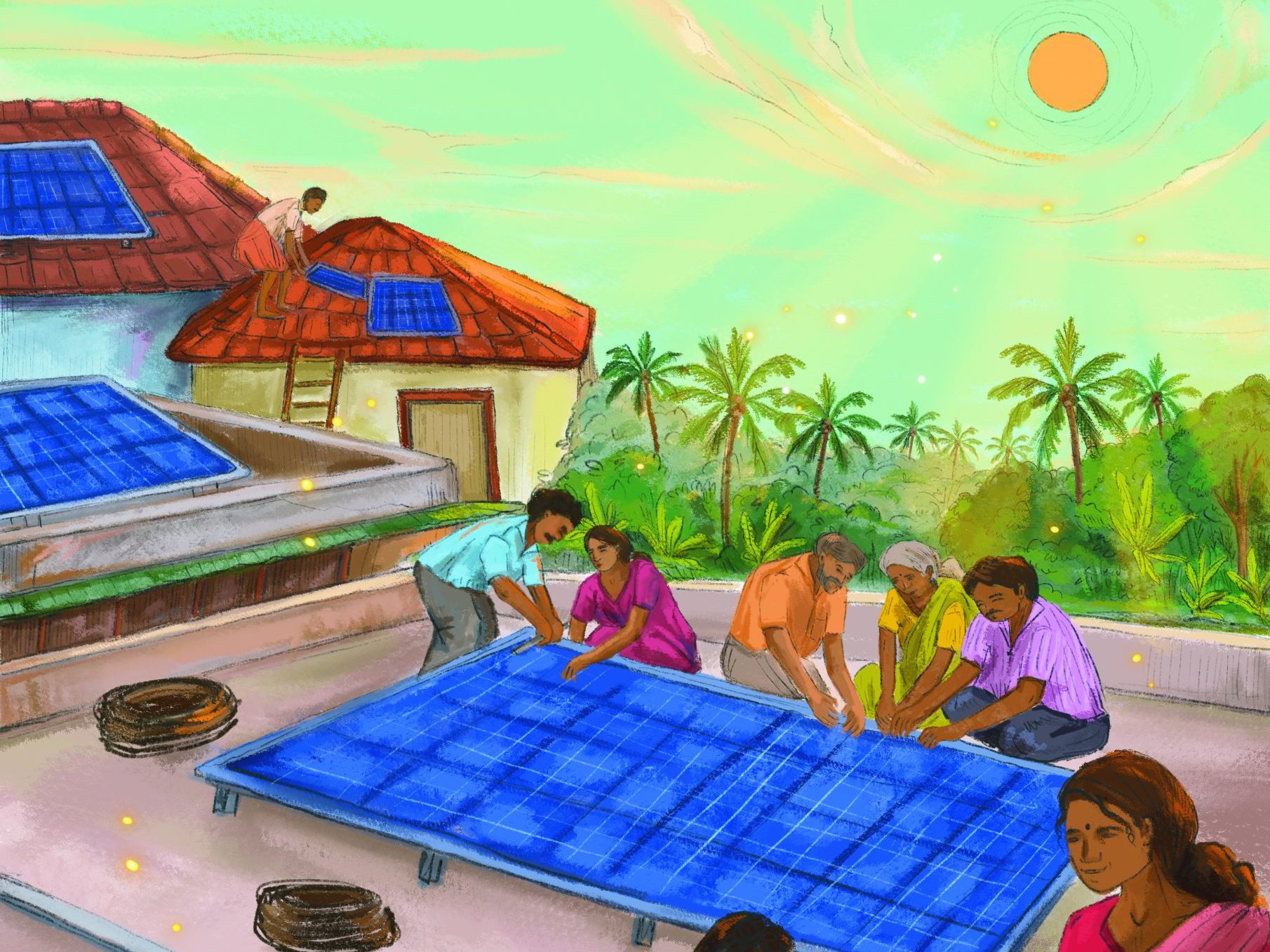
For Sachith K K, former Panchayat President of Perinjanam, climate action did not begin with a disaster – it began with a belief. A belief in living without disturbing nature’s balance, and in the power of collective thinking. Conversations with friends about sustainable living slowly deepened, finding direction through T. M. Manoharan, then Chairman of KSERC and a native of Perinjanam. Those ideas took shape when Sachith helped organise an awareness programme on alternative energy, attended by nearly 300 residents. What began as dialogue soon became action.

Illustration by: Athulya Pillai

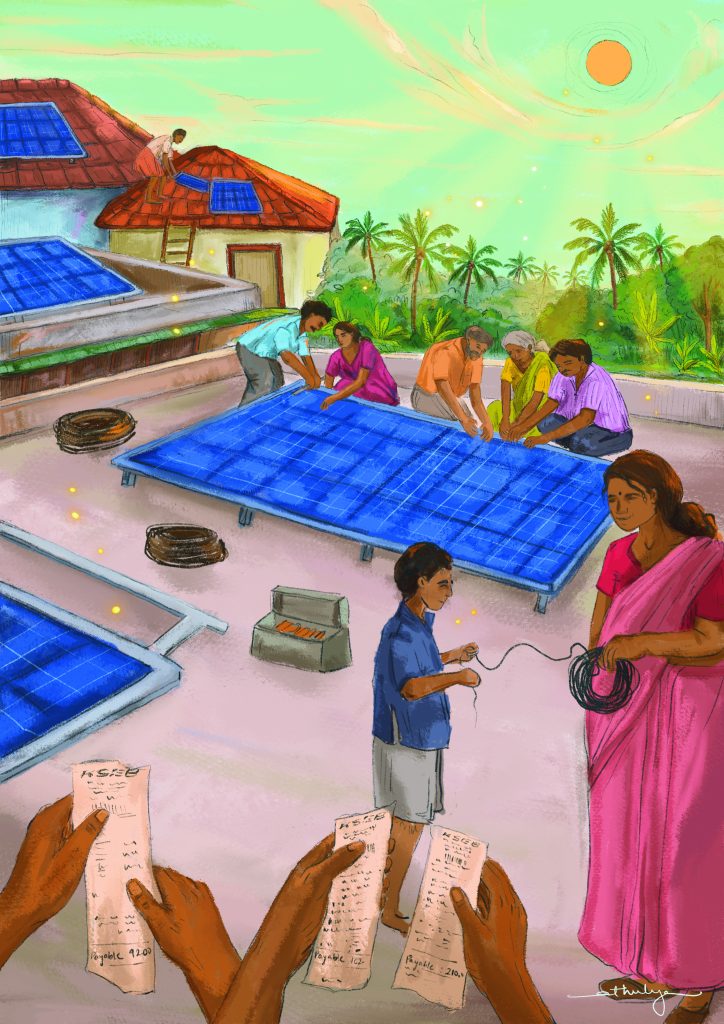
That moment laid the foundation for Perinjanormam, a community-led solar movement that has transformed Perinjanam into a Solar Gramam. Despite skepticism around solar power, the Panchayat focused on trust and transparency. NRIs contributed early funds, cooperative banks enabled affordable loans, and clear agreements ensured long-term public benefit—including a free solar plant for the Panchayat office and a locally trained maintenance team.

Eight years on, 850 households are rooftop solar prosumers, cutting electricity bills by up to 80 percent and collectively reducing emissions at scale. Today, solar panels are planned alongside new homes, not added later. Today, the village stands as a success story of how community efforts can drive decentralised rooftop solar energy adoption.

This governance and community-led impact has been nationally recognised, earning the village of Perinjanam the Akshaya Oorja Award (2019) and the Maha Panchayat Award from MediaOne for excellence in community-driven renewable energy.

When the Sea Enters Our Homes: How Coastal Kerala Is Rewriting Climate Resilience

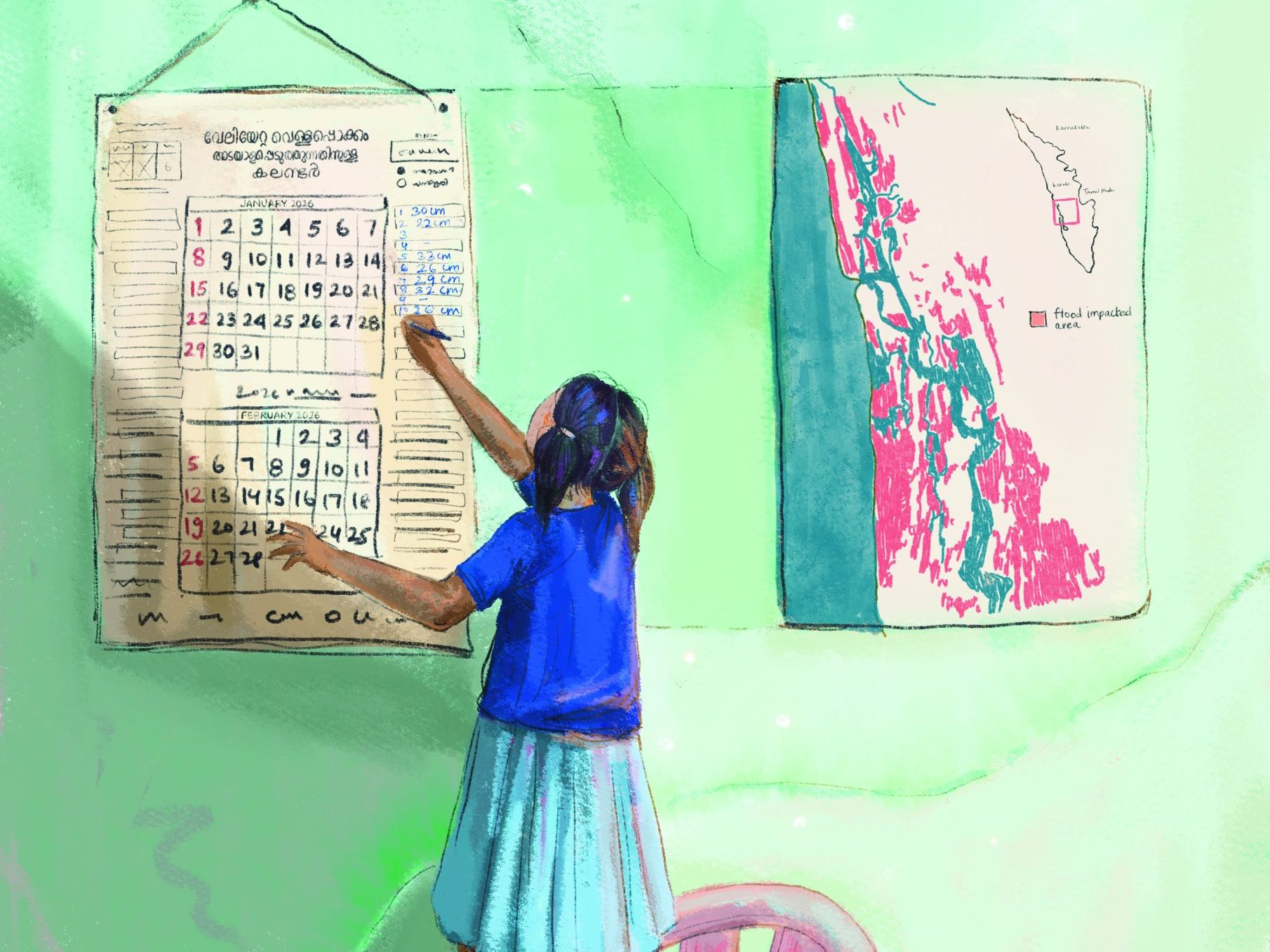
Each year, as tides rise along Kerala’s coast, fear quietly enters people’s homes. High-tide flooding is no longer an occasional inconvenience but a recurring crisis—damaging houses, contaminating drinking water, and disrupting livelihoods sustained over generations. The decline of traditional coastal agri-aqua systems such as Pokkali has further destabilised the fragile balance between land and sea.

In response, a collaborative initiative—Co-creating Community Resilience to Climate Change–Aggravated High-Tide Flooding in Coastal Kerala—emerged in 2021. EQUINOCT, Asar, and local CSOs partnered with fisher groups, farmers, and local governments to develop solutions rooted in lived realities.

Illustration by: Athulya Pillai

“Nobody had any statistics on the extent, severity or impacts of high tide floods,” says Jayaraman Chillayill, co-founder and managing director of EQUINOCT. “So we devised a calendar, distributed across 10,000 households in 20 coastal panchayats in Ernakulam district, to record timing, water levels, and flood events. To translate this evidence into governance-ready insights, we developed SeaSight, a real-time decision-support dashboard for Panchayats and disaster management authorities.”

In September 2024, a special Gram Sabha in one of the panchayats, Ezhikkara passed a landmark resolution urging the state to recognise tidal flooding as a disaster—an action echoed by several other Panchayats. Two multi-stakeholder convenings of affected Panchayats followed. As a result of sustained efforts over five years, Kerala state cabinet recommended the inclusion of high-tide flooding as a state-specific natural disaster on 28 January 2026.

The initiative has been showcased by the Global Centre on Adaptation, the Girl Up UN Foundation, IIT Palakkad, CUSAT, and the SwitchOn SustainAgri Challenge.

Where Rights Took Root: Odisha Gram Sabhas Protect &Prosper from ‘Green Gold’

In the Baipariguda block of Odisha’s Koraput district, Kendu leaf, often called “Green Gold”, has long sustained tribal livelihoods. Yet for years, collectors faced limited access to markets, inadequate facilities, and systemic barriers that prevented them from earning fair returns for their labour.

After a 15-year struggle, this began to change. Eleven Gram Sabhas in Baipariguda secured their Community Forest Resource and Community Rights under the Forest Rights Act, 2006. Drawing on the powers granted under the Act, the Gram Sabhas came together to collectively manage, collect, and market Kendu leaf, with a strong focus on supporting women collectors from marginalised tribal households.

Illustration by: Eisha Nair

Despite repeated challenges, including the Forest Department’s rejection of Gram Sabha-issued transit permits, the communities persisted. Through collective planning and solidarity, the Gram Sabhas successfully marketed Kendu leaf worth Rs. 16 lakh in 2024 and Rs. 12 lakh in 2025.

Led by tribal women and supported through the Baipariguda Gram Sabha Maha Sangha, this collective effort has strengthened livelihoods while promoting sustainable use of forest resources. 

Commons at Stake: Community Leadership Revives an Ecosystem in Odisha

For more than two years, a collective of Indigenous women in Odisha’s Badakichab village, walked their Commons with maps, memory, and lived knowledge. They documented land use, forest cover, water sources, and how deeply women’s lives depend on these resources.

Their findings revealed a stark gap: over 10 hectares of unused common land could support non-timber forest produce, yet no NTFP plantations existed, leading to dwindling livelihoods.

Illustration by: Eisha Nair

“As farmers we can lose crops,” says community leader Purnima Sisa, “but when our crops fail, the forest feeds us. When we are sick, it is the forest that heals us. It gives us wood to build and resources to live. Without the forest, there is no life here.”

With this clarity, the women turned evidence into action. Placing their plan before the Palli Sabha, securing Gram Sabha approval, and ensuring inclusion in the Gram Panchayat Development Plan, the women turned data into governance. With knowledge support from SPREAD, their persistence unlocked Compensatory Afforestation Fund Management and Planning Authority (CAMPA) funds, and soon over 16,000 saplings, mango, jackfruit, tamarind, bamboo, harida, bahada, amla and more were planted across the ignored land.

Today, these growing forests are protected by the very women who envisioned them, demonstrating community leadership can revive ecosystems, strengthen livelihoods, and build climate resilience.

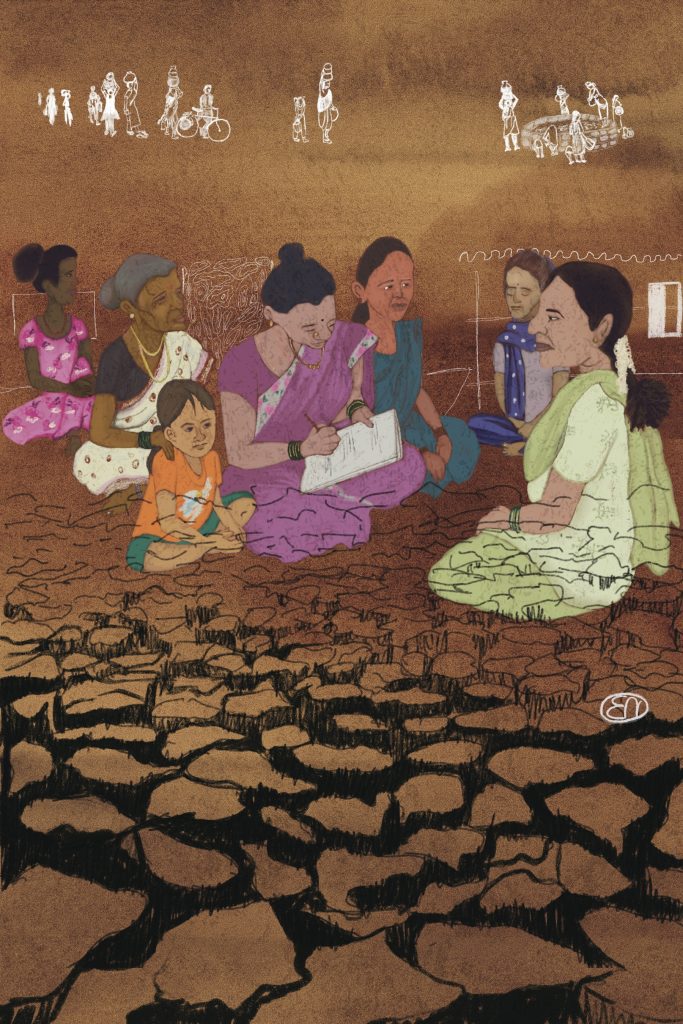
When the Wells Run Dry: How Kalmana’s Women Secured Water for Their Village

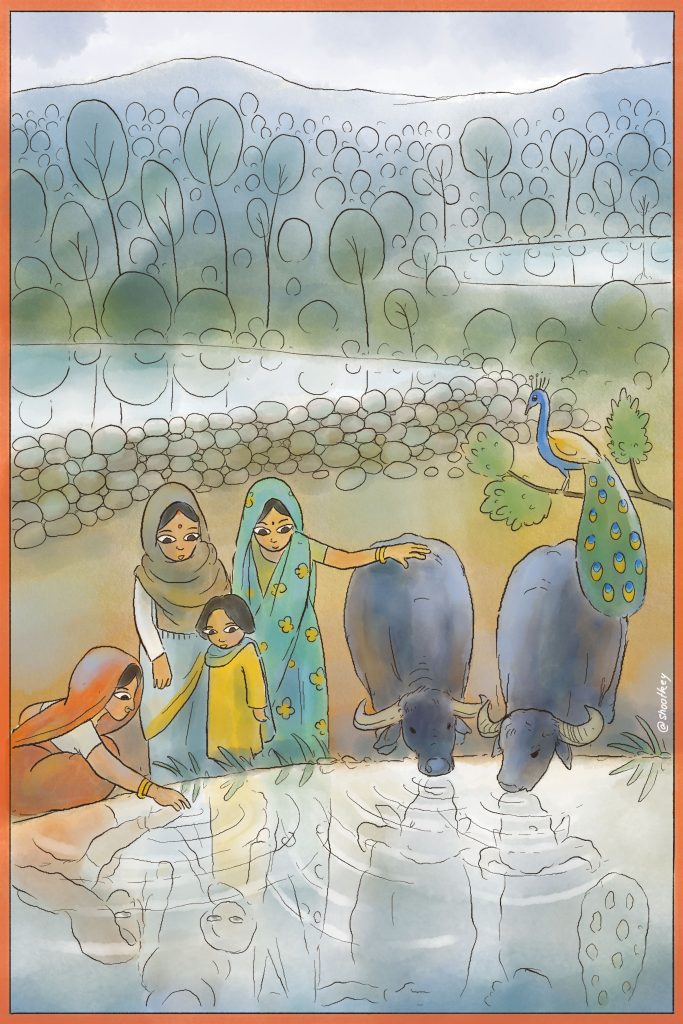
In Kalmana Gram Panchayat of Nagpur district, recurring droughts were felt most strongly by women. They spent hours fetching water from distant sources, only to repeat the task the next day.

With no end in sight, women shared their reality during the 2024 Climate Gaav Samvad, village-level dialogues that brought elected women representatives and community members together to reflect on local climate challenges.

Illustration by: Eisha Nair

Through these conversations, it became clear that weak and poorly managed water systems were the root of the problem, and that the Village Water Supply Committee existed only on paper. Women leaders took the initiative to reconstitute the committee, clarify responsibilities, and begin regular coordination within the Gram Panchayat.

During the 2024–25 planning cycle, women prepared a focused demand list that included rainwater harvesting systems, water storage and purification facilities, and repairs to existing wells. These demands were approved in the Gram Sabha.

Approval was only the beginning. Consistent follow-up through regular meetings and delegation visits ensured timely implementation. Six critical works were completed at a cost of Rs. 10.45 lakh, including rainwater harvesting systems, a central water tank, repairs to the main supply well, and two community RO filters. This has ensured access to clean drinking water for Kalmana and freed women’s time for livelihoods and wellbeing.