Popup Image

Share this powerful gallery of art and climate.

These paintings speak of survival, resistance, and care. Share this page with those who value community, creativity, and climate justice.

Where Rights Took Root: Odisha Gram Sabhas Protect &Prosper from ‘Green Gold’

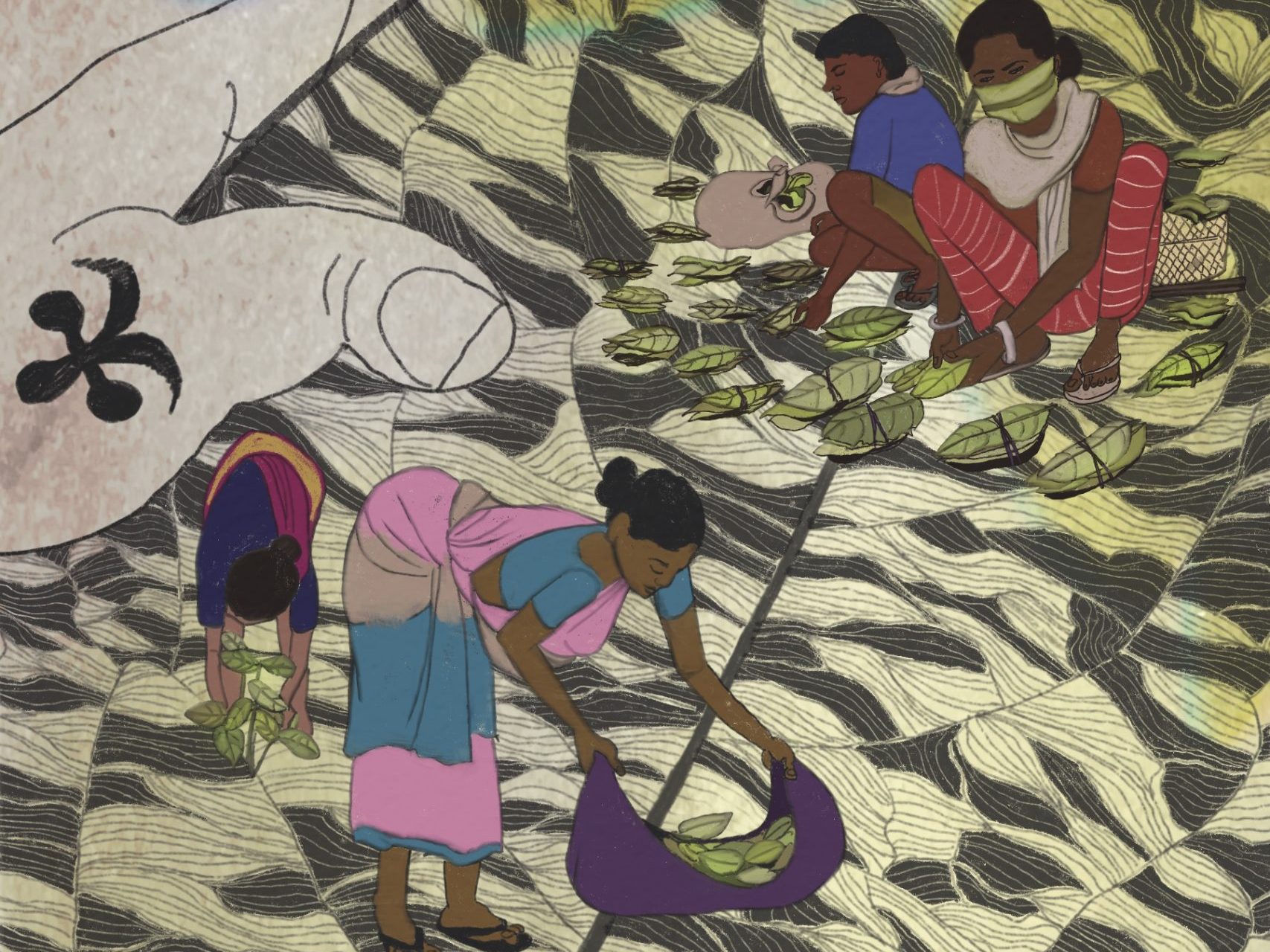
In the Baipariguda block of Odisha’s Koraput district, Kendu leaf, often called “Green Gold”, has long sustained tribal livelihoods. Yet for years, collectors faced limited access to markets, inadequate facilities, and systemic barriers that prevented them from earning fair returns for their labour.

After a 15-year struggle, this began to change. Eleven Gram Sabhas in Baipariguda secured their Community Forest Resource and Community Rights under the Forest Rights Act, 2006. Drawing on the powers granted under the Act, the Gram Sabhas came together to collectively manage, collect, and market Kendu leaf, with a strong focus on supporting women collectors from marginalised tribal households.
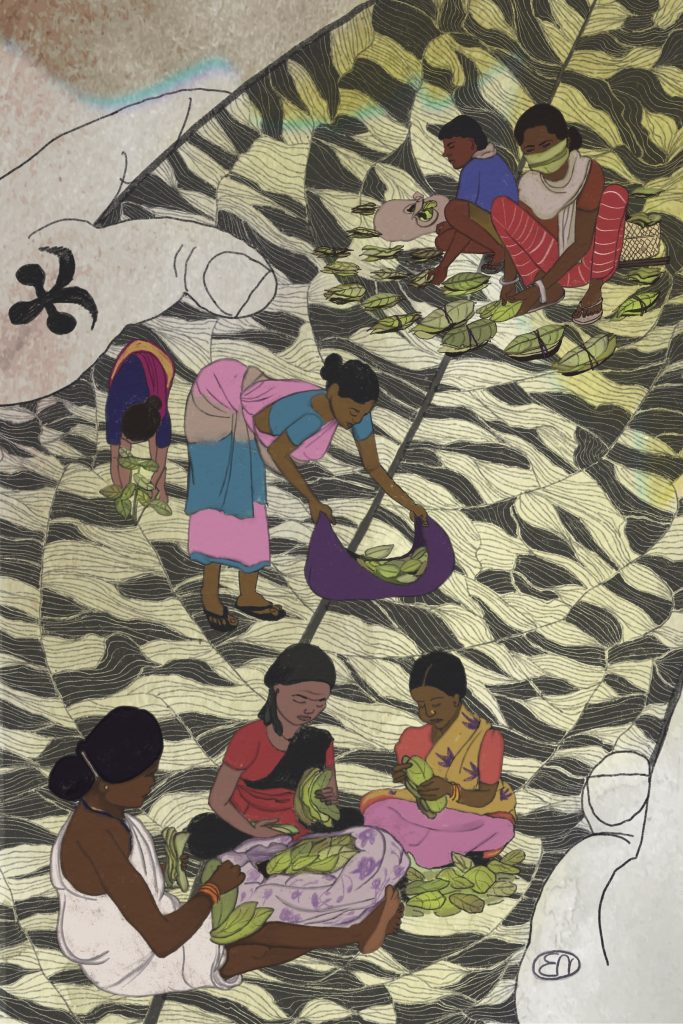
Illustration by: Eisha Nair

Despite repeated challenges, including the Forest Department’s rejection of Gram Sabha-issued transit permits, the communities persisted. Through collective planning and solidarity, the Gram Sabhas successfully marketed Kendu leaf worth Rs. 16 lakh in 2024 and Rs. 12 lakh in 2025.

Led by tribal women and supported through the Baipariguda Gram Sabha Maha Sangha, this collective effort has strengthened livelihoods while promoting sustainable use of forest resources. 
Commons at Stake: Community Leadership Revives an Ecosystem in Odisha

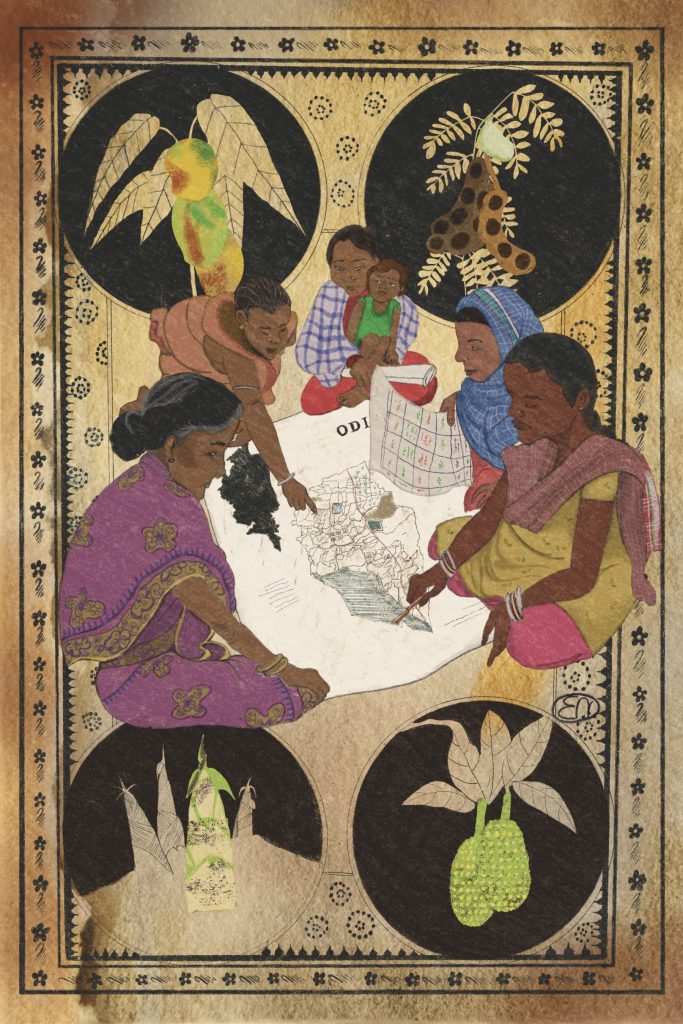
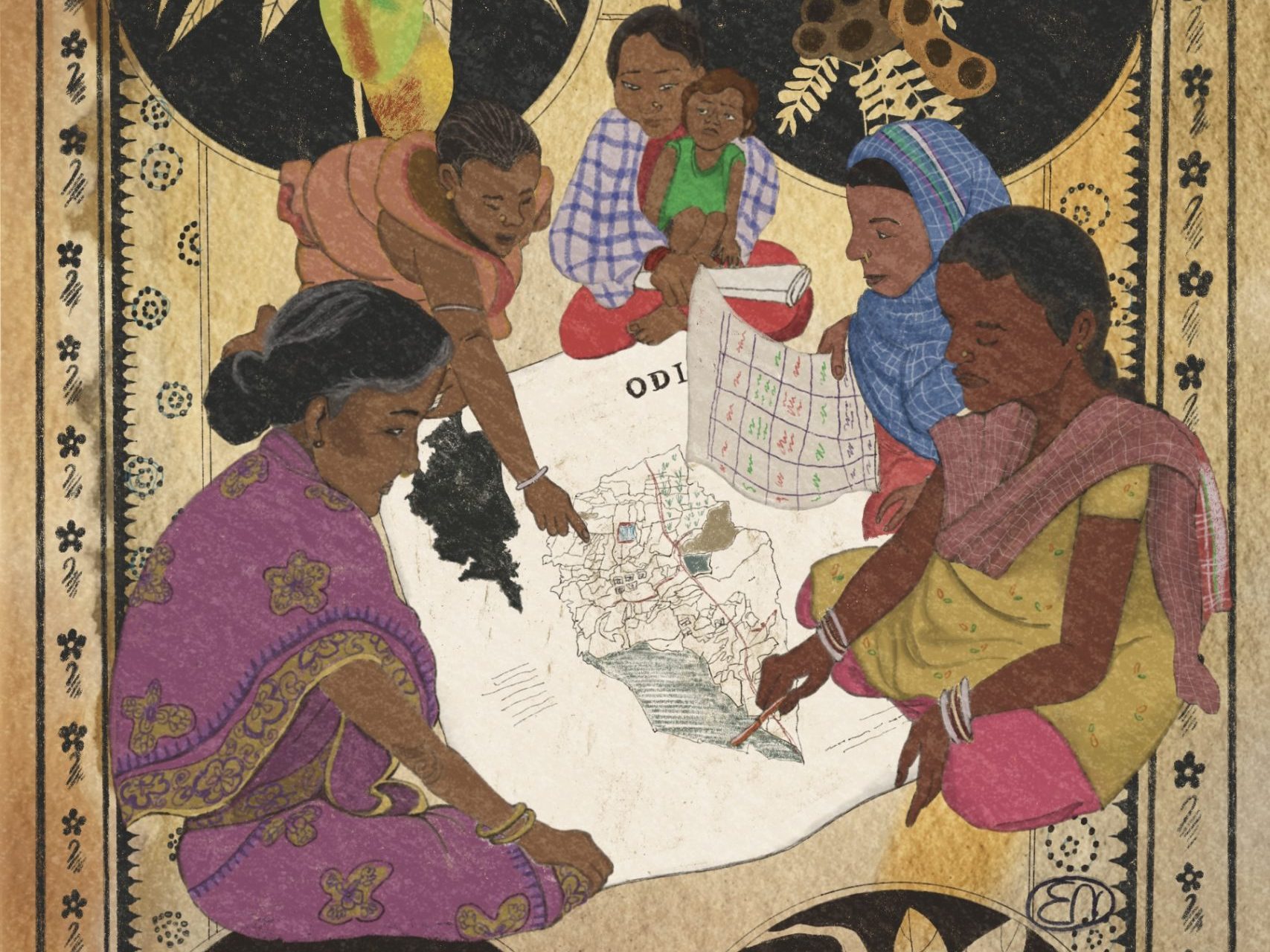
For more than two years, a collective of Indigenous women in Odisha’s Badakichab village, walked their Commons with maps, memory, and lived knowledge. They documented land use, forest cover, water sources, and how deeply women’s lives depend on these resources.

Their findings revealed a stark gap: over 10 hectares of unused common land could support non-timber forest produce, yet no NTFP plantations existed, leading to dwindling livelihoods.

Illustration by: Eisha Nair

“As farmers we can lose crops,” says community leader Purnima Sisa, “but when our crops fail, the forest feeds us. When we are sick, it is the forest that heals us. It gives us wood to build and resources to live. Without the forest, there is no life here.”

With this clarity, the women turned evidence into action. Placing their plan before the Palli Sabha, securing Gram Sabha approval, and ensuring inclusion in the Gram Panchayat Development Plan, the women turned data into governance. With knowledge support from SPREAD, their persistence unlocked Compensatory Afforestation Fund Management and Planning Authority (CAMPA) funds, and soon over 16,000 saplings, mango, jackfruit, tamarind, bamboo, harida, bahada, amla and more were planted across the ignored land.

Today, these growing forests are protected by the very women who envisioned them, demonstrating community leadership can revive ecosystems, strengthen livelihoods, and build climate resilience.

When the Wells Run Dry: How Kalmana’s Women Secured Water for Their Village

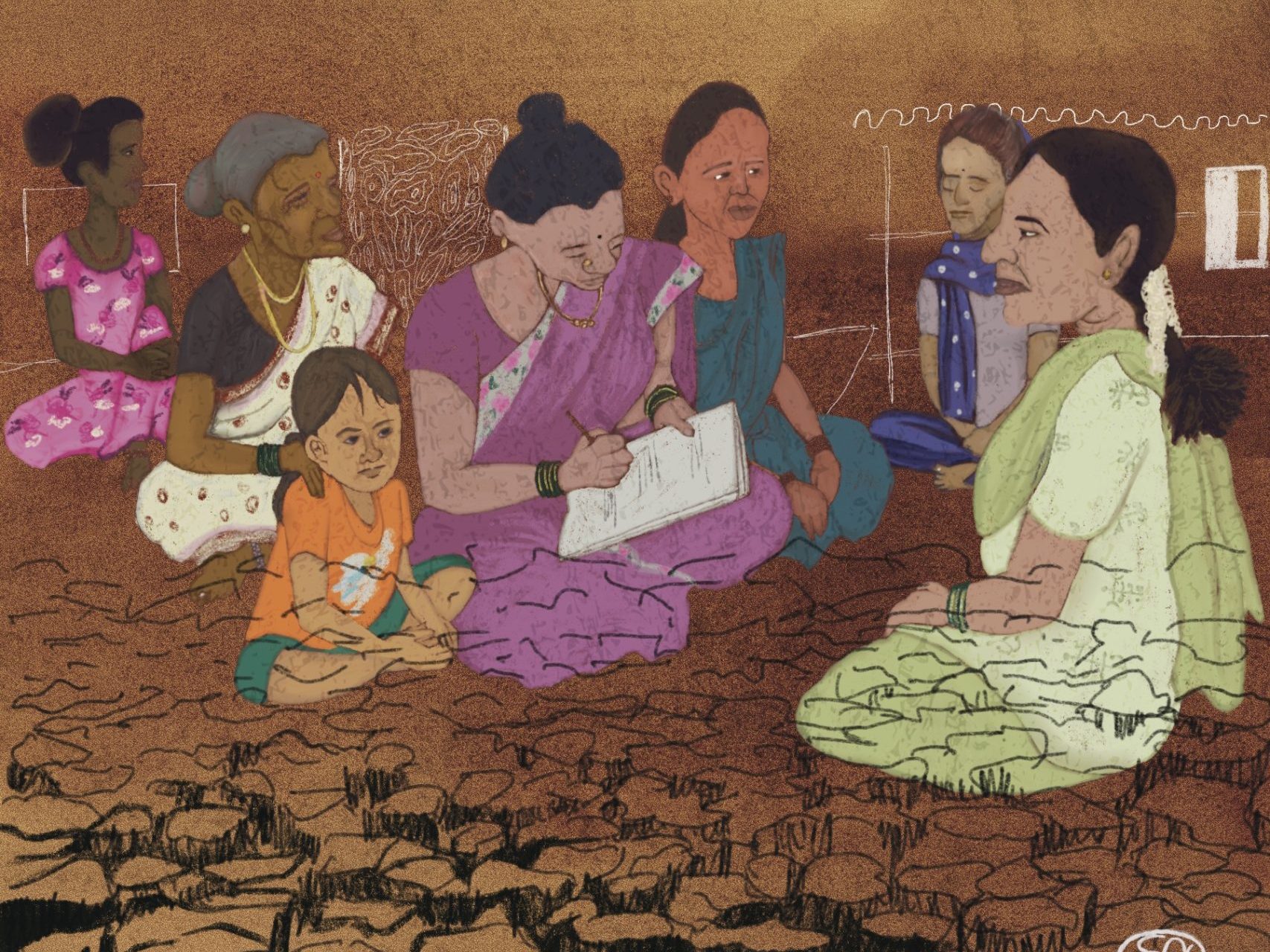
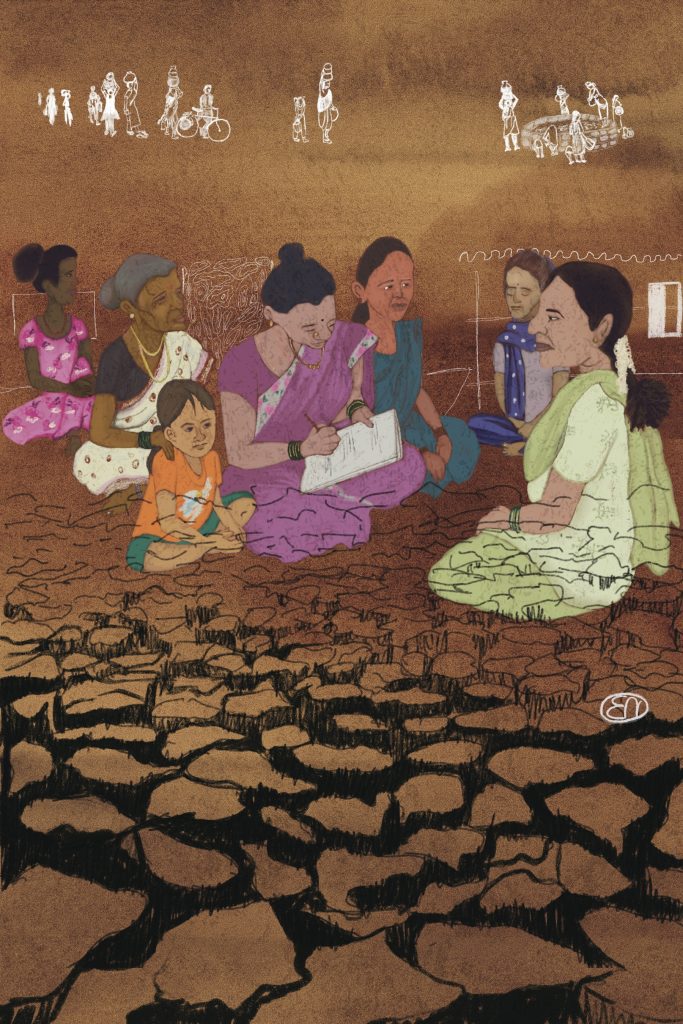
In Kalmana Gram Panchayat of Nagpur district, recurring droughts were felt most strongly by women. They spent hours fetching water from distant sources, only to repeat the task the next day.

With no end in sight, women shared their reality during the 2024 Climate Gaav Samvad, village-level dialogues that brought elected women representatives and community members together to reflect on local climate challenges.

Read the blog in Marathi here.

Illustration by: Eisha Nair

Through these conversations, it became clear that weak and poorly managed water systems were the root of the problem, and that the Village Water Supply Committee existed only on paper. Women leaders took the initiative to reconstitute the committee, clarify responsibilities, and begin regular coordination within the Gram Panchayat.

During the 2024–25 planning cycle, women prepared a focused demand list that included rainwater harvesting systems, water storage and purification facilities, and repairs to existing wells. These demands were approved in the Gram Sabha.

Approval was only the beginning. Consistent follow-up through regular meetings and delegation visits ensured timely implementation. Six critical works were completed at a cost of Rs. 10.45 lakh, including rainwater harvesting systems, a central water tank, repairs to the main supply well, and two community RO filters. This has ensured access to clean drinking water for Kalmana and freed women’s time for livelihoods and wellbeing.

Maharashtra’s First Net-Zero Village: A Woman Sarpanch Leads with Care

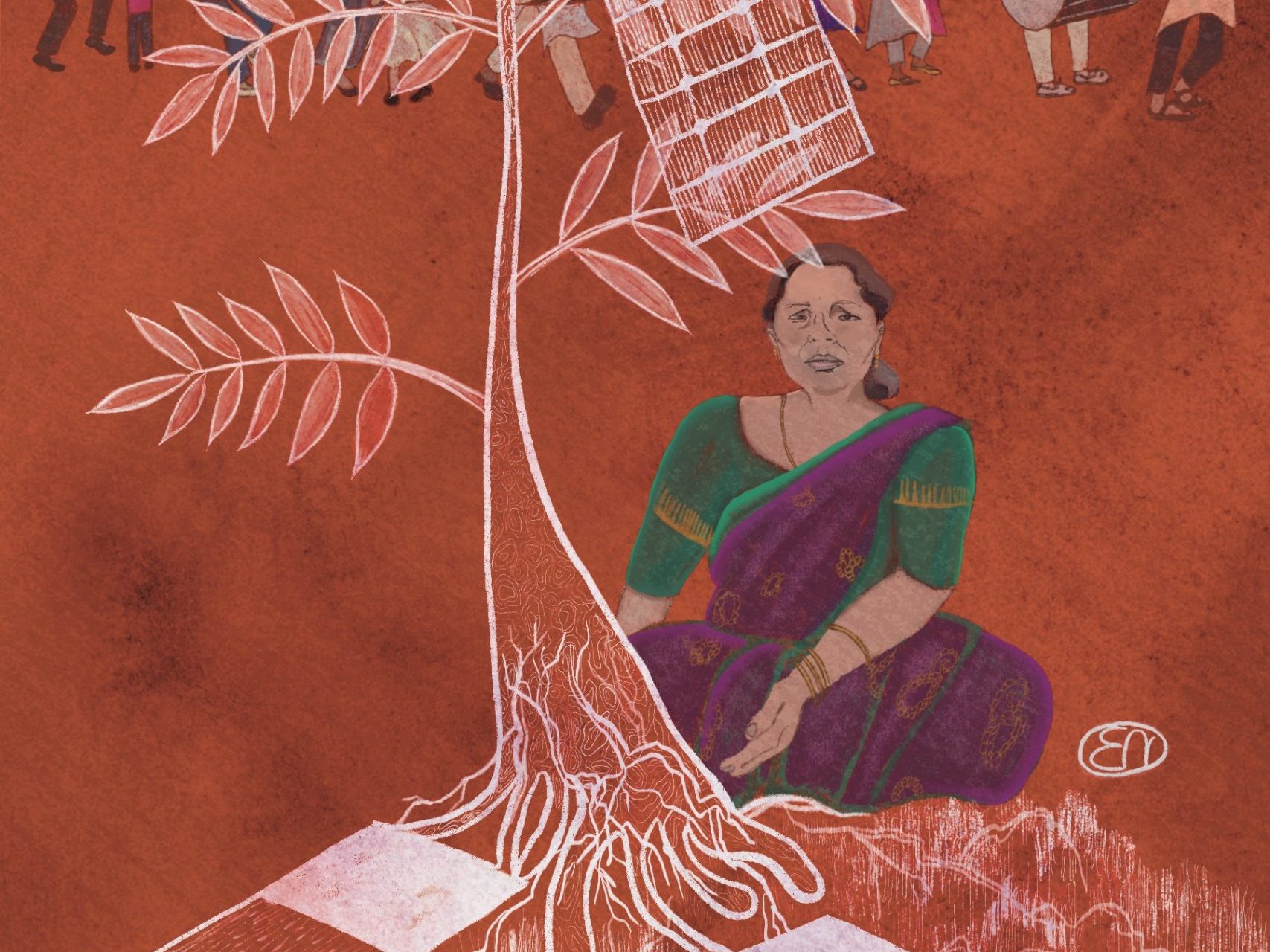
Sharada Gaydhane stands at the heart of Bela Gram, a quiet village in Maharashtra’s Bhandara district that chose courage over complacency.

“We don’t need extreme events to feel the impact of climate change. It is in the water we fetch, the food we grow, and the air we breathe. It affects our health first, and that is my responsibility to do what’s best for my village,” the twice-elected Sarpanch and Vasundhara awardee says.

Read this blog in Marathi

Illustration by: Eisha Nair

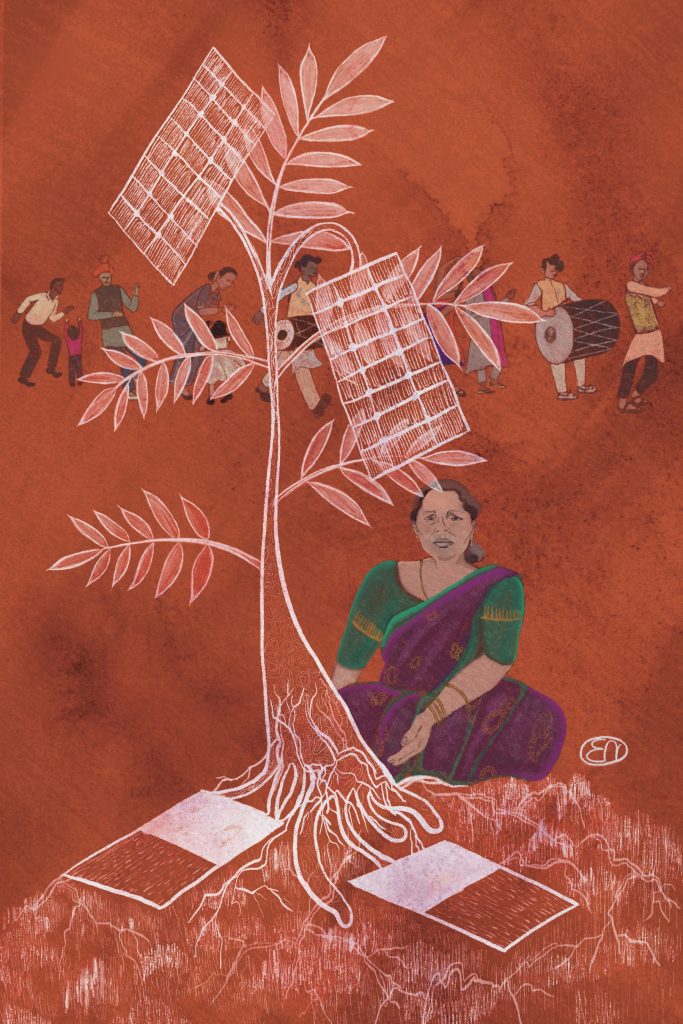
Under her leadership, climate action became a way of life. Families planted more than 90,000 trees, often during weddings, and village festivals. Kitchens moved away from smoky chulhas to LPG. Solar panels lit homes, Anganwadis, and Panchayat offices, while waste began to be segregated at every doorstep. Rejecting single-use plastics slowly became second nature.

Resource and Support Centre for Development (RSCD) played a crucial role, supporting capacity building, and leadership training through its Savitri Academy. With strong community participation and a dedicated Carbon Neutral Committee, Bela became Maharashtra’s first net-zero village and won the 2024 Rashtriya Panchayat Puraskar.

From a small village in Bhandara, Bela Gram offers a blueprint for climate action rooted in care, courage, and community.