Popup Image

Share this powerful gallery of art and climate.

These paintings speak of survival, resistance, and care. Share this page with those who value community, creativity, and climate justice.

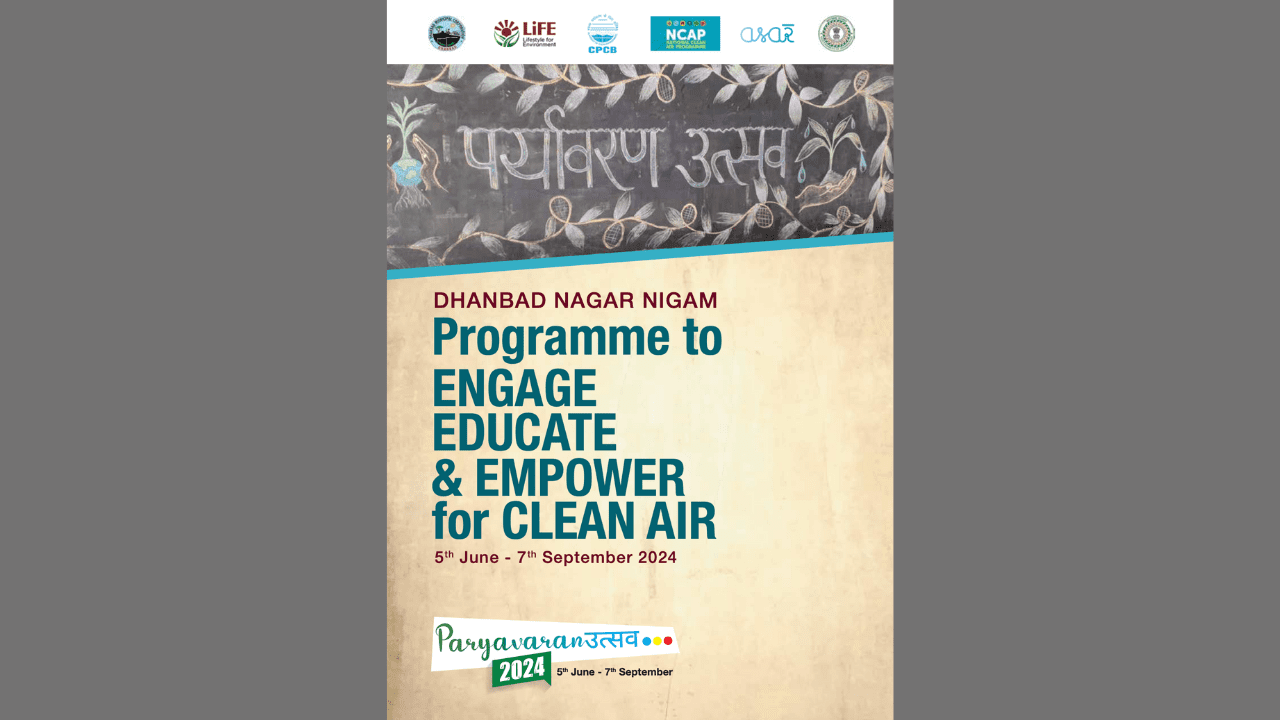
Paryavaran Utsav 2024: Dhanbad’s 90-Day Clean Air Engagement Programme Report

The Paryavaran Utsav 2024 report highlights Dhanbad Nagar Nigam’s three-month citizen-led campaign to build awareness, educate communities, and inspire collective action for clean air. Spanning from World Environment Day to the International Day for Clean Air and Blue Skies, the programme engaged thousands of students, civil society groups, and residents through workshops, art competitions, community dialogues, street plays, and the Vayu Mitra volunteer initiative. The report captures how this large-scale effort deepened public participation and strengthened Dhanbad’s commitment to improving air quality under the National Clean Air Programme (NCAP).

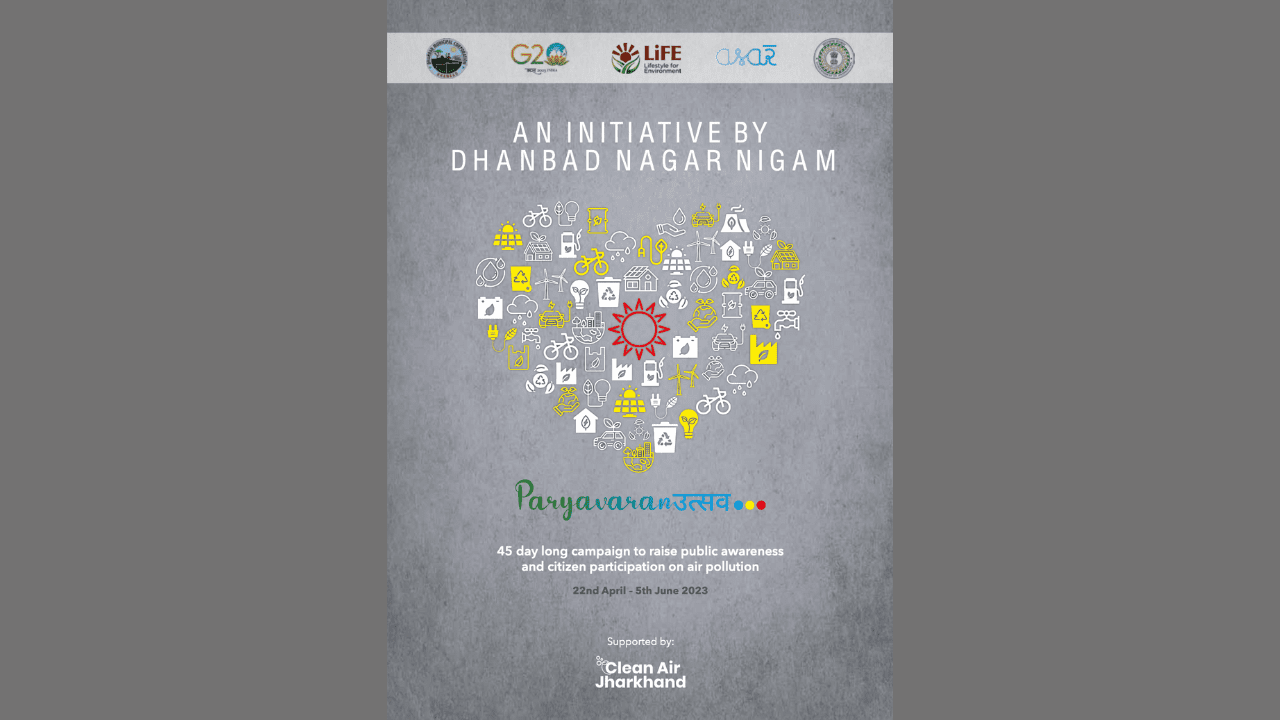
Paryavaran Utsav 2023: Dhanbad’s 45-Day Clean Air Awareness Campaign Report

Paryavaran Utsav 2023 was a 45-day public outreach campaign led by the Dhanbad Municipal Corporation in collaboration with Clean Air Jharkhand and Asar. The initiative aimed to build public awareness on air pollution and encourage community participation for cleaner air. Through school competitions, community dialogues, social media campaigns, and the “Vayu Mitra” citizen volunteer programme, the campaign reached thousands of people across Dhanbad. This report captures the activities, outcomes, and the growing momentum toward collective action for clean air and healthier communities.

A month in my life: A Community-Led Approach -Understanding Risks and Implications of Air Pollution

A Month in My Life: A Community-Led Approach – Understanding Risks and Implications of Air Pollution explores the alarming state of air quality in Jamshedpur, one of India’s major industrial cities. Through a community-driven citizen science initiative, the report documents daily exposure to fine particulate matter (PM2.5 and PM10) using handheld air quality monitors. Conducted by local youth volunteers known as Vayu Veers, the study combines real-time data with personal narratives to reveal how air pollution affects health, livelihoods, and everyday life in the steel city.

The findings highlight pollution levels up to 10 times higher than national standards, uncovering severe health implications and urgent environmental risks. By centring local voices and lived experiences, this report provides a holistic view of Jamshedpur’s air quality crisis and calls for immediate, evidence-based interventions to protect public health. It serves as a valuable resource for policymakers, researchers, and citizens seeking to understand and address India’s growing air pollution challenge.

Training Modules on the inter-linkages of Gender and Climate Change in India

Jharkhand State Livelihood Promotion Society (JSLPS), Department of Rural Development, Government of Jharkhand in partnership with Asar and Child in Need Institute (CINI) have created training modules on the interlinkages of Gender and Climate Change in India. The modules were launched on August 25 in Ranchi and are being rolled out with JSLPS Self Help Groups across Jharkhand. These structured and interactive modules are designed to:

  •  Build awareness among women Self Help Groups (SHGs) on the gendered impacts of climate change.
  • Strengthen women’s leadership in shaping equitable, context-specific climate solutions and facilitating the creation of locally led climate action plans.
  • Support marginalised communities with the knowledge, skills, and systems to adapt and build resilience to climate change.

The modules mark an important step in strengthening gender and climate linkages while building climate resilience for the state.

Improving Air Quality Through Sustainable Mining – Compliance and Performance Assessment in Dhanbad’s Coal Sector


Air pollution has become a significant environmental and public health issue in India, particularly in urban centres. Key contributors to this growing crisis include industrial, vehicular and dust emissions from coal mining activities. The main emissions contributing to air pollution include particulate matter (PM), sulfur dioxide (SO2), nitrogen oxides (NOx), and carbon dioxide (CO2).

Building a Climate Resilient Jharkhand

This report documents a national conference on climate change in Jharkhand, co-hosted by Asar and PDAG, which brought together over 100 stakeholders—including government officials, CSOs, academics, and local leaders. The discussions focused on three themes: climate adaptation and mitigation, decentralised renewable energy (DRE), and just transition. Key outcomes included the need for localised renewable energy solutions, the role of panchayats in energy governance, integration of traditional knowledge into policy, and the urgency of planning a just coal transition. Recommendations included setting up independent transition cells, improving DRE financing, and leveraging DMFT funds for sustainable development.

Summary Report | Co-Creation Conclave 2022

Held on October 1, 2024, in Ranchi, the Co-Creation Conclave 2.0 brought together over 30 participants from 23 organisations to advance a community-centric Just Transition in Jharkhand. Building on discussions from the first conclave in May 2024, the event focused on actionable steps for livelihood diversification, strengthening CBOs, skill development, and grassroots engagement. Key themes included institutional collaboration, women’s leadership, climate resilience, and inclusive planning. Participants co-developed action plans across three areas—livelihoods, CBO platforms, and capacity building—while prioritising grassroots engagement and technical support. The conclave fostered collective ownership and mapped pathways toward a climate-resilient, just Jharkhand.

Social and Behaviour Change for Reducing Household Air Pollution Handbook for the Facilitator

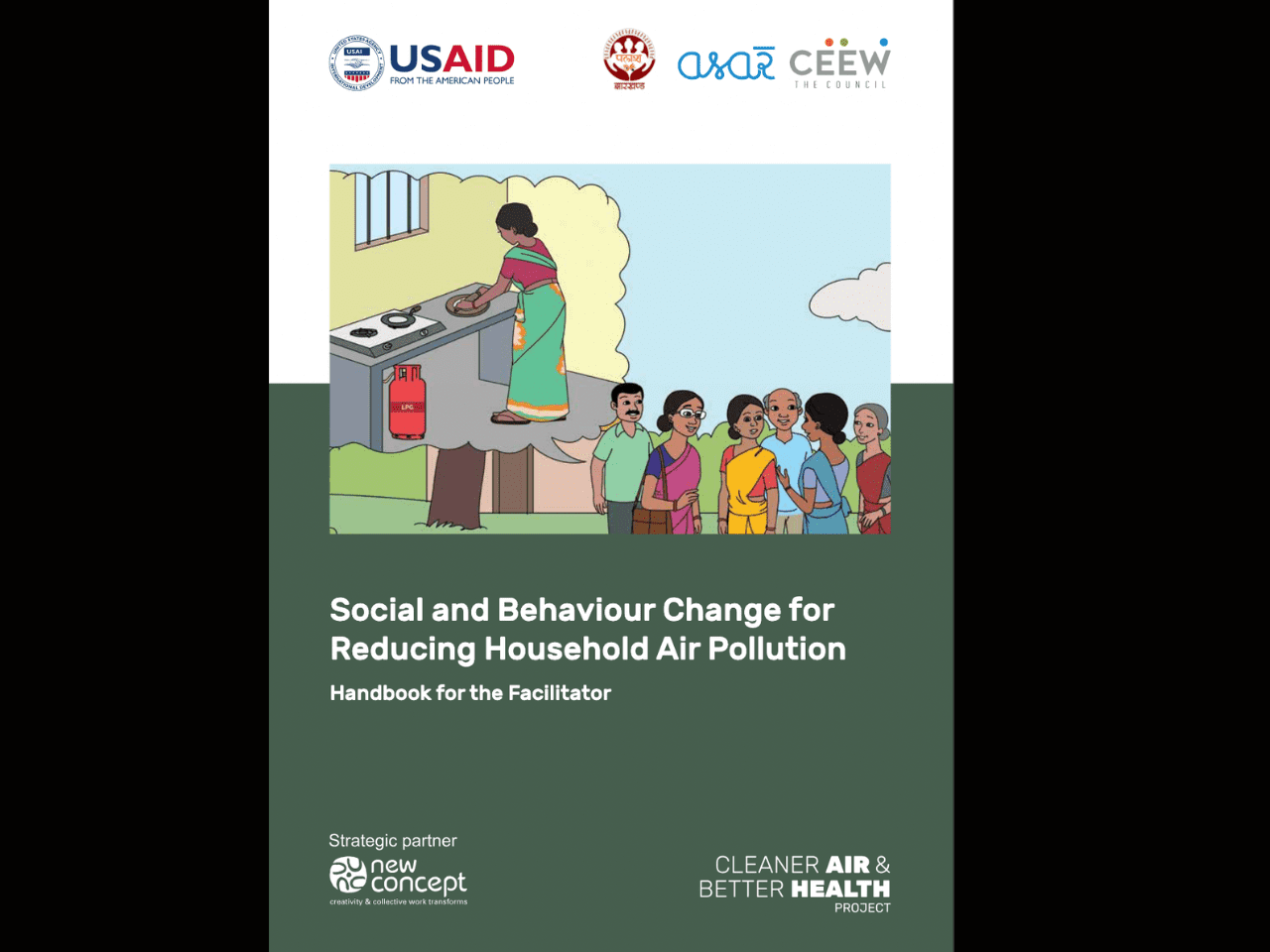
This facilitator handbook is part of the Cleaner Air and Better Health (CABH) project and aims to reduce Household Air Pollution (HAP) in Jharkhand through community-led Social and Behaviour Change Communication (SBCC). Designed for use with Self-Help Group (SHG) women, it outlines three interactive group meetings focused on HAP awareness, promoting clean cooking alternatives like LPG, and enabling economic empowerment. Activities such as conversation maps, flashcards, and games guide participatory learning. The handbook culminates in a community meeting to reinforce key messages and catalyse collective action, with a strong focus on inclusivity, behavioural change, and local ownership.

Insights from Conference of Panchayats 2.0 – Locally Led Climate Action in Jharkhand: Present and Future

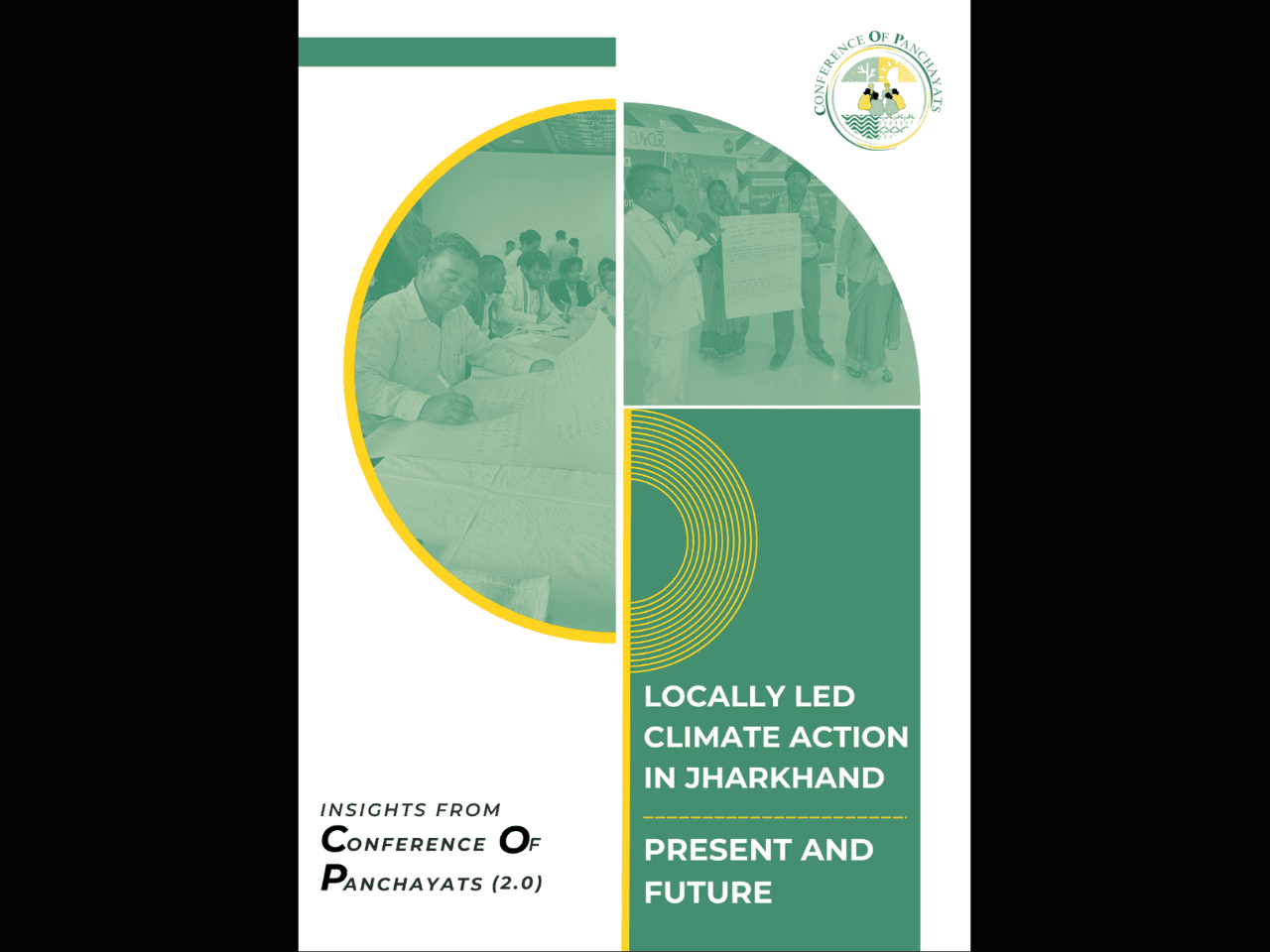
Taking inspiration from the global Conference of Parties on Climate Change, the Conference of Panchayats (CoP) was conceptualised by PDAG and Asar in 2022 to localise climate discourse and action. CoP uses a bottom-up, community-driven model that centres Panchayati Raj Institutions (PRIs) as pivotal actors in localised climate response. The second edition, CoP 2.0, held between July 2023 and January 2024 across five divisions of Jharkhand, brought together over 250 elected PRI members, community leaders, CSOs, and government officials.

The convenings focused on:

  • Understanding climate vulnerabilities faced by Jharkhand’s communities,
  • Showcasing local adaptation and mitigation practices, and
  • Exploring the potential of climate finance and convergence mechanisms to build resilience.

Participants shared lived experiences of climate impacts—declining rainfall, water scarcity, deforestation, crop losses, and disproportionate burdens on women and indigenous groups. Strategies like rainwater harvesting, crop diversification, afforestation, and use of renewable energy were discussed. Local governance bodies showcased initiatives and highlighted gaps in funding, awareness, and technical support.

Key takeaways include the need to empower Gram Panchayats, integrate climate resilience into village development plans, invest in climate-smart agriculture and skill-building, and build an institutional framework for a Just Transition in coal-dependent regions.

CoP 2.0 underscores that climate solutions must be local, inclusive, and informed by traditional knowledge—with PRIs leading the way.
Health Matters: Air Pollution & its Impacts

Air pollution has become a matter of serious concern in many parts of the country, with Ranchi, the capital of Jharkhand, being no exception to the problem of air pollution, especially in its urban centers. The data from the Global Burden of Disease shows that about 17% of the total deaths in Jharkhand in 2019 were attributed to air pollution. The top five risk factors for mortality in the state in 2019 were air pollution, high blood pressure, unsafe water and poor sanitation, high blood sugar, and a poor diet. It is important to point out that air pollution is not only considered the world’s biggest environmental health threat, where it causes and exacerbates many diseases ranging from asthma to cancer, pulmonary diseases, and heart disease but now it is considered a serious threat for the quality of our life and possibly its survival.


Given the complex nature of the problem with its multiplicity of sources and effects, it is clear that there
is no “silver bullet” solution. Addressing this problem will require a multi-sectoral approach, driven by environmental and health data, science & evidence, and a proper strategy. Realizing the seriousness of the problems, the Government of India launched the National Clean Air Program (NCAP) in the year 2019, under which city-specific clean air action plans have been prepared for the prevention and control of air pollution. Ranchi has been selected as one of the million-plus cities under the Fifteenth Finance Commission (XV-FC) and an action plan has been prepared for the city with defined mitigation measures to control pollution from all sources. The formulation and implementation of an action plan is
important because improving air quality through emission reduction and stricter air quality regulations is the most effective strategy. Effective policies to reduce emissions at the source is clearly preferable but plenty of evidence also supports the importance of preventive measures and risk reduction because of the fact that air pollution will remain a reality for a few years even if the mitigation measures are being implemented efficiently.

With this background, the convening “Health Matters – Air Pollution and its Impacts” was organized to discuss and deliberate on the linkage between polluted air and the deteriorating health of people in
the state. The discussion focused on risk reduction and preventive measures for air pollution. It also provided a forum to discuss the effects of air quality on health and share experiences, needs, and concerns. A more practical and participatory approach was expressed as the need to achieve clean air with health at the forefront.