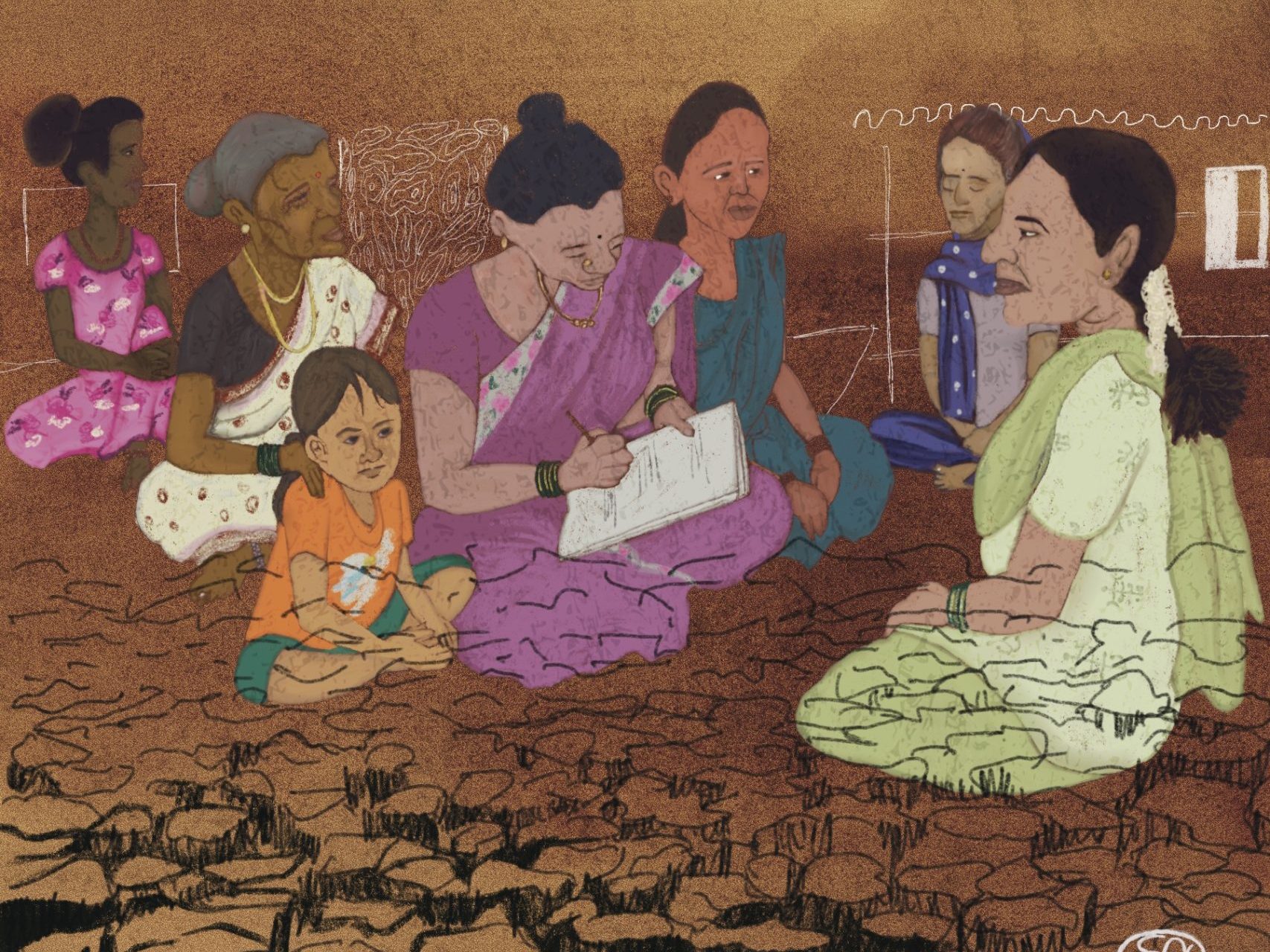
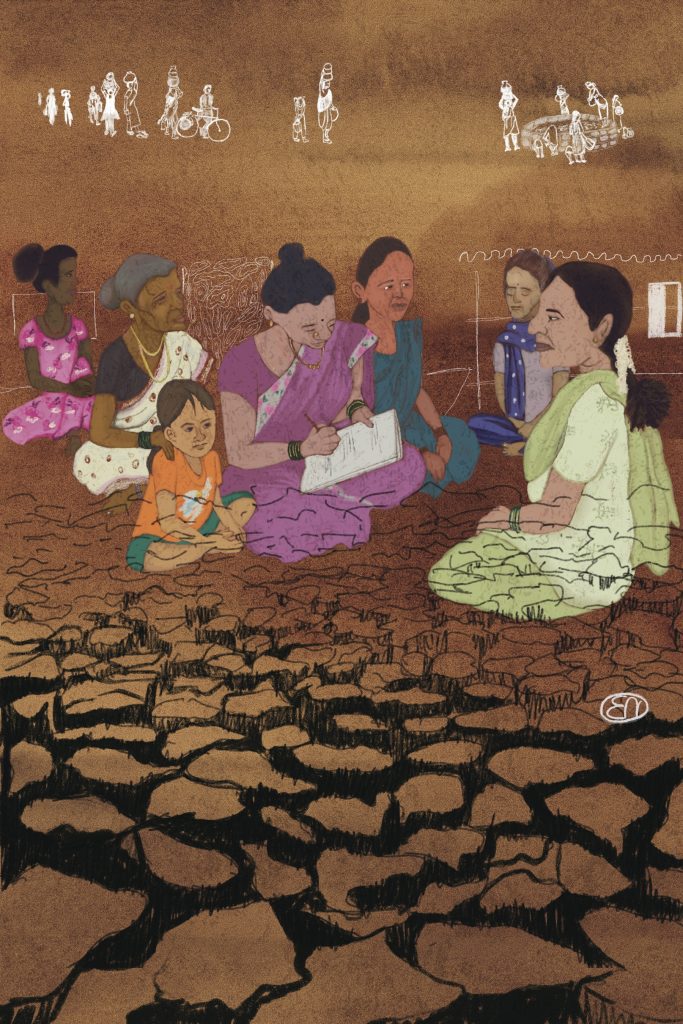
नागपूर जिल्ह्यातील कळमना गावात वारंवार पडणाऱ्या दुष्काळाचा सर्वाधिक फटका महिलांना बसत होता. दूरवरून पाणी आणण्यासाठी रोजचे कित्येक तास खर्ची पडत आणि दुसऱ्या दिवशी पुन्हा तेच चक्र सुरू होत असे.
यावर कोणताही उपाय सापडत नव्हता. हा सगळा अनुभव २०२४च्या ‘क्लायमेट गाव संवाद’मध्ये महिलांनी मोकळेपणाने मांडला. या गावपातळीवर झालेल्या चर्चेमुळे लोकनियुक्त महिला प्रतिनिधी आणि गावकरी वातावरणबदलाच्या आव्हानांवर विचार करू लागले.
या संवादांमधून आणि रिसोर्स अँड सपोर्ट सेंटर फॉर डेव्हलपमेंट (RSCD) यांच्या मार्गदर्शनातून हे स्पष्ट झाले की, कमकुवत आणि ढिसाळ व्यवस्थापन असलेली पाणीपुरवठा व्यवस्था हीच या समस्येची मुळं आहेत आणि गावातील पाणीपुरवठा समिती फक्त कागदावरच अस्तित्वात होती. त्यामुळे महिला नेतृत्वानं पुढाकार घेत या समितीची पुनर्रचना केली, जबाबदाऱ्या स्पष्ट केल्या आणि ग्रामपंचायतीत नियमित समन्वयाची प्रक्रिया सुरू केली.
साठवण्याच्या व्यवस्था, पाणी साठवून ठेवणं आणि शुद्धीकरण सुविधा, तसेच विद्यमान विहिरींची दुरुस्ती यांचा समावेश होता. या मागण्यांना महिला सभा आणि ग्रामसभेत मंजुरी मिळाली, आणि नियोजनप्रक्रियेदरम्यान रिसोर्स अँड सपोर्ट सेंटर फॉर डेव्हलपमेंट (RSCD) यांचं मार्गदर्शनही मिळत होतं.
मंजुरी मिळणं हा फक्त पहिला टप्पा होता. नियमित बैठका आणि प्रतिनिधींच्या भेटींच्या माध्यमातून सातत्याने पाठपुरावा केल्यामुळे कामांची अंमलबजावणी वेळेत पूर्ण झाली. एकूण रु.१०.४५ लाख खर्च करून सहा महत्त्वाची कामं पूर्ण करण्यात आली. यामध्ये पावसाचे पाणी साठवण्याच्या व्यवस्था, गावासाठी पाण्याची टाकी उभारणे, मुख्य पाणीपुरवठा विहिरीची दुरुस्ती आणि दोन सामुदायिक आरओ फिल्टर्सचा समावेश आहे. यामुळे कळमना गावात स्वच्छ पेयजलाची उपलब्धता सुनिश्चित झाली आणि पाणी आणण्यासाठी महिलांना लागणारा वेळ वाचला आणि त्यामुळे या महिलांना त्यांच्या उपजीविकेकडे आणि आरोग्याकडे लक्ष देण्यासाठी अधिक वेळ उपलब्ध झाला.
भंडारा जिल्ह्यातील बेला हे एक सामान्य गाव. पण या गावाने ‘जैसे थे’ परिस्थिती न स्वीकारता बदलाची कास धरली आणि या बदलाच्या केंद्रस्थानी आहेत सरपंच शारदा गायधने.
“वातावरण बदलाचे परिणाम हे केवळ मोठ्या आपत्तीमधूनच समजतात, असं नाही, तर आपण वापरत असलेलं पाणी, आपण पिकवलेलं अन्न आणि आपण घेत असलेल्या श्वासातूनही त्याचे परिणाम जाणवतात. या बदलाचा सर्वात पहिला परिणाम आपल्या आरोग्यावर होतो आणि माझ्या गावाच्या हिताचं काम करणं ही माझी जबाबदारी आहे,” असे दोनदा निवडून आलेल्या सरपंच आणि वसुंधरा पुरस्कार विजेत्या शारदा गायधने म्हणतात.
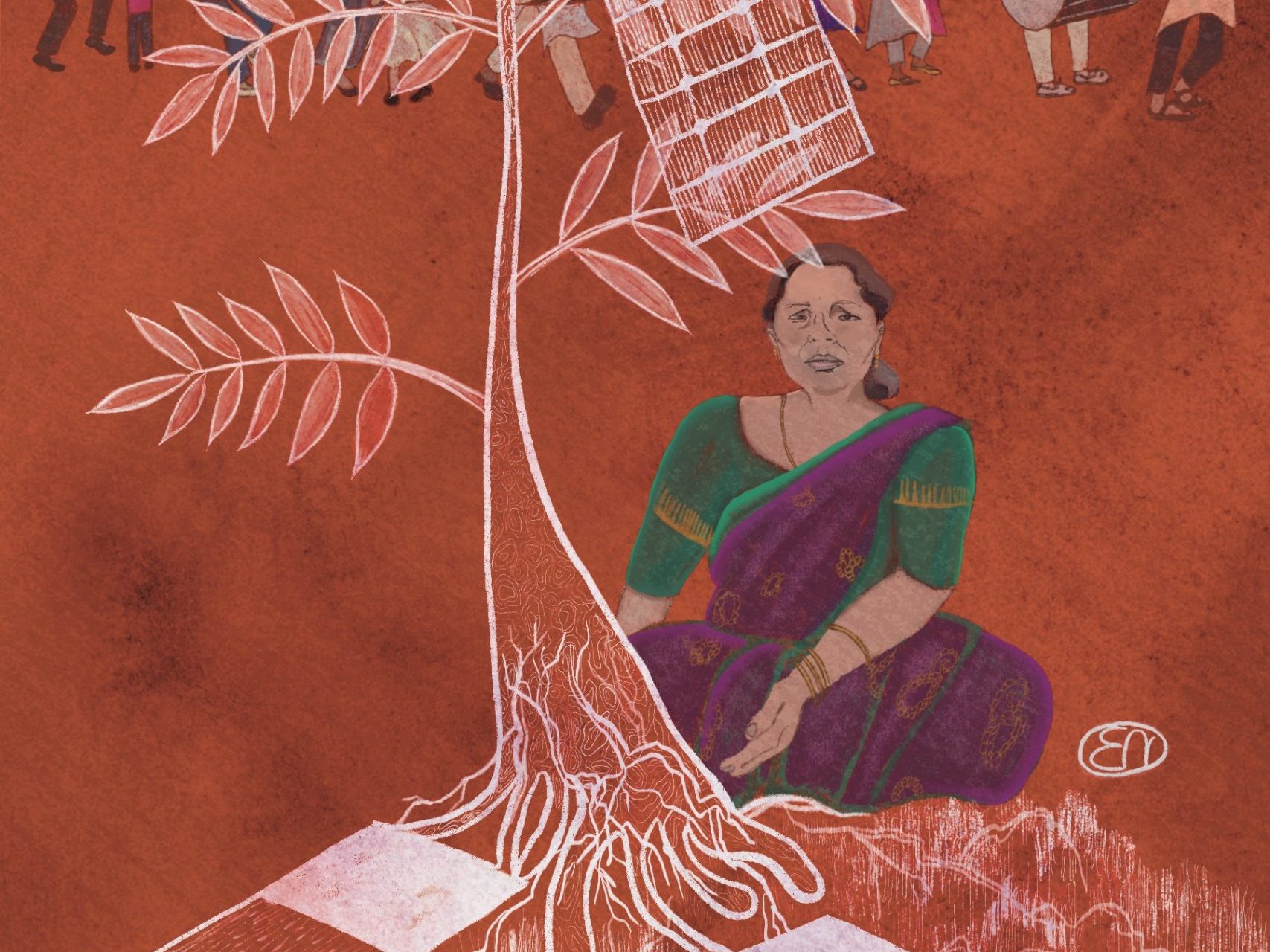
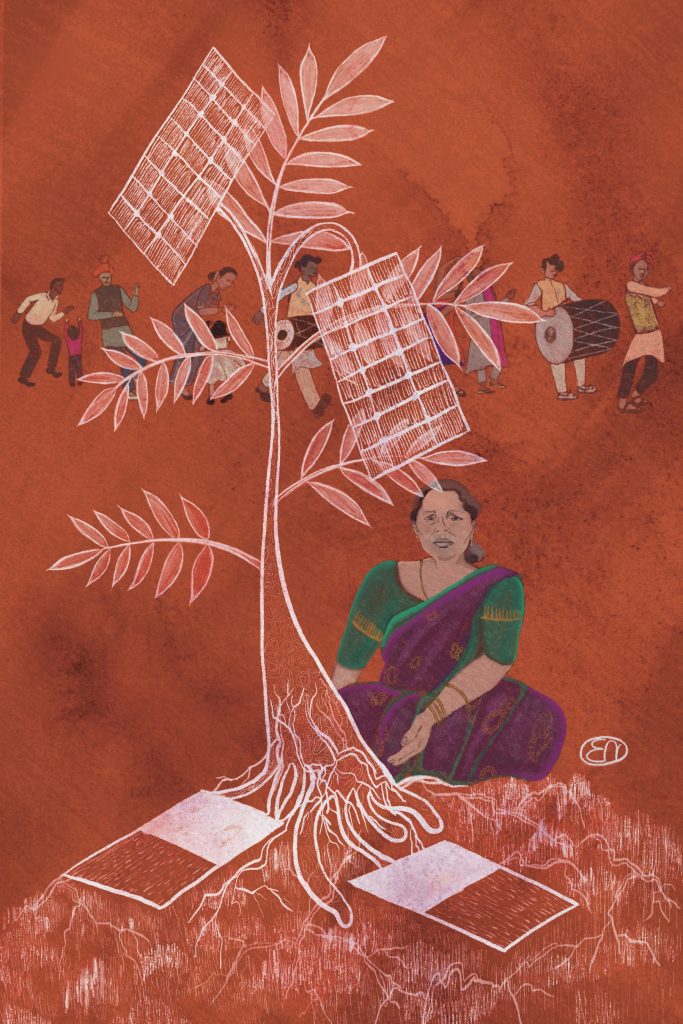
त्यांच्या नेतृत्वाखाली वातावरण बदलाबद्दल जागरूकता हा दैनंदिन आयुष्याचा भाग झाला आहे. गावातील कुटुंबांनी लग्नसमारंभ आणि सणांच्या निमित्ताने ९०,०००हून अधिक झाडं लावली. धूर करणाऱ्या पारंपरिक चुलींऐवजी स्वयंपाकघरांमध्ये एलपीजीचा वापर सुरू झाला. सौरऊर्जेने घरे, अंगणवाड्या आणि पंचायत कार्यालये प्रकाशमान केली. प्रत्येक घराला कचऱ्याचं वर्गीकरण करण्याची सवय लागली आणि एकदाच वापरल्या जाणारं प्लास्टिक नाकारणं हळूहळू सर्वांच्या अंगवळणी पडलं.
रिसोर्स अँड सपोर्ट सेंटर फॉर डेव्हलपमेंट (RSCD) यांनी या प्रवासात महत्त्वाची भूमिका बजावली. त्यांच्या ‘सावित्री अकॅडमी’च्या माध्यमातून क्षमता वाढ आणि नेतृत्व प्रशिक्षणाला भक्कम पाठबळ मिळालं. सामुदाय पातळीवर भरघोस सहभाग आणि सक्रिय ‘कार्बन न्यूट्रल कमिटी’च्या पुढाकारामुळे बेला हे महाराष्ट्रातील पहिलं नेट-झीरो गाव ठरलं आणि २०२४ चा राष्ट्रीय पंचायत पुरस्कारही प्राप्त केला.
भंडाऱ्यातील बेला या छोट्याशा गावनं संवेदनशीलता, धाडस आणि एकीच्या बळावर वातावरण बदलासंदर्भातील कृतीची ‘ब्लू प्रिंट’ तयार केली, असं म्हटलं तर वावगं ठरणार नाही.
Sharda Gaydhane-Shende had been speaking for about four minutes when I realised the 300-seat room had gone quiet in a particular way. The kind of quiet that settles when something real is being said, the whole room arriving at the same moment together.
She was speaking about trolley bags.
Free trolley bags had become the unexpected doorway through which Bela Gram Panchayat entered its journey toward rooftop solar. Sharda tai, the Sarpanch, had used them as a conversation starter, going door to door. She knew her neighbours. She knew what would get them talking. That turned out to be enough. Today, Bela is Maharashtra’s first net-zero village, and the Panchayat has been recognised at the state and national levels, receiving Majhi Vasundhara Abhiyan awards worth ₹3 crore and the First Prize in the Carbon Neutral Vishesh Panchayat Puraskar category of the National Panchayat Awards 2024, a testament to what becomes possible when government missions meet local leadership that is ready and willing.
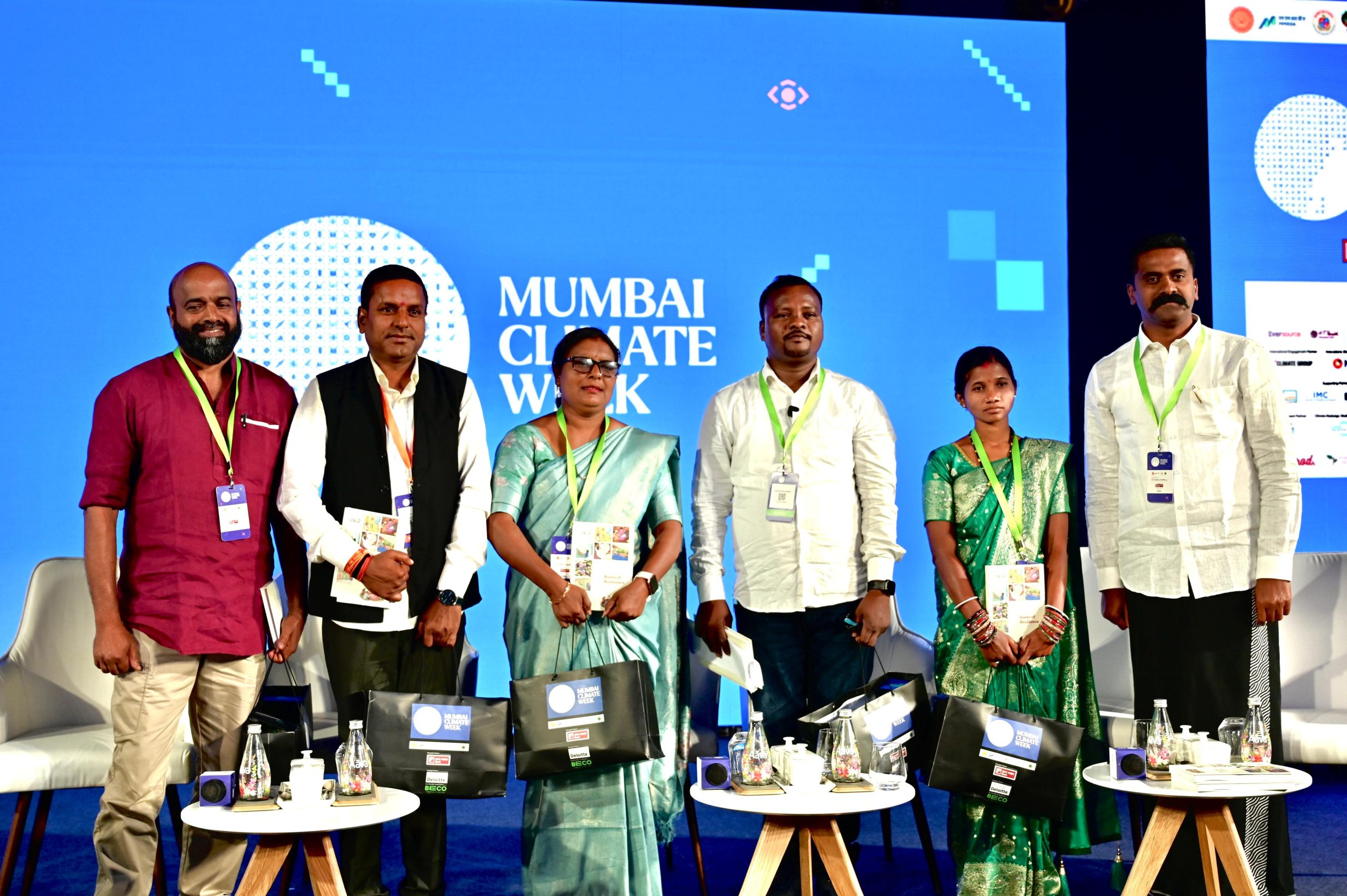
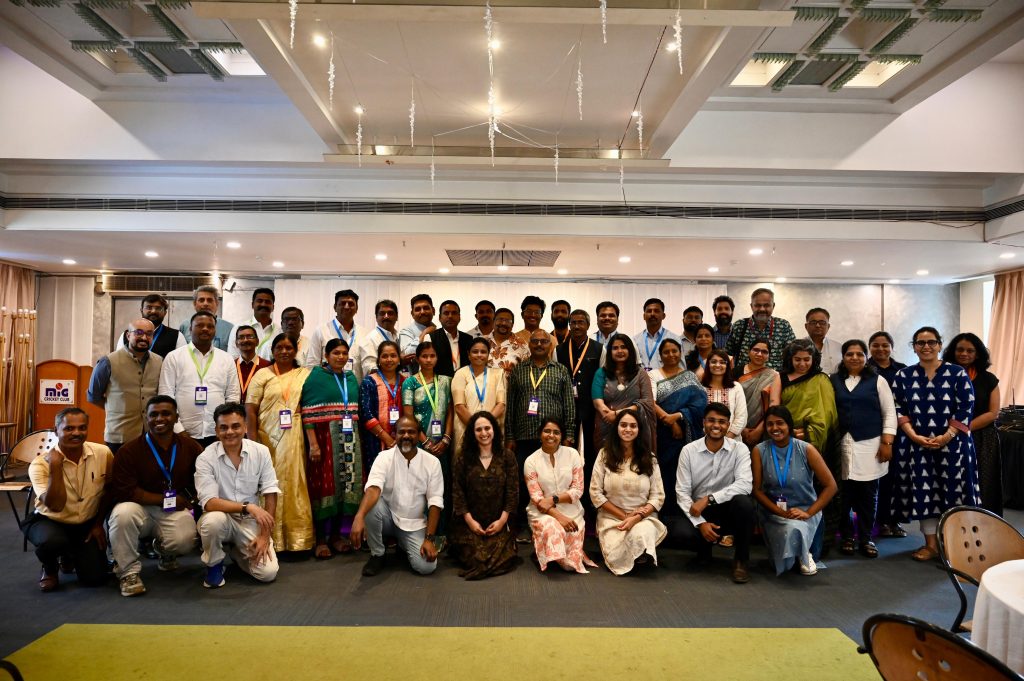
This was the session we were building towards: From the Frontlines: Panchayats Leading India’s Climate Charge, hosted as a main session at the Mumbai Climate Week 2026 at the Jio World Convention Centre, BKC. Six Panchayat leaders and representatives from Maharashtra, Karnataka, Kerala, Bihar, Jharkhand, and Odisha had come to share what they had built in their own villages and what it had taken for them to build it.
The stories were different in their details and in the languages they were narrated in, but recognisable in their shape.
Suryanarayana’s account had a particular texture. In Huledanahalli, the pandemic years had forged something that outlasted the crisis, a solidarity network of young people who came together and chose to stay together for the long work of village development. They are still there, exploring new ideas with the same enthusiasm. What began as collective care had become collective agency.
We had six pioneers in that room that day. India has so many more; Panchayat leaders quietly doing this work at the village level whose names and work rarely appear in climate policy discussions, let alone on international stages. And yet, these are precisely the communities that did not cause the crisis they are now asked to navigate. They still contribute the least to the emissions reshaping their seasons, their harvests, and their water. What they have built in Bela, in Perinjanam, in Siyari, and in Koraput is an act of collective self-determination in the face of a problem they did not have much to do with but have simply inherited.
Each story pointed to the same thing: climate mitigation or adaptation, when they work, is built through the accumulation of deliberate, community-led decisions made by people who understand their land, their neighbours, and what is actually at stake. No single scheme or top-down intervention can conjure that.
At one point during the session, one of the representatives said something that has stayed with me. They said they were happy about the opportunity to speak on a stage like Mumbai Climate Week, and sad that there was a timer in front of them. They just had so much to share.
The audience laughed, gently. I laughed too. But in that laughter, I also heard the beginning of something. The appetite in the room, the leaning-in, and all the people who reached out to us before and after the session made it clear that more platforms and longer sessions are both needed and inevitable. These Panchayat leaders have been building and adapting long before any conference took notice and will continue to do so long after. But the right rooms, at the right moments, can shorten the distance between what they already know and the policies, partnerships, and resources that have yet to catch up.
This session was, in many ways, an expression of what Asar and Policy & Development Advisory Group (PDAG) set out to do when we co-initiated the Conference of Panchayats, our own COP. The premise was simple: Panchayat leaders hold real agency in shaping decisions affecting their communities. The kind of agency that goes well beyond implementation, well beyond being “beneficiaries”. The insights generated when Sharda tai, Jayanti di, Sachith, and Suryanarayana are in the same room; learning from each other, seeing their struggles reflected, building on one another’s work. These may be among the least measured and most consequential parts of our response to climate change.
At Asar, we think about our theory of change as mycelium – the vast, largely invisible network beneath a forest floor that connects trees, carries nutrients, and makes the whole ecosystem more resilient than any single organism could be alone. What I witnessed in that room in Mumbai felt exactly like that. For 10 years now, a network has been growing below the surface, without fanfare, Panchayat to Panchayat, state to state, one story feeding the next.
India’s climate ambitions are often measured in gigawatts and megatons. They should also be measured in the number of platforms where a Sarpanch from Maharashtra can sit beside a Panchayat representative from Jharkhand and say: here is what we did, here is what was hard, here is what we learned. This is where the world stops to listen – not for four minutes, but for as long as it takes.
The mycelium is real, and somewhere right now, in a village whose name no one has heard yet, a Sarpanch is knocking on a door. That is where India’s climate story begins.
To explore more stories of how Panchayats across India are shaping climate action from the ground up, visit our Roots of Resilience series on the Asar website. These blogs bring together voices, experiences, and lessons from local leaders working at the frontlines of change.
By Vishwajeet Poojary, with inputs from Suhas Joshi.
For far too long, conversations about climate change and its impacts have remained confined to the echo chambers of academics, researchers, and policymakers. We are now at a critical moment where we must move beyond jargon-heavy debate that momentarily alarm but rarely connect. At Asar, we believe that to communicate the urgency of the climate crisis, we must first humanise it.
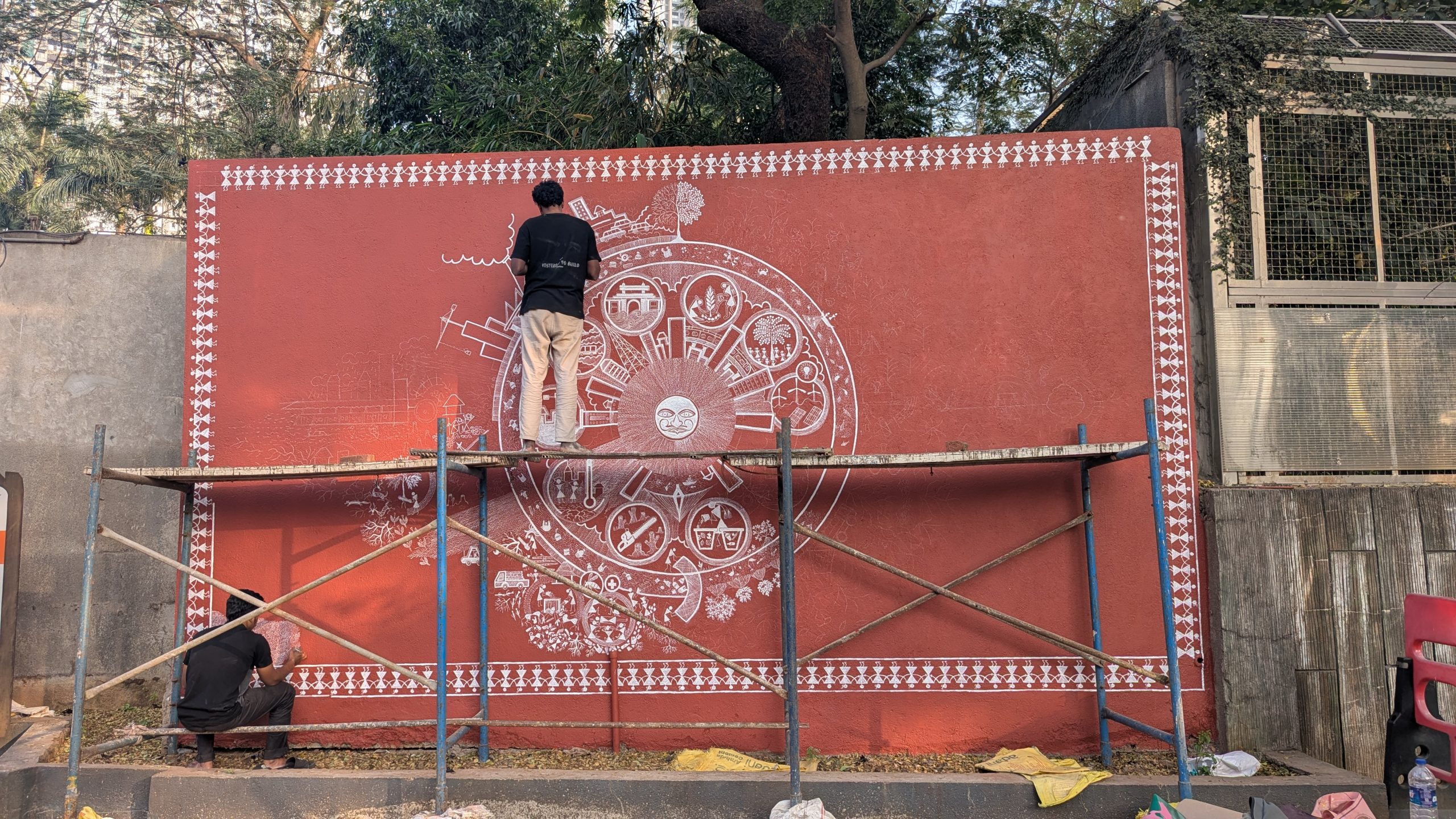
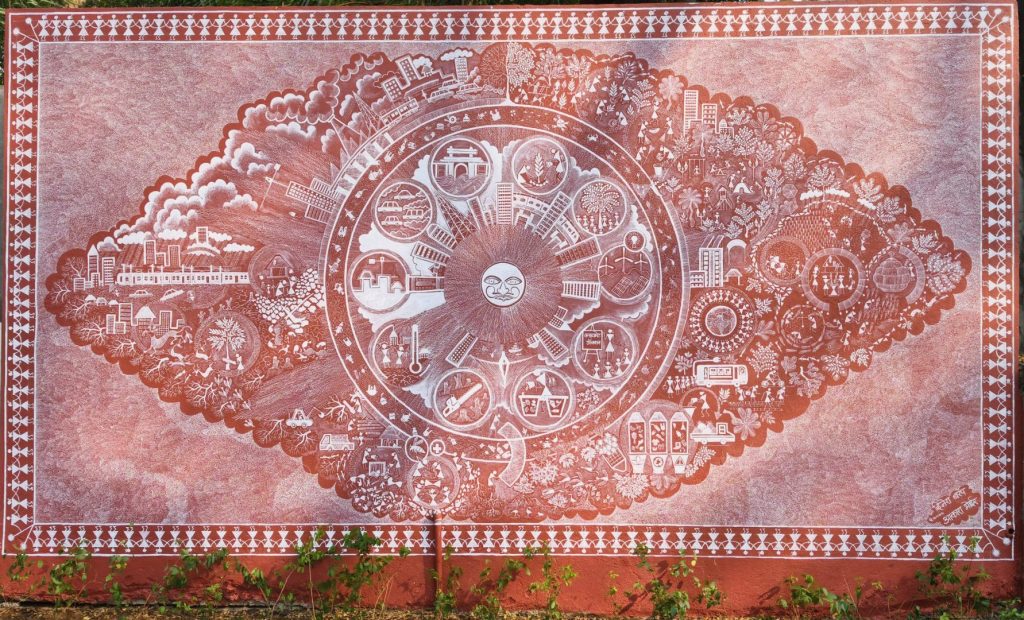
Created by two young Adivasi artists – Dinesh Barap and Akash Bhoir, this Warli artwork at Veermata Jijabai Bhosale Botanical Udyan and Zoo comes alive just before Mumbai Climate Week. The setting itself offers a rare opportunity to take climate conversations beyond expert rooms and institutional spaces, placing them in a public, accessible environment where families, children, and visitors from across the city gather with interest.
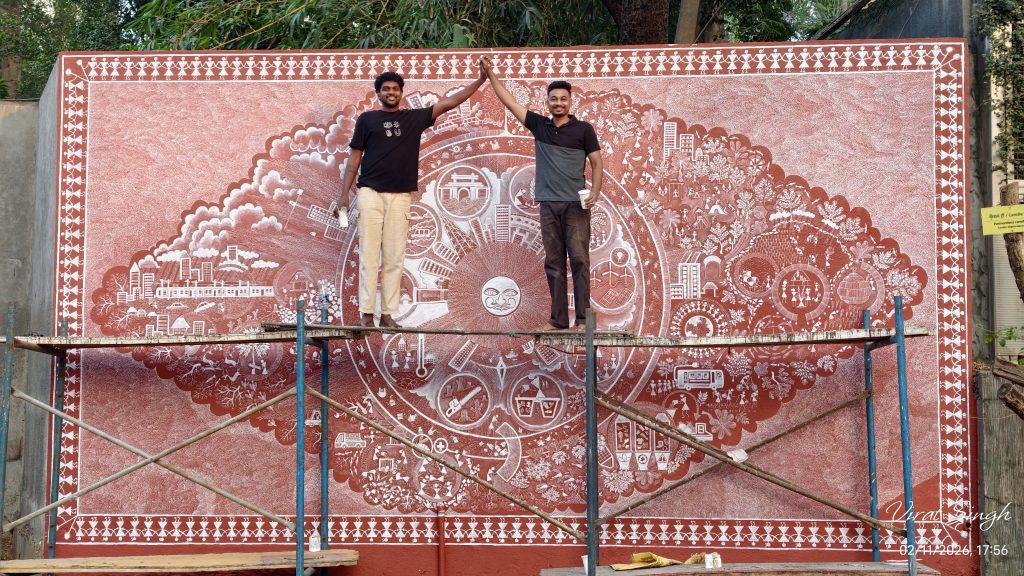
Artists Akash Bhoir (Right) and Dinesh Barap (left) pose with the Warli mural at Veermata Jijabai Bhosale Botanical Udyan and Zoo
As the government, climate experts and organisations come together to reflect on climate future, this mural speaks directly to people across ages, neighbourhoods, and backgrounds, inviting everyone visiting the zoo to see how climate change intersects with their own lives, choices, and responsibilities.
About Two Paths, One Circle: A Warli Story of Climate, Community, and Choice.
This warli art represents two paths. One side reflects the climate realities we are already living with: rising heat, erratic rains, degraded air & water, rising sea-levels & coastal flooding, farmlands under stress from droughts and shifting seasons, and more. These are no longer distant problems – they affect all of us – farmers, fisherfolk, city dwellers, children, and wildlife – each in different ways.
The other side shows how we can act – together. It depicts communities, businesses, and governments switching to clean energy, restoring ecosystems, promoting sustainable transport and city spaces, supporting climate-resilient farming, and cutting emissions. These depictions remind us that real climate action is a shared effort – centered around people and strengthened by forward-looking choices from governments and businesses working toward a sustainable future.
A view of the completed mural on the premises of the Veermata Jijabai Bhosale Botanical Udyan and Zoo.
Running along the border of the mural is a continuous circle of people holding hands in a traditional Warli dance. It tells us that climate action is always about people and no one stands outside the climate story. Climate change is a collective problem and needs collective action – communities aware of risks, calling for action, backed by governments and businesses investing in solutions. The same hands that harm can also heal it, when everyone – from communities to leaders – choose to act together.
With its minimal yet powerful visual language, this Warli art turns complex climate issues into human stories for everyone to understand. This wall invites visitors – especially children and young people – to reflect on their own role in shaping a climate-resilient Mumbai and Maharashtra.
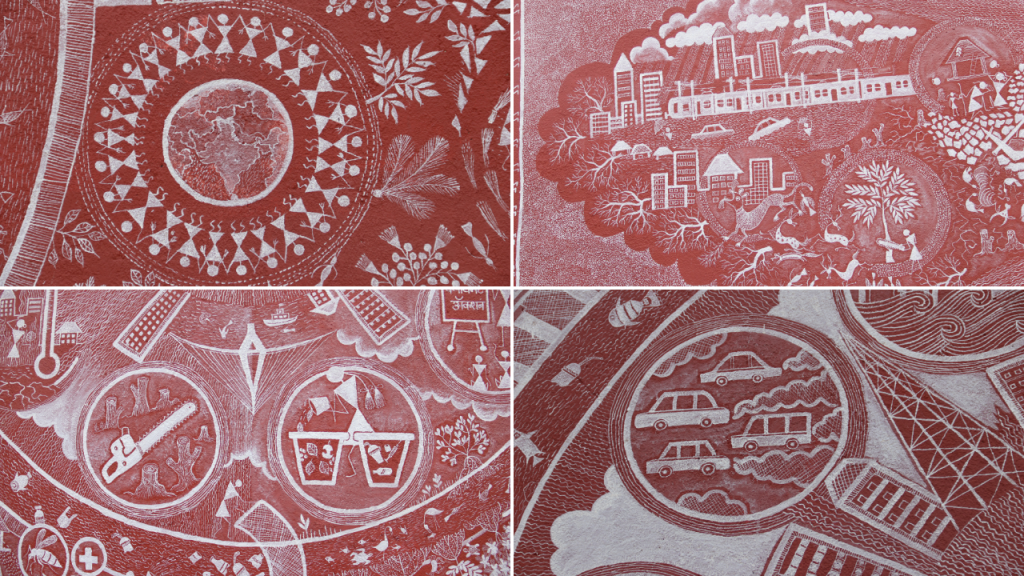
The mural contains incredibly detailed paintings of climate issues plaguing India in general and Maharashtra in particular. Here are a few glimpses.
About the artists:
Dinesh Barap is a Warli artist from the Nava Pada Warli settlement in Sanjay Gandhi National Park, Mumbai. Dinesh was trained in this art form by his grandmother and he went on to complete his Bachelor of Arts at Ruia College, Mumbai. Dinesh has exhibited his work for the Confluence Exhibition for Living Waters Museum in 2021 and Forest in the City exhibition for KRVIA in 2024 at CSMVS and Conscious Collective, Godrej Campus, Vikhroli. He conducts forest walks and Warli workshops and is currently studying Fine Arts at Sir JJ School of Fine Arts, Mumbai.
Akash Bhoir is a contemporary Warli artist belonging to the Malhar koli tribe, living with his family in their ancestral home in Keltipada, a tribal hamlet of Aarey Colony. Akash works to keep his community’s cultural heritage alive and creates art and spaces where people can reconnect with nature and indigenous knowledge. Akash works with sustainable, eco-friendly materials that honour the earth. For him, Warli art is not merely a decorative style but a “lost script,” a visual language that carries the memories of his people. He strives to preserve the soul of Warli art while allowing it to evolve, ensuring the stories, struggles, and spirit of his people reach a global audience.
वातावरणबदलाबद्दल चर्चा करण्यासाठी आम्ही वारली चित्रकलेची निवड का केली?
गेली अनेक वर्षे वातावरण बदल आणि त्याच्या परिणामांची चर्चा ही बहुदा तज्ज्ञ, संशोधक आणि धोरणकर्त्यांपर्यंतच मर्यादित राहिली आहे. आता मात्र अशी वेळ येऊन ठेपली आहे, जेव्हा केवळ संज्ञा आणि तांत्रिक शब्दांमध्ये होणाऱ्या चर्चेपर्यंत हा विषय मर्यादीत राहून चालणार नाही. कारण अशी चर्चा किंवा वादांमुळे तात्पुरती खळबळ उडते. पण सामान्यांपर्यंत या समस्येचे महत्त्व ज्या तीव्रतेने पोहोचले पाहिजे, त्या तीव्रतेने पोहोचत नाही. वातावरण बदलाच्या या आव्हानावर उपाययोजना करण्यासाठी प्रथम ही समस्या सगळ्यांना समजेल अशा भाषेत मांडणे गरजेचे आहे, असे ‘असर’मध्ये आम्हाला वाटते.
यासाठी दिनेश बरप आणि आकाश भोईर या दोन तरुण आदिवासी वारली चित्रकारांशी आम्ही संपर्क साधला. या दोघांनी वीरमाता जिजाबाई भोसले उद्यान व प्राणिसंग्रहालयात हे आगळेवेगळे चित्र साकारले आहे. ‘मुंबई क्लायमेट वीक’च्या निमित्ताने ही कलाकृती साकारली आहे. या उपक्रमामुळे वातावरण बदलाचे परिणाम आणि त्यावरील उपायांची चर्चा तज्ज्ञ आणि संस्थात्मक वर्तुळाच्या बाहेर पोहचेल. सार्वजनिक पातळीवर, सामान्य लोकांमध्ये या विषयी बोलले जाईल. प्राणीसंग्रहालयाला भेट देणाऱ्या सर्व स्तरातील कुटुंबांमध्ये आबालवृद्धापर्यंत हा विषय थेट पोहचू शकेल.
कलाकार आकाश भोईर (उजवीकडे) आणि दिनेश बरप (डावीकडे), वीरमाता जिजाबाई भोसले वनस्पती उद्या व प्राणीसंग्रहाल, मुंबई येथील वारली भित्तीचित्रासोबत.
दोन वाटा एक वर्तुळ: वातावरण बदल, समुदाय आणि आपण काय निवडतो, याची वारली शैलीतील मांडणी
या वारली चित्रकलेत दोन भाग दाखवले आहेत. वाढते तापमान, अनियमित पाऊस, हवेची व पाण्याची खालावलेली गुणवत्ता आणि समुद्राची वाढती पातळी व किनारपट्टीवर येणारे पूर, दुष्काळ व बदलेल्या ऋतूचक्राचा शेतीवर होणारा दुष्परिणाम इत्यादी परिणाम एका बाजूला दाखवले आहेत. या समस्या आपल्यापासून फार लांब नसून त्या आज थेट आपल्या दारापर्यंत पोहचल्या आहेत. या समस्यांचा शेतकऱ्यांवर, मच्छिमारांवर, गावांपासून ते महानगरापर्यंत सर्व स्तरातील नागरिकांवर, मुलांवर आणि वन्यजीवनावर वेगवेगळ्या प्रकारे परिणाम होत आहे.
या आव्हानाला आपण एकत्रितपणे कसे सामोरे जाऊ शकतो ते चित्राच्या दुसऱ्या बाजूला दाखवले आहे. पर्यावरणाला किमान हानी पोहोचविणाऱ्या ऊर्जेचा म्हणजे क्लीन एनर्जीचा वापर करणे, परिसंस्थांचे पुनःस्थापन करणे, शाश्वत परिवहन सेवांचा वापर आणि सार्वजनिक ठिकाणे जबाबदारीने जपणे, वातावरण बदलाला तोंड देण्यास सक्षम असलेल्या शेतीला पाठिंबा देणे आणि उत्सर्जन कमी करणे अशा सर्वांनीच अंमलात आणायच्या उपाययोजनांचा त्यात समावेश होतो. या चित्रांवरून आपल्याला जाणवते की, वातावरण बदलावर उपाययोजना करण्यासाठी एकत्रितपणे कृती करणे आवश्यक आहे. या कृती लोककेंद्री असतील, दूरदृष्टीने घेतलेल्या शासकिय निर्णयाचे त्यास पाठबळ असेल आणि शाश्वत भविष्याच्या दृष्टीने काम करणाऱ्या उद्योग व्यवसायांचा त्यात समावेश असेल हे गरजेचे आहे.
या म्युरलच्या परीघावर हातात हात गुंफून पारंपरिक वारली नृत्य करणारी माणसे चितारली आहेत. वातावरण बदलावरील कृती ही कायम मानवकेंद्री असते आणि वातारणीय बदलांच्या परिघाबाहेर कोणीही जाऊ शकत नाही. वातावरण बदल ही सामुदायिक समस्या आहे आणि त्यावर उपाययोजना करण्यासाठी सामुदायिक प्रयत्नांचीच आवश्यकता आहे. समुदायांना या समस्येची, किंबहुना धोक्याची जाणीव असणे, त्यावर कृती करण्यासाठी लोकांना आवाहन करणे, सरकारचा त्याला पाठिंबा असणे आणि उद्योग व्यवसायांनी या उपाययोजनांमध्ये गुंतवणूक करणे याचा त्यात समावेश आहे. समुदायांपासून नेतृत्वाने एकत्रितपणे कृती करण्याचे ठरविले तर ज्या हातांनी परिस्थिती बिघडवली आहे, तेच हात त्यावर उपायही करू शकतात.
वीरमाता जिजाबाई भोसले वनस्पती उद्यान व प्राणीसंग्रहालय, मुंबई येथील वारली भित्तीचित्र.
किमान अभिव्यक्तीतून कमाल परिणाम साधाणाऱ्या या वारली कलेच्या माध्यमातून वातावरण बदलासारखी गुंतागुंतीची समस्या मानवी कथांच्या रूपात सोपी करुन सांगण्यात आली आहे, जेणेकरून सगळ्यांना या समस्येचे गांभीर्य समजू शकेल. या भित्तीचित्राच्या निमित्ताने विशेषतः मुलांना आणि तरुणांना आवाहन करण्यात आले आहे. मुंबई व महाराष्ट्राला वातावरण बदलाच्या समस्येला तोंड देण्यासाठी कसे सक्षम करता येईल, यावर त्यांनी व्यक्त व्हावे अशी यामागची अपेक्षा आहे.
वातावरणाच्या भविष्याबद्दल चर्चा करण्यासाठी देशविदेशातील तज्ज्ञ, संस्था, शासन, प्रशासन ‘मुंबई क्लायमेट वीक’मध्ये एकत्र येत असताना या चित्राच्या माध्यमातून सर्व वयोगटातील, परिसरातील आणि वेगवेगळी पार्श्वभूमी असलेल्यांशी थेट संवाद साधण्यात आला आहे. वातावरण बदलामुळे मानवजातीवर, आयुष्यावर, त्यांच्या निवडींवर आणि जबाबदाऱ्यांवर कशा प्रकारे परिणाम होत आहे, हे पाहण्यासाठी सर्वांना एक प्रकारे आवाहन करण्यात आले आहे.
भारताला सर्वसाधारणपणे आणि महाराष्ट्राला विशेषतः भेडसावणाऱ्या वातावरणीय समस्यांचे अत्यंत सूक्ष्म आणि तपशीलवार चित्रण या भित्तीचित्रात केले आहे. त्याची ही झलक.
चित्रकारांची माहिती :
दिनेश बरप हे मुंबईतील संजय गांधी राष्ट्रीय उद्यानातील नवा पाडा येथील वारली चित्रकार आहेत. दिनेश यांनी या कलेचा वारसा त्यांना त्यांच्या आजीकडून मिळाला आहे. मुंबईतील रुईया महाविद्यालयातून त्यांनी कला शाखेतील पदवी प्राप्त केली आहे. दिनेश यांनी २०२१ मध्ये लिव्हिंग वॉटर्स म्युझियमसाठी झालेल्या कॉन्फ्लुअन्स एक्झिबिशनमध्ये तसेच २०२४ मध्ये केआरव्हीआयएसाठी आयोजित फॉरेस्ट इन द सिटी या प्रदर्शनात आपली कला सादर केली होती. ही प्रदर्शने सीएसएमव्हीएस आणि गोदरेज कॅम्पस, विक्रोळी येथील कॉन्शस कलेक्टिव्ह येथे आयोजित करण्यात आली होती. ते जंगलभ्रमंती उपक्रम आणि वारली कार्यशाळांचे आयोजन करतात. सध्या ते मुंबईतील सर जे. जे. स्कूल ऑफ फाइन आर्ट्स येथे फाइन आर्ट्सचे शिक्षण घेत आहेत.
आकाश भोईर हे मल्हार कोळी जमातीतील समकालीन वारली कलाकार आहेत. ते आपल्या कुटुंबासह आरे कॉलनीतील केलटीपाडा या आदिवासी पाड्यातील त्यांच्या वडिलोपार्जित घरात राहतात. आपल्या समुदायाची सांस्कृतिक परंपरा जिवंत ठेवण्यासाठी आकाश सातत्याने काम करत आहेत. निसर्गाशी आणि आदिवासी ज्ञानाशी पुन्हा नाते जोडता यावे, यासाठी त्यांनी कलेच्या माध्यमातून विविध कलाकृती आणि ठिकाणांची मांडणी केली आहे. त्यांच्या दृष्टीने वारली कला ही केवळ सजावटीची शैली नसून ती एक ‘हरवलेली लिपी’ आहे, जी त्यांच्या समाजाच्या आठवणी आणि अनुभव जपून ठेवते. वारली कलेचा आत्मा जपताना ती पुढे विकसित करण्याचा त्यांचा प्रयत्न आहे, जेणेकरून त्यांच्या समाजाच्या कथा, संघर्ष आणि जगणे जागतिक स्तरावर पोहोचू शकेल.