Popup Image

Share this powerful gallery of art and climate.

These paintings speak of survival, resistance, and care. Share this page with those who value community, creativity, and climate justice.

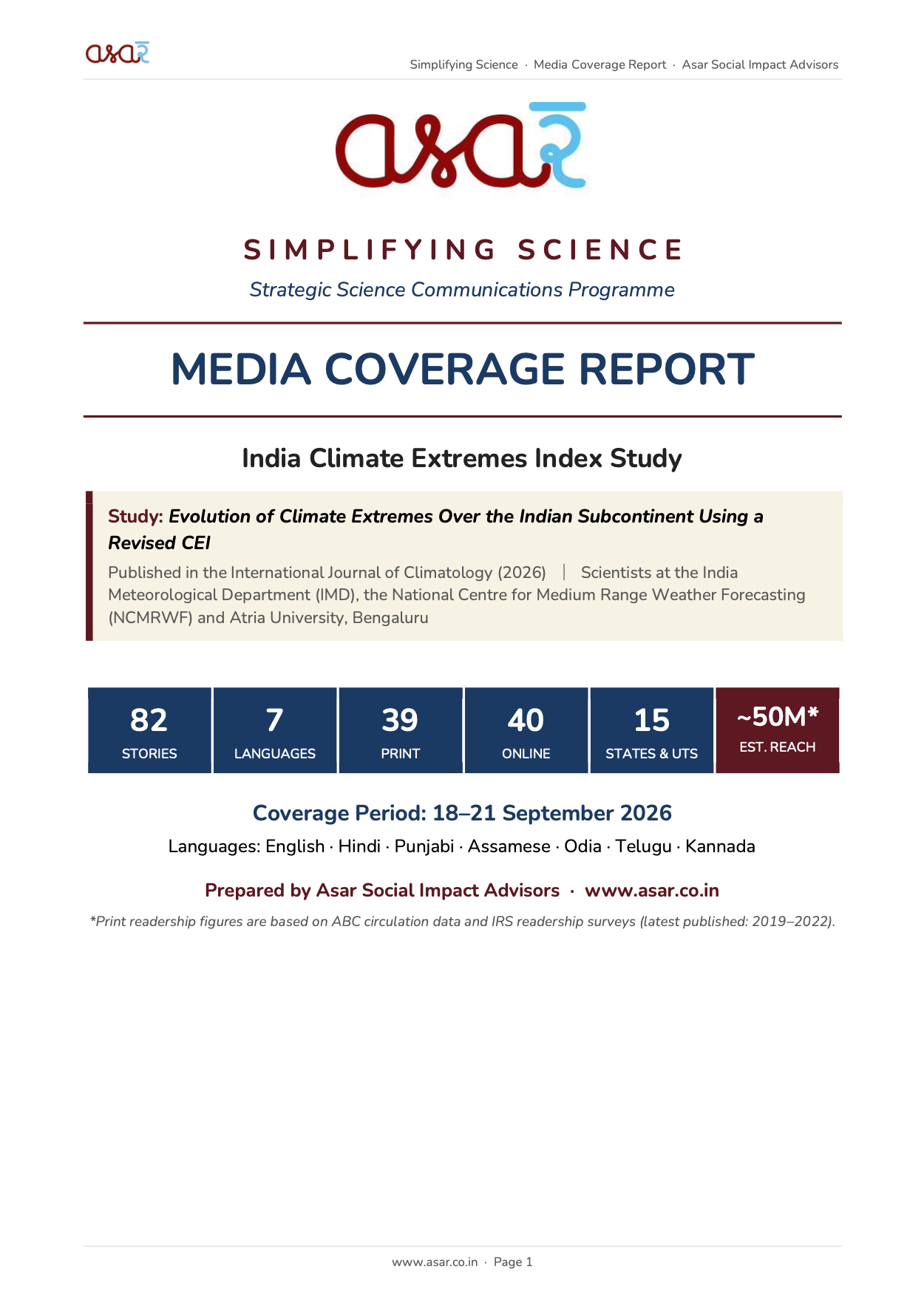
India Climate Extremes Index Study: A Simplifying Science Media Campaign

As part of the Simplifying Science programme, Asar partnered with researchers to communicate the findings of the study, “Evolution of Climate Extremes Over the Indian Subcontinent Using a Revised CEI,” published in International Journal of Climatology (2026). Led by scientists from the India Meteorological Department, the National Centre for Medium Range Weather Forecasting and Atria University, Bengaluru, the research analysed 52 years of climate observations across India. It found that climate extremes are intensifying differently across regions, with expanding heat hotspots in the northwest, faster drying and persistent drought in parts of the south, and increasing rainfall extremes alongside longer dry spells in the Northeast.

To bring these findings to diverse audiences, Asar developed a multilingual, region-specific media outreach strategy that translated the research into accessible stories for national and regional media. The campaign generated 82 stories across seven languages, with coverage spanning 15 states and Union Territories and an estimated reach of around 50 million people.
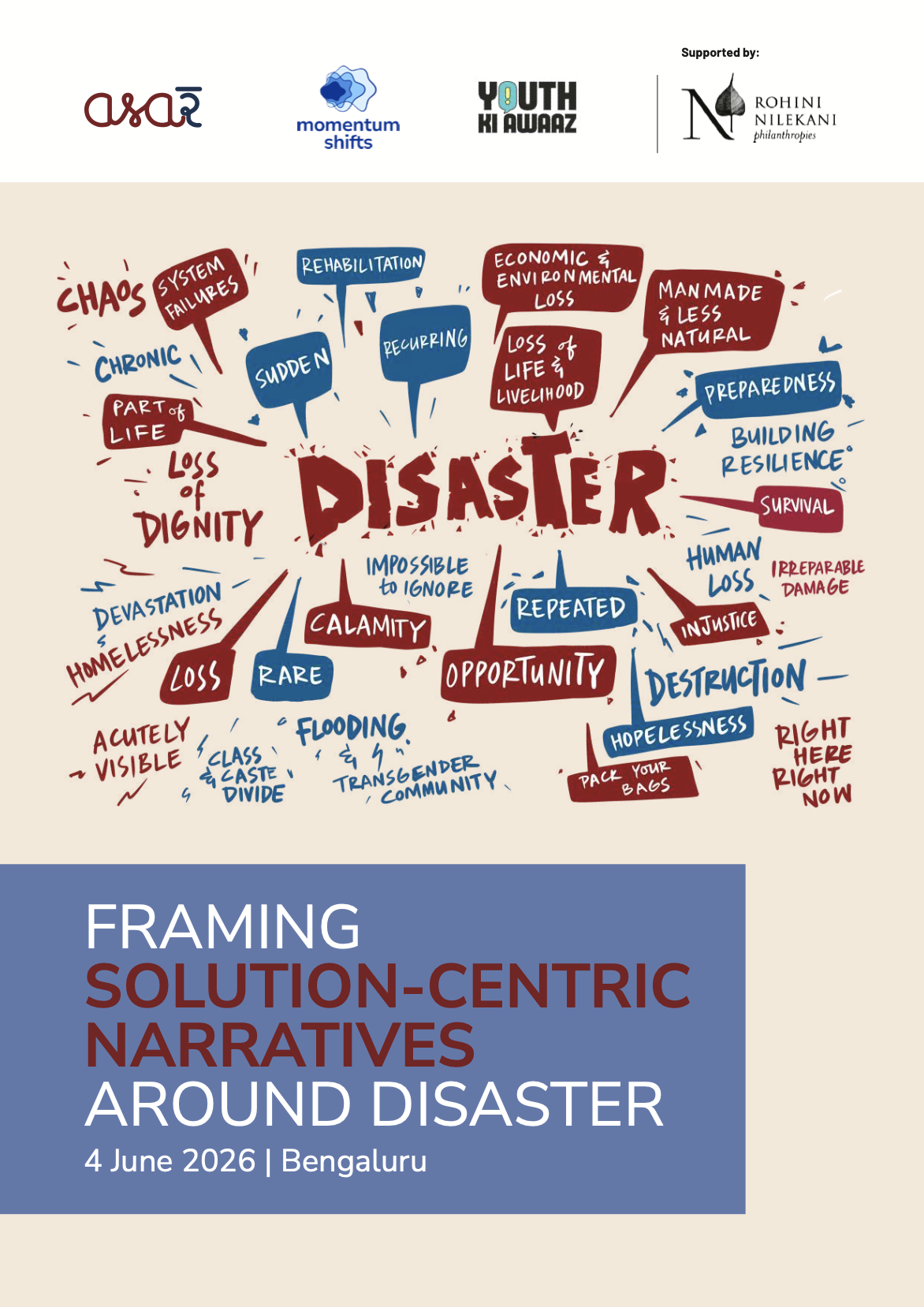
Framing Solution-Centric Narratives Around Disaster

Disaster communication shapes how people prepare for, respond to, and recover from disasters. Nearly 85% of India’s districts face recurring risks from floods, droughts, cyclones, heatwaves, and landslides. Yet public conversations still focus mainly on the immediate impacts after a disaster strikes.

Framing Solution-Centric Narratives Around Disaster presents insights from a convening held in Bengaluru on 4 June 2026. More than 30 journalists, researchers, policy advocates, civil society organisations, and community representatives came together to examine how India communicates disasters across five major hazard types.

Participants identified four important narrative shifts. They encouraged communicators to view disasters as recurring systemic challenges rather than isolated events. They also highlighted communities as first responders instead of passive victims. Another recommendation called for greater attention to human impacts alongside physical losses. Finally, participants urged decision-makers to recognise that development choices often shape disaster outcomes.

Alongside these narrative shifts, the report offers practical recommendations for journalists, researchers, civil society organisations, philanthropies, and governments. It serves as a resource for anyone working to strengthen disaster communication, improve preparedness, and build more resilient communities.


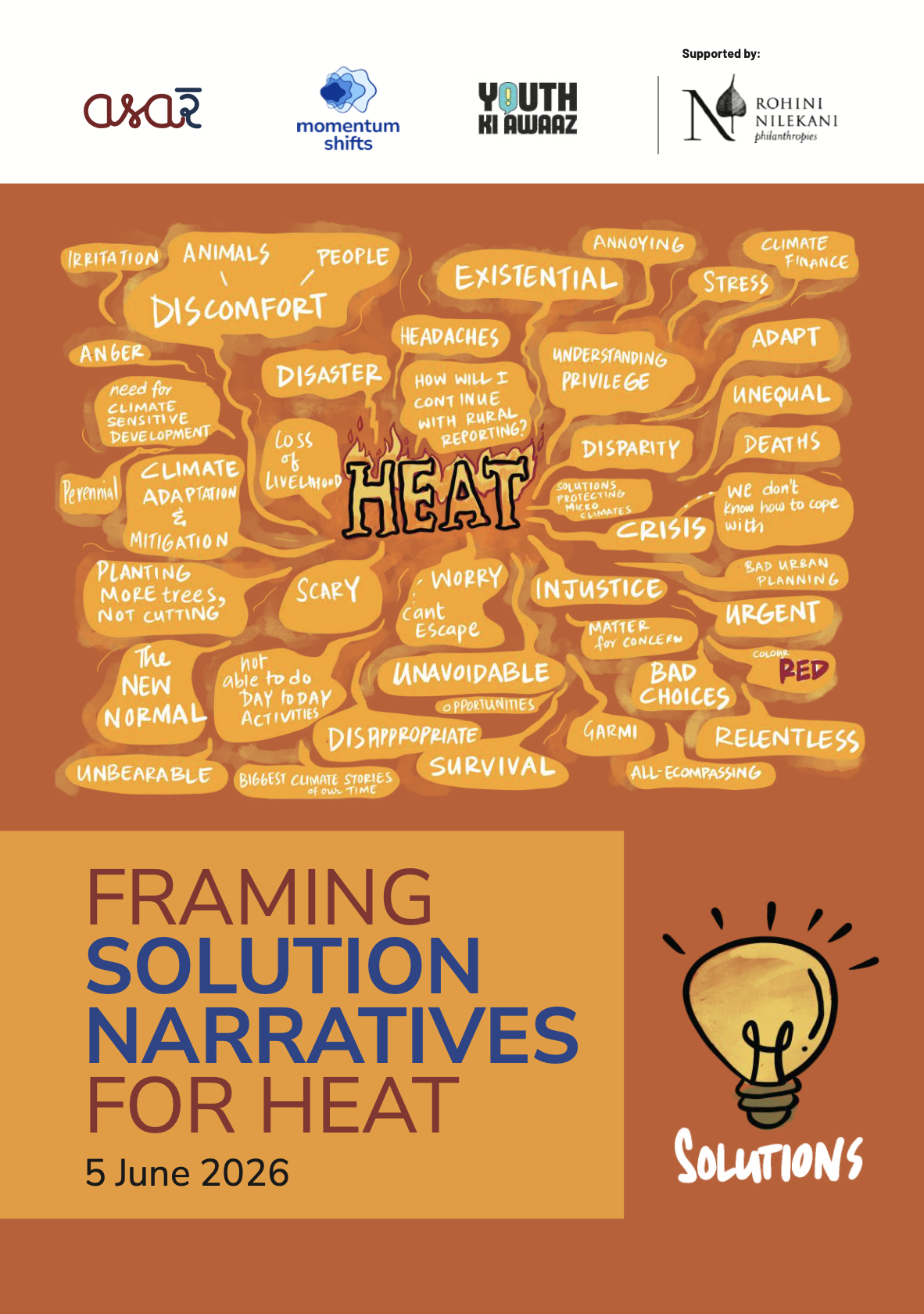
Framing Solution Narratives for Heat

Heat communication has become increasingly important as India experiences more frequent and intense heatwaves. Despite record-breaking temperatures, heat is still widely perceived as a seasonal inconvenience instead of a public health and climate challenge. Stronger narratives can help communities, institutions, and policymakers recognise the risks and respond more effectively.

Framing Solution Narratives for Heat captures insights from a convening held in Bengaluru on 5 June 2026. More than 40 journalists, researchers, policy advocates, communicators, and civil society organisations participated in the discussion. Together, they explored how better heat communication can shape public understanding and support stronger policy responses.

The report identifies several important narrative shifts. It encourages treating heat as a public protection issue rather than an individual burden. It highlights the need for systemic protection for outdoor workers instead of relying only on shade. It also recommends viewing heat as a year-round climate challenge rather than a seasonal event. In addition, it argues that cooling should be recognised as essential public infrastructure instead of a private privilege.

The report also examines which messages resonate with different audiences, including rural communities, journalists, builders, and policymakers. It concludes with the commitments participants made to strengthen heat communication across sectors. This resource supports anyone working to communicate extreme heat more effectively and inspire action that improves public health and climate resilience.

Air Pollution Across the Indo-Gangetic Plain and Himalayas: A Simplifying Science Media Campaign

This report documents the outreach and impact of Asar’s second campaign under the Simplifying Science programme. Centred on the study, Decadal Shifts in Aerosol Hotspots and Source Attribution over the IGP, North-East India and Himalayas: A 25-Year (2000–2024) Study, published in Atmospheric Environment, the campaign translated complex scientific findings into accessible, evidence-based stories for diverse audiences across India. The research was led by Prof. Abhijit Chatterjee of the Bose Institute, Kolkata, with Mr. Soumen Raul as the principal research fellow.

The study revealed that particulate matter pollution has increased by more than 20% across the Indo-Gangetic Plain, the Himalayan region and North-East India over the past two decades, with pollution from the plains increasingly affecting Himalayan ecosystems. It also highlighted the growing role of biomass burning in driving air pollution, particularly in North-East India, underscoring the need for stronger policy attention beyond urban emission sources.

Working closely with the research team, Asar developed region-specific press materials in multiple languages and disseminated them through an extensive network of media partners. The campaign generated more than 80 stories across 7 languages, reached audiences in 12+ states, secured coverage in over 30 print and 40 digital publications, and achieved an estimated audience reach of nearly 80 million people. This report captures the campaign’s methodology, media outreach and impact, demonstrating how strategic science communication can bridge the gap between research and public understanding.

Moist Heatwaves, Monsoons and Public Awareness: A Simplifying Science Media Campaign

Simplifying Science is Asar’s strategic science communication initiative focused on making climate research accessible, relevant, and actionable for people across India. The programme works at the intersection of climate science, public communication, and regional media, translating complex scientific studies into clear, multilingual narratives that can reach communities most affected by climate impacts.

This coverage report documents the first Simplifying Science campaign, built around the study “Anatomy of Moist Heatwaves in India During the Summer Monsoon Season”, published in Climate Dynamics by researchers from the University of Reading, University of Leeds, the UK Met Office, and IITM Pune. The research highlighted the growing danger of humid heatwaves in India and demonstrated that such events could potentially be forecast up to four weeks in advance.

Working closely with the study’s authors, Asar translated the findings into accessible stories and disseminated them across regional and national media ecosystems in six Indian languages. Over a 14-day period, the campaign generated 43 media placements across print, digital, and broadcast platforms, with an estimated reach of 53–59 million people.