or share via social media

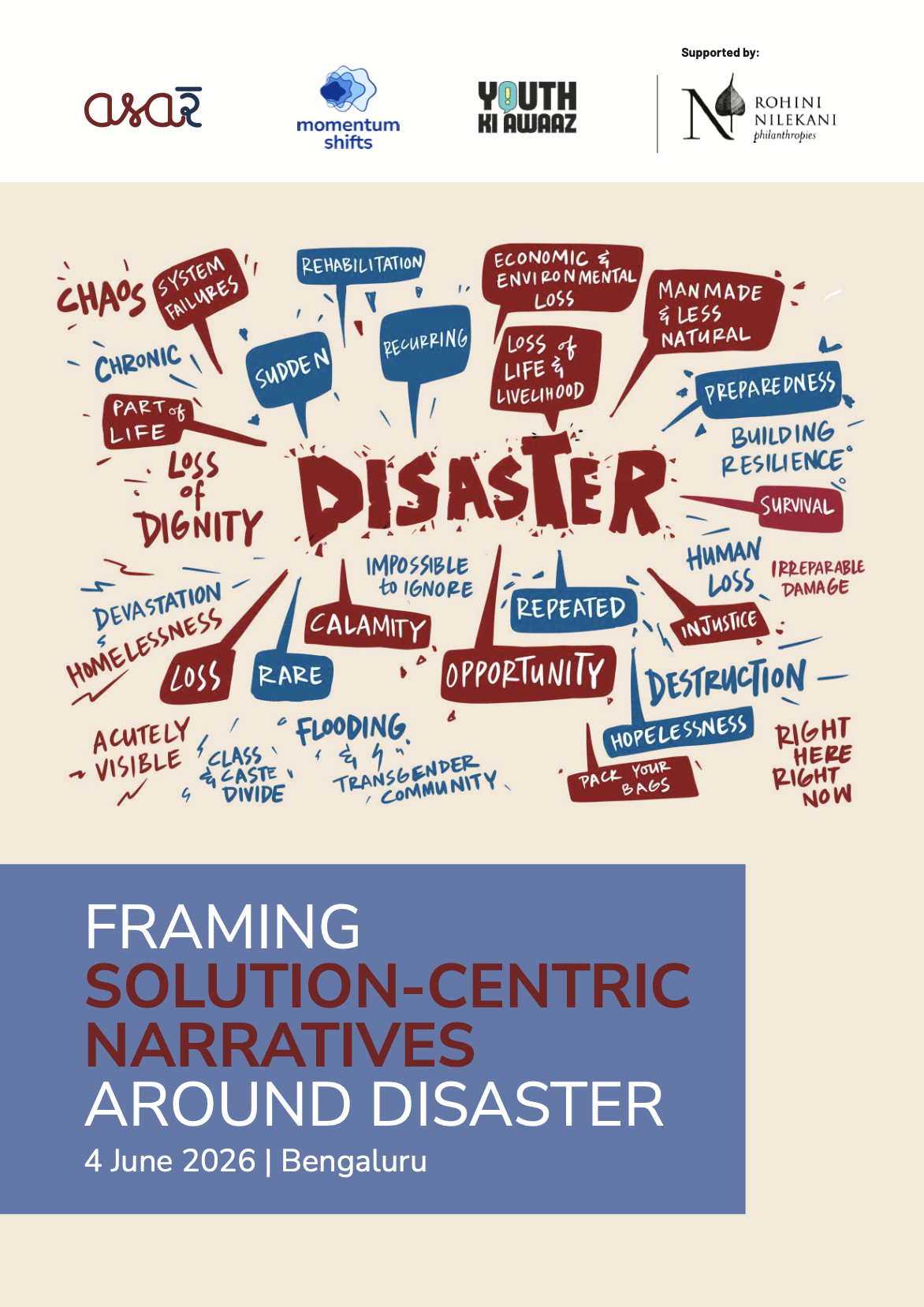
Disaster communication shapes how people prepare for, respond to, and recover from disasters. Nearly 85% of India’s districts face recurring risks from floods, droughts, cyclones, heatwaves, and landslides. Yet public conversations still focus mainly on the immediate impacts after a disaster strikes.
Framing Solution-Centric Narratives Around Disaster presents insights from a convening held in Bengaluru on 4 June 2026. More than 30 journalists, researchers, policy advocates, civil society organisations, and community representatives came together to examine how India communicates disasters across five major hazard types.
Participants identified four important narrative shifts. They encouraged communicators to view disasters as recurring systemic challenges rather than isolated events. They also highlighted communities as first responders instead of passive victims. Another recommendation called for greater attention to human impacts alongside physical losses. Finally, participants urged decision-makers to recognise that development choices often shape disaster outcomes.
Alongside these narrative shifts, the report offers practical recommendations for journalists, researchers, civil society organisations, philanthropies, and governments. It serves as a resource for anyone working to strengthen disaster communication, improve preparedness, and build more resilient communities.