Popup Image

Share this powerful gallery of art and climate.

These paintings speak of survival, resistance, and care. Share this page with those who value community, creativity, and climate justice.

Climate Education in India is Being Reduced to Awareness Messaging. What Can We Do About It? 

Key takeaways:

  • Climate change should be integrated across curricula and syllabi instead of being taught as a standalone subject.
  • Effective climate education develops judgement, systems thinking and the ability to navigate uncertainty, not just awareness of the problem.
  • Learning that is rooted in lived experiences builds greater agency than abstract instruction.
  • India needs climate education that supports both development aspirations and climate resilience without shifting responsibility solely onto young people.
  • The goal is not simply to teach students about climate change, but to prepare them to make better decisions in an increasingly conflicted and challenging world. 

Climate change is perhaps the most consequential challenge of our times. Yet, when the conversation turns to climate education, the instinct is usually to ask whether schools and universities should simply teach more about climate change. This isn’t the correct approach, in my view.

The more useful question is this: How can climate thinking become part of the way we learn across subjects, rather than another subject added to an already stacked curriculum?

To be clear, I am not an educator, curriculum designer or pedagogy expert. I come at this issue from the edges, as someone with an interest in climate change and the systems it operates in; as someone invested in how public institutions shape long-term action.Working at Asar has given me the space to stay curious without always needing immediate answers. It has also created opportunities for me to engage closely with younger people. These conversations have often been thoughtful, sometimes empathetic, and occasionally a bit disengaged. .   difficult work..  Not because students don’t care, but because they are already overwhelmed by crises, narratives and expectations. Simply keeping up with the conversation can feel like an inordinate amount of work.

My perspective is influenced in no small part by my early experiences in informal spaces. For instance, as part of the Student Sea Turtle Conservation Network, or volunteering with the Tamil Nadu Forest Department across Guindy National Park, Vedanthangal, Pichavaram, and the Gulf of Mannar. They always felt like active engagement and that’s maybe that’s why the things I learnt from them have stayed with me. Not everything useful comes with a syllabus.

Climate change  is not another topic to squeeze into an already crowded curriculum. It is the context in which many future decisions about cities, finance, agriculture, health, infrastructure and governance will be made. This is why  climate perspectives and thinking should be woven across all educational disciplines, instead of the standalone, “awareness messaging” approach with which the subject is currently taught. This idea surfaced again during a recent discussion hosted by The Hindu on climate education. One observation from my colleague Pallavi has stayed with me: that climate education cannot remain limited to explaining impacts. It must also help people make decisions in conditions of uncertainty. That sounds obvious, but translating it into classrooms is far more difficult than it appears. It requires rethinking incentives, teaching methods and assessment, not simply adding new content.

In a recently co-authored piece on climate and culture, I reflected on how cultural shifts quietly enable system-level change. In that sense, climate education is as much about shaping “ways of seeing” as it is about building theoretical knowledge. 

There is another important balance to hold in the Indian context. Per capita emissions remain modest, while development needs remain significant. Climate education should not shift responsibility disproportionately onto young individuals, especially when individual action alone is insufficient without collective and institutional change. Climate education should not place disproportionate responsibility on young people to solve a crisis largely driven by structural factors and institutional decisions. Individual choices matter, but they are insufficient.

At the same time, today’s students will become tomorrow’s planners, architects, engineers, economists, teachers and public officials. Their education will shape how they interpret growth, risk and opportunity.  A recent paper by my colleagues Arjun and Priyanka notes that education is not Climate Neutral. More education does not automatically mean better outcomes because it depends on what and how we choose to learn. In fact, emerging evidence suggests that unless education is oriented to a climate-impacted reality, it risks missing the opportunity to shape how future decisions get made. 

Agency is equally important. Through our own engagement and surveys, we have found that climate learning often creates anxiety when it remains abstract. But when it connects to lived environments, local challenges and opportunities for experimentation, it builds confidence alongside concern. It transforms climate change from something that happens to people into something they can engage with collectively.

This distinction is important because much of climate education still stops at awareness. Awareness is necessary, but it is also the easier part. Translating awareness into capability, participation and collective action is far more difficult. Increasingly, research suggests that climate education should not simply be viewed as a communication tool. It may itself become an important climate mitigation and adaptation strategy by shaping how future generations make decisions.

There are already encouraging signs of this shift, as my colleagues have noted. In Tamil Nadu, the state’s Climate Mission is beginning to integrate climate learning across more than 11,000 government schools. In Bengaluru, the Bengaluru Climate Action Cell is connecting city-level climate priorities with schools and students. Across Maharashtra and elsewhere, educator-focused programmes are helping teachers build interdisciplinary approaches to climate learning. While these initiatives remain initial experiments, they demonstrate a growing recognition that climate education is about application, not just awareness.

There is also humility in recognising that the future will not be designed entirely using today’s assumptions. Every generation works with the knowledge available to it. The next generation will inherit different technologies, different uncertainties and different possibilities. Our responsibility is not to prescribe every answer, but to equip them to ask better questions.

At its best, climate education creates space for young people to become thinkers, collaborators and architects of the future rather than passive recipients of information. It is less about instruction than about enabling curiosity, judgement and imagination.

Perhaps that is why I remain convinced that climate education should not become another school subject. It should become another way of seeing the world.
Why is Climate Anxiety Causing Young People to Feel Powerless?

Key Takeaways

  • Young people in India are increasingly aware of climate change, but that awareness is often accompanied by fear, helplessness, and emotional exhaustion.
  • Climate communication today is built around urgency and catastrophe, but offers very few collective spaces for emotional processing or action.
  • Current systems — especially media and education — create awareness without agency, deepening feelings of isolation and powerlessness.
  • Climate education must move beyond information transfer and create spaces for emotional literacy, reflection, dialogue, and collective engagement.
  • Climate anxiety is not only an individual mental health issue, but also a response to larger social, ecological, and political systems.

In 2024, while conducting a survey on the Perception of First Time Voters on Climate Education in India along with the Climate Educators Network (CEN), we at Asar’s  Climate and Education team noticed a pattern.

Among 1,600 young participants from four states, the majority were aware of the climate crisis, but their awareness wasn’t translating into a sense of agency. To the contrary, they reported feeling emotionally overwhelmed, uncertain about the future, and were unable to articulate what meaningful action might look like for their generation. Words like “hopelessness”, “helplessness”, “anxiety” and “anger” were used recurrently.

Over the next year, our findings formed the basis  of several conversations that led to the webinar Understanding Climate Anxiety: A Conversation and the launch of Everyday Feelings, Everyday Climate, an online tool to help young people reflect on, and articulate, their thoughts about climate change.

The webinar affirmed our earlier observations. Participants repeatedly spoke about feeling overwhelmed, isolated, exhausted, angry, and “stuck”.

Why are young people feeling overwhelmed by climate change?

One reason  could be how climate communication is structured. Young people today  consume climate news and content almost continuously — from heatwaves to floods, cyclones, drought, crop losses, deteriorating air quality indices and the doom-and-gloom of social media posts predicting ecological collapse.

Climate communication has been  built around urgency, catastrophe, and alarm. While this has succeeded in making the issue visible and immediate, it has also exacerbated people’s emotional burdens.  


The gap between awareness and agency
Current communications systems, especially education and media, are designed to deliver information and drive viewership, not elicit action. Climate change is often taught as data, policy, or science, while the press peddles catastrophe.

There are very few collective spaces where young people can process their feelings and engage meaningfully with the fundamentals of the issue

 As a result, their emotions tend to become individualised. Anxiety becomes “your stress”. Hopelessness becomes “your inability to cope”. The appropriate response to the planetary crisis becomes “doing your bit”. Reduce waste, change consumption, recycle more; but the crisis feels larger than what any one person can meaningfully influence. Without spaces for collective reflection, solidarity, or action, awareness can constrain rather than liberate.

Climate anxiety is not only an individual problem

This reflects a larger issue in modern approaches to mental health, which run the risk of hyper-individualising human suffering, framing distress primarily as something located within a person rather than something which is shaped by systems.

Treating climate anxiety only as a personal mental health issue risks obscuring the systems producing that distress in the first place. These systems include unequal urban infrastructure, insecure livelihoods, extractive development models, weak public health systems, and climate policies that often exclude young people from decision-making.

However, this does not mean that personalised care is not important. In fact, one of the strongest threads that emerged during the webinar — especially from the mental health practitioners — was the importance of self-compassion. Participants were encouraged to be gentler with themselves in the face of grief, helplessness, and overwhelm.

The webinar also taught us that many people are longing for a sense of community. 

This is where we envision climate education playing an important role; in creating room for emotional literacy, reflection, dialogue, and collective engagement.

Importantly, this is not just about turning “negative emotions” into “positive emotions”, or forcing optimism in the face of the crisis. Negative emotions are not necessarily a barrier to engagement – they are important signals on how people respond to witnessing injustice, uncertainty, or loss. 

Our tool, Everyday Feelings, Everyday Climate, emerged from this thought process. The tool does not attempt to diagnose or “fix” climate anxiety, but rather creates spaces for reflection through prompts, storytelling, metaphors, music, and lived experiences. It asks young people not only what they think about climate change, but what they feel — and whether those feelings become different when recognised collectively. 

Why Budget Allocation Matters for Climate Literacy in Tamil Nadu

The recent budget allocation of Rs 24 crores for climate literacy in Tamil Nadu is more than just an item in the state budget. It is a powerful statement of intent. Without budget allocation, even well-meaning policies have the risk of being mere ink on paper, failing to reach classrooms, students, and communities that they could empower.

Take Kerala’s Pothuvidyabyasa Samrakshana Yajnam (Public Education Rejuvenation Campaign or Education Mission) for example. Backed by a substantial investment of Rs 500 crore in the 2016-17 budget, the campaign upgraded over 1,000 schools to international standards, sparking a surge in enrollment. An estimated 9.34 lakh children enrolled additionally in public schools from classes 1 to 10 during the 2021-22 academic year.

Similarly, Tamil Nadu too has shown that the investment in education yields results. The ₹200 crore allocated in 2021 to tackle Covid-induced learning loss paved the way for Illam Thedi Kalvi (Education at the Doorstep), reaching 3 million children across 2 lakh centres. The impact is undeniable: according to an assessment report of the scheme by the state planning commission, 85% of parents report improved learning outcomes, and 74.1% said their children are happier learners. The scheme also created  employment for 2 lakh women, 91% from SC, ST, BC, and MBC communities, who gained skills and recognition through training and honorariums. 

If Tamil Nadu’s climate literacy drive is to succeed, it will need this same budgetary commitment to turn policy on paper into action on the ground.

Why Does Climate Education Matter

Tamil Nadu has consistently demonstrated its commitment to tackling the climate crisis, with initiatives like the Tamil Nadu Climate Change Mission, the Green Tamil Nadu Mission, and the Tamil Nadu Wetland Mission. The state’s leadership in renewable energy is equally impressive, harnessing 800,000 MW of wind and over 47 MW of solar power.

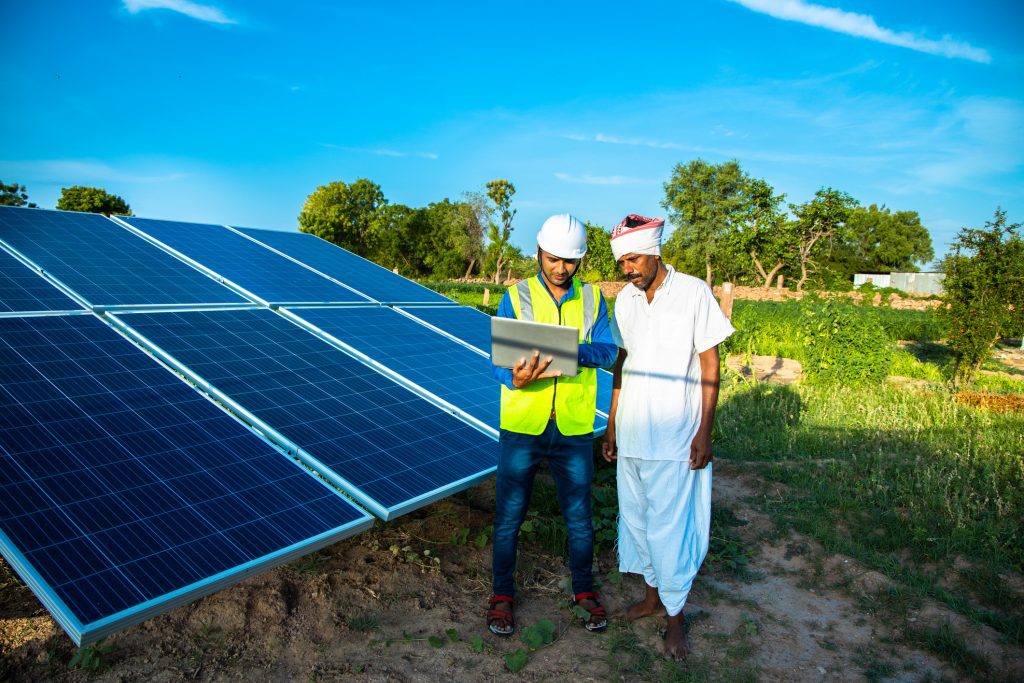
young male technician worker wearing green vests and helmet checks the maintenance of the solar panels and talking about installation of new solar panel with farmer at field, technology in agriculture

For all these policy level efforts to be fruitful, it’s important that they resonate with the common public. Climate education could act as a bridge between policy and action. According to UNESCO’s State of Education Report 2023, climate education is defined as a comprehensive, multidisciplinary approach that teaches students and youths about climate change, including its causes, impacts, solutions, and how to live sustainably and reduce environmental impacts. A robust climate education approach should equip students with the understanding of the climate crisis (knowledge), encourage them to reflect their own context (values), ask questions and ultimately empower them to engage with the communities and relevant officials to take collective actions (skills).

A baseline study by the Tamil Nadu Climate Change Mission found that while half of the students had heard of climate change, over 73% lacked a scientific understanding of the concept. Another survey revealed that while 82% of first-time voters recalled learning something new about climate change in school, much of this education was superficial, focusing on facts rather than solutions.

This is why the recent ₹24 crore budget allocation for climate literacy is significant. However, as it evolves the next step is to deepen, go beyond awareness and expand this into climate education. 

Challenges in Implementation

One key challenge is teachers’ capacity to teach climate change. Training needs to go beyond one-off workshops or sticking to textbooks. Teachers should be able to link climate change to their students’ local realities, weave it into topics like water, waste, energy, and social justice, and make it relevant across subjects. They should also help students move from awareness to action, building both knowledge and emotional resilience. This demands continuous, collaborative support.

Another challenge is bridging the gap between school and higher education, especially from a research perspective. Universities and research institutions produce valuable studies on climate risks and solutions, but this knowledge often remains in academic circles. Schools rarely tap into it. Bridging this gap could involve partnerships where researchers help teachers translate complex findings into engaging, hands-on projects.

For example, a project on water scarcity might combine science, social justice, and data analysis, making learning meaningful and rooted in students’ experiences.

The third challenge is coordination among  different departments. While the environment department allocated the budget, implementation involves SCERT, Samagra Shiksha and other directorates of the school education department. With the fund, a coordination committee can be formed with deputed staff from each department where they can meet regularly, co-plan and take decisions.

This Fund Helps Reimagine Climate Education

This fund creates an opportunity to seed a regional and a teacher-led ‘networked’ model for climate education. It can be used to  build a regional collective of diverse experts – school teachers, climate practitioners, NGOs, academics in science and social science, communicators, writers and storytellers – who could co-design resources and curriculum, pilot context-based curriculum in schools, and mentor teachers continuously. 

This network could help in addressing the three challenges: support teachers in building their expertise in climate change to interpret locally, integrate it across subjects and guide students; bridge the gap between school education and evolving climate knowledge from higher education institutions as the network itself should have academics from higher education institutions; and work across departments to coordinate efforts. 

For example, Nagapattinam, one of the most vulnerable districts on climate risks in the state as per the report by Anna University’s Climate Studio, could develop a student-led mangrove restoration project. Initially, a regional climate education network could be formed comprising school teachers, a representative from NGO/CSO working on environmental conservation, a professor from higher education space and a government official from TN Coastal Restoration Mission. The network could design the project to ensure it is relevant, place-based and fun for children. It would also monitor the project’s impact on children’s knowledge, skills and values, and mentor teachers on guiding them.  

The current budget allocation could establish this ‘collective’ into a vibrant ecosystem that not only builds capacity but also promotes innovation, collaboration, and long-term ownership, reimagining how climate change is taught and acted upon in Tamil Nadu schools.