or share via social media
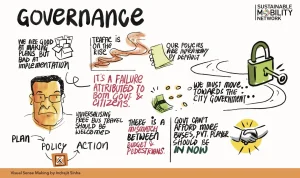

The success of India’s transition to sustainable mobility depends, of course, on the policies enacted by the Centre and states, but more crucially on how effectively these policies are translated into action – across departments, sectors and geographies.
“Bringing state leaders, industry partners and ecosystem stakeholders together at the Sub-National EV Leadership Forum was an important reminder that progress will depend on how knowledge and expertise are shared between people and institutions.”
What does it take to move from policy to implementation?
In September, representatives from 13 states and Union Territories met in Goa to discuss the challenges of advancing electric mobility. The group included officials from transport, environment and climate departments, NITI Aayog representatives, EV100 members, vehicle manufacturers and other industry representatives.
Climate Group convened the meeting with the Sustainable Mobility Network (SMN), a collective of more than 25 organisations working to make mobility cleaner, safer and more inclusive. The aim was to connect state experiences and examine practical questions: how can charging infrastructure be deployed at scale? How can electric buses and commercial vehicles become viable? What will help businesses and consumers make the switch? How can government departments and other actors work together to address barriers?
EV adoption is about more than EV policy
State EV policies now extend beyond purchase incentives to cover charging infrastructure, manufacturing, skills, financing and institutional arrangements. By December 2025, 26 of India’s 36 states and Union Territories had an active EV policy. More than 29,000 public EV charging stations had been installed by June 2025. The challenge now is to address the barriers that continue to limit adoption.
A charging station depends on land, electricity connections, tariffs, approvals and a viable operating model. Grid capacity and coordination with electricity distribution companies can be as important as the charger itself. Businesses considering electric delivery vehicles must consider vehicle costs, financing, charging access and daily utilisation. Public transport agencies face questions around vehicle specifications, procurement, operating costs and access to finance. These challenges are interdependent. Investments and infrastructure need the conditions to operate and remain viable.
At the Goa meeting, participants discussed the total cost of ownership of electric vehicles, lenders’ concerns about battery residual values, the difficulty of financing vehicles when future resale values are uncertain, and gig-economy workers’ access to credit. Viable financial models cannot resolve these issues alone. The transition needs closer engagement between government, industry and finance.
No single model for every state
The discussions underlined the importance of local context. A state with an established automotive manufacturing base may prioritise supply chains and investment. A state with hilly terrain, dispersed settlements or a strong tourism economy may face different questions about connectivity, vehicle choice, charging locations and operating models. States with large public transport systems or significant last-mile delivery markets may choose to focus on those segments.
The purpose of state-to-state learning is not to identify a single model policy or rank states. It is to understand what has worked, why it worked and what might be adapted elsewhere. A financing model or institutional arrangement may offer a useful starting point even if it cannot be transferred wholesale.
The Goa convening gave participants space to compare experiences, question peers and discuss what had not worked. Such exchanges can help states distinguish between an approach that looks promising in principle and one that suits their circumstances.
The value lies in what participants take back: a different perspective, a useful contact or a clearer understanding of what an approach requires. Learning does not mean every state arriving at the same answer, but in building practical cooperation from experiences that would have otherwise remained isolated.
Connections matter as much as the conversation
Climate Group works with businesses and governments to accelerate climate action. EV100 brings together companies committed to electrifying their fleets, while RE100 engages businesses to source 100% renewable electricity. The Under2 Coalition connects state and regional governments working to advance climate action. As transport electrifies, these networks can help link business experience and demand with the realities of policy design and implementation, including the electricity needed to power electric vehicles.
The Sustainable Mobility Network connects organisations working across public transport, electrification, active mobility, research, policy, strategic communications, engagement and financing. Its value lies in bringing complementary expertise to the questions states are trying to resolve. That includes connecting state officials with industry’s operational knowledge, research evidence and the perspectives of organisations working on access, affordability and inclusion.
Over time, these exchanges can build the trust and relationships needed for more open conversations and collaboration. They can also help state officials find the expertise, evidence and partners they need.
What happens next?
The next step is to continue the exchange on vehicle economics and financing, access to expertise, and implementation challenges that require action across government, industry and other partners. States must help shape this agenda: their priorities differ, and collaboration does not require them to adopt the same approach.
No single meeting can provide all the answers. The value of the Goa convening will lie in whether the relationships and shared learning enabled states to solve problems and adapt.

Be the first to hear about new initiatives, community voices, and grounded climate solutions.