Popup Image

Share this powerful gallery of art and climate.

These paintings speak of survival, resistance, and care. Share this page with those who value community, creativity, and climate justice.

What does Tamil Nadu’s New Budget Mean for Climate Action?

Governments have little choice but to spend money on relief measures when climate disaster strikes. In this piece, I analyze Tamil Nadu’s Revised Budget Estimates and Agriculture Budget – presented earlier this month – to illustrate how the state is trying to move beyond merely responding to disasters.

The state’s budget shows spending across three levels: responding to immediate climate shocks (reactive), reducing future vulnerability (preventive) and changing some of the systems that produce emissions and risk (transformative). These distinctions are important. 


For one, spending money to manage the outcomes of a particular disaster does not make citizens less vulnerable to subsequent disasters. Secondly, building resilience requires upgrading infrastructures of energy, transport and trade that are responsible for the climate crisis. And thirdly, transitioning to cleaner technologies may adversely impact workers and communities.

The state’s newly-elected Tamilaga Vettri Kazhagam government’s largest investments are directed towards infrastructure for energy transition, but there are concerns about implementation, ecological outcomes and the real beneficiaries of these investments.

Scenario 1: Reactive Governance (pays for damages)

The most immediate climate-related spending in the budget is directed at managing the worst outcomes of bad weather. Tamil Nadu has allocated Rs. 340 crore from the State Disaster Management Fund to secure drinking water and cattle fodder during dry spells, and the implementation of the Tamil Nadu Agricultural University’s District Agricultural Contingency Plan across 12 districts affected by weather anomalies.

A separate Rs. 111 crore project, with Rs. 55 crore in initial funding, will implement drought interventions in 75 villages in Virudhunagar, Ramanathapuram and Sivagangai districts. Rs. 331.17 crore has been allocated for crop damage compensation and the Uzhavar Pathukappu Thittam, a social security scheme for elderly farmers and agricultural workers in Tamil Nadu.

Several other climate responses are also focused on agriculture:

  • Rs. 134.83 crore for the Kuruvai Package Scheme, including support for direct seeding, liquid bio-fertilisers and seeds after a weak southwest monsoon and delays in releasing water from the Mettur Dam.
  • Rs. 648.55 crore for crop insurance, covering 36 lakh acres across 37 districts against weather-related yield losses.
  • Rs. 31 crore for the Kaalnadaigal Kaappom livestock insurance scheme, alongside more than Rs. 120 crore to upgrade veterinary hospitals and expand mobile services.

These allocations show the growing cost of creating safety nets for people whose lives and livelihoods are affected by climate change. The funds reach their homes and farms after a crisis has already reared its head.

Scenario 2: Preventive Governance (builds resilience before the next disaster)

In comparison to Scenario 1, more funds have been allocated for reducing climate vulnerability. Along Tamil Nadu’s coast, the budget allocates Rs. 322 crore for the TN-SHORE project, including Rs. 40 crore to restore 2,500 hectares of mangroves across eight coastal districts. Mangroves provide protection against coastal erosion and cyclonic impacts while storing carbon and fostering biodiversity. This is preferable to concrete sea walls.

In cities, Rs. 2,117 crore has been allocated for the Chief Minister’s Integrated Urban Development Mission. The budget’s focus on Chennai includes blue-green infrastructure, strengthening retaining walls and improving discharge capacity around water bodies.

The challenge, however, is not simply to move more water out of cities. Preventing urban flooding hinges on the protection of wetlands and land use reform.

The budget details other smaller investments in ecological systems:

  • Rs. 25 crore for feasibility studies on reducing sewage and industrial pollution in the Cauvery, Vaigai and Tamiraparani rivers.
  • Rs. 20 crore for studies on ecological restoration and barrages in the Cauvery delta.
  • Rs. 122.51 crore for the Tamil Nadu Soil Fertility Mission in 2026-27, including support for green manure, multi-grain seeds, Soil Health Cards, vermicompost and liquid bio-fertilisers.
  • Rs. 7.35 crore for crop protection and ecological restoration measures, including eco-friendly wild boar repellent, solar-powered fencing and the removal of invasive Prosopis juliflora.
  • Rs. 4,025.63 crore for canal restoration and Rs. 125 crore for desilting 5,955 kilometres of rivers and canals.
  • Rs. 785 crore for micro-irrigation, covering 2,22,794 acres through drip and sprinkler systems.
  • Funding for 500 new farm ponds and the desilting of 500 existing ponds.
  • Rs. 10 crore for tarpaulins for 43,500 farmers, protecting harvested crops from unseasonal rain.

Instead of disaster relief, these expenditures focus on soils, water systems, coastal ecosystems and farm-level infrastructure to minimise exposure to climate change related shocks. As with Scenario 1, there is still the question of follow-through and scale. Several river-related interventions are still at the feasibility-study stage. These need to pave the way for actual restoration and pollution-control, in future budgets.

Scenario 3: Transformative Governance (systemic decarbonisation and social equity)

The most substantial allocations in the budgets are towards transformative governance: changing how energy is produced and moved, how people travel, how industries operate, how livelihoods are protected etc.

A just transition for workers

One of the smaller allocations is also one of the more interesting. Rs. 3 crore has been allocated to train 12,500 traditional internal combustion engine mechanics in electric vehicle and battery maintenance.

The amount is modest, but the principle is significant. An energy transition can disrupt livelihoods if workers whose skills are tied to fossil-fuel technologies are left behind. Training existing mechanics for electric mobility acknowledges that decarbonisation is also a question of employment and economic security.

Preparing the grid for renewable energy

The largest transformative investments are in electricity infrastructure. Tamil Nadu is accelerating investments to meet projected peak power demand of 37,000 MW by 2035-36.

Major projects include:

  • The Coimbatore-Ariyalur transmission line: Rs. 4,000 crore.
  • The Virudhunagar-Coimbatore transmission line: Rs. 1,640 crore.
  • Chennai ultra-high-voltage grid upgrades: Rs. 1,390 crore.
  • Green Energy Corridor Phase II: Rs. 1,187 crore.
  • Green Energy Corridor Phase III: Rs. 6,884 crore.
  • The Vellimalai Pumped Storage project: Rs. 5,050 crore.

The state is also drafting a Battery Energy Storage Systems policy. These investments recognise a basic challenge of the energy transition: adding renewable generation is not enough if the transmission grid and storage systems cannot manage it.

Cleaner transport and access to new technology

The budget allocates Rs. 500 crore to prepare depots for 1,000 new air-conditioned electric buses in Chennai. It also includes Rs. 50 crore for 20,000 public EV charging stations and Rs. 5 crore to support charging infrastructure in residential apartment complexes.

For solar energy, the budget provides Rs. 23.06 crore for standalone solar-powered pumpsets for 1,000 off-grid farmers and Rs. 50 crore as a top-up to the PM Surya Ghar scheme, supporting domestic consumers to install rooftop solar.

These measures could reduce dependence on fossil fuels. But access remains an important equity question. Who can afford an electric vehicle, install rooftop solar or benefit from new charging infrastructure? Public transport, agricultural energy and targeted subsidies may therefore matter as much as technology deployment itself.

Agriculture, ecology and low-carbon livelihoods

The transformative approach also extends to agriculture and rural livelihoods. The budget includes Rs. 16 crore for the Tamil Nadu Palmyra Development Corporation, Rs. 63.81 crore for the Tamil Nadu Millet Mission and Rs. 7.61 crore for the Minor Millet Mission. It allocates Rs. 60 crore for a Green Steel Production Initiative to support MSME steel rolling mills in adopting cleaner technologies.

Other allocations include:

  • Rs. 4 crore for the Vetri Vaanmagal Drone Force, including training for women drone operators and subsidies for trained women.
  • Rs. 60 lakh for demonstrations of Direct Seeded Rice and Alternate Wetting and Drying across 2,000 acres, alongside work on carbon trading verification protocols.
  • Rs. 1,531.38 crore in forestry-related allocations, including support for agroforestry and human-animal conflict management.
  • Rs. 17.70 crore for an Agroforestry Scheme covering 12,500 acres of fallow land.
  • 35.51 lakh tree seedlings for farms under the Green Tamil Nadu Mission.
  • Rs. 8 crore in organic farming incentives and funding towards the proposed Nammalvar Diploma College for Organic Agriculture.
  • Rs. 1 crore for research at Sandiyur KVK in Salem on converting poultry waste into organic fertiliser pellets.

Tamil Nadu is spending roughly Rs. 1,700 crore on responding to immediate climate-related shocks and around Rs. 7,600 crore on preventive resilience. The largest share, nearly Rs. 19,000 crore, is directed towards longer-term systemic change, particularly electricity infrastructure, renewable energy integration and transport electrification. With total estimated revenue and capital expenditure of approximately Rs. 4.62 lakh crore in 2026-27, these climate-linked allocations account for roughly 6% of the state budget.

The categorisation is not exact. Many budget allocations serve multiple purposes, and not every rupee spent on a transmission line, canal or urban infrastructure project should automatically be counted as climate spending. 

The key question is whether these investments reduce vulnerability. Will restored mangroves strengthen protection for coastal communities? Will urban flood infrastructure benefit the neighbourhoods most exposed to extreme rainfall? Will workers be able to find secure livelihoods as older industries change? Will ecological studies lead to long-term restoration? And who will have a say in deciding how this transition unfolds?
Everyday Mobility in Tamil Nadu: More Than Just Transport 

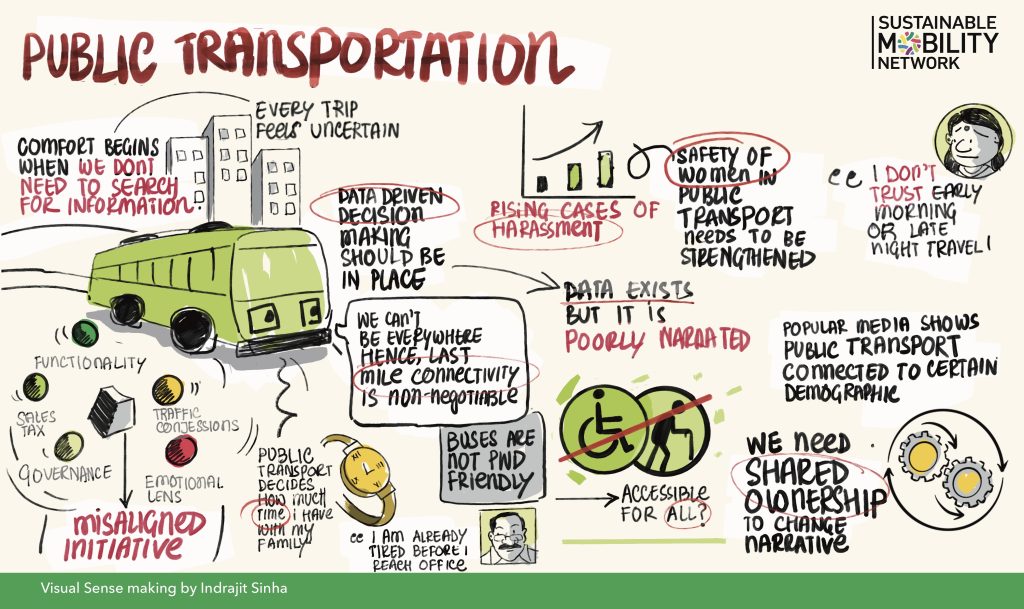
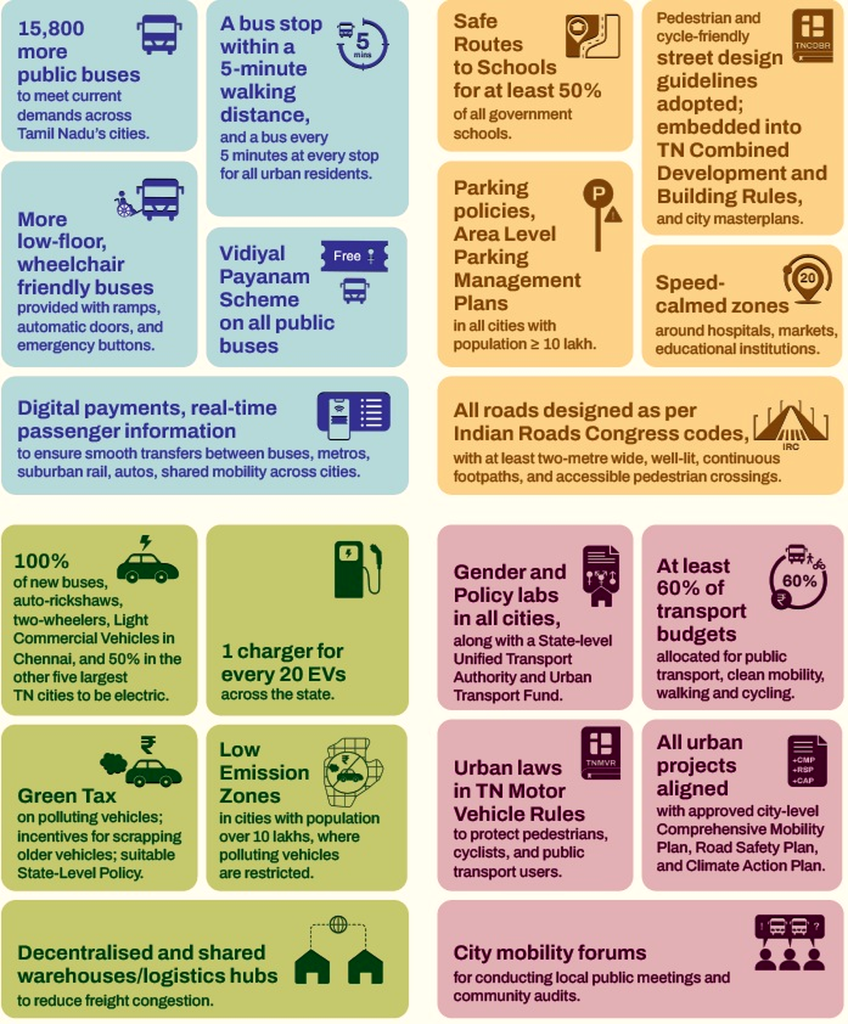
Somewhere between home and work, the walk to a bus stop, crossing a street, a footpath that narrows or disappears without warning, or the approach to a suburban rail or metro station, you learn a lot about a city. You begin to see who moves with relative ease and who has to plan every step. These everyday signals sat at the centre of a conversation in Chennai, when a group of us came together to reflect on what it might actually take to make Tamil Nadu’s cities feel future-ready by 2031. This marked the launch of the Tamil Nadu Urban Mobility Charter, shaped through a roundtable anchored by the open collaborative, the Sustainable Mobility Network (SMN). Holding this space for the network were the Institute for Transportation and Development Policy (ITDP) India, Citizen Consumer and Civic Action Group (CAG), Poovulagin Nanbargal and Asar.

When Mobility Stops Being Technical

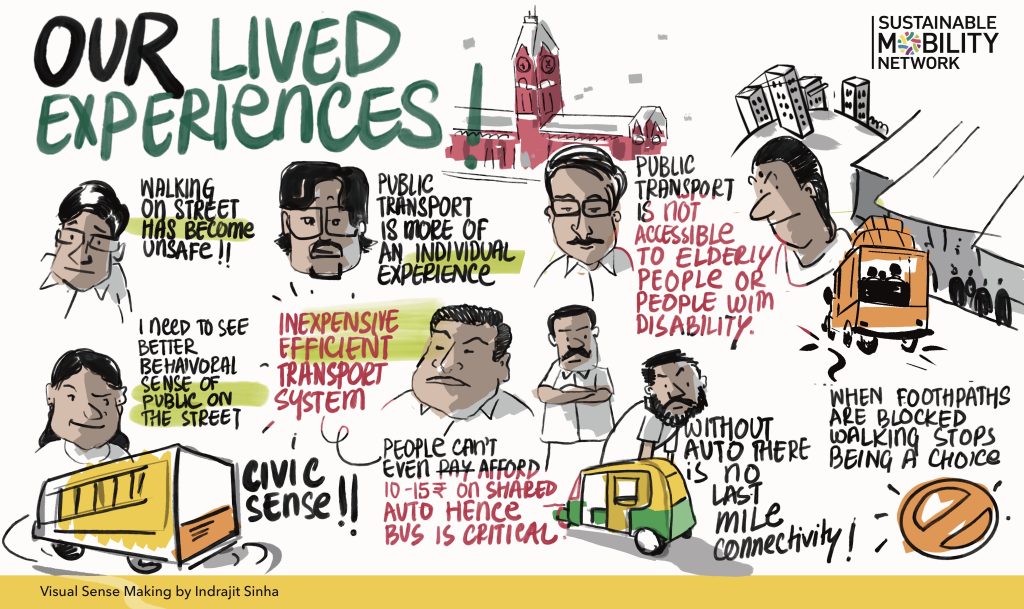
What became clear fairly early is that mobility in Tamil Nadu is not just a technical subject. It isn’t only about engineering, traffic management, climate emissions or policy design, important as all of those are. It has become something personal. When parents stop allowing children to walk or cycle short distances because streets feel unsafe, mobility becomes a safety issue. When people spend hours stitching together unreliable bus journeys, it becomes a question of dignity, inclusion, and livelihoods. When people quietly turn down jobs or educational opportunities because reaching them predictably is hard, mobility turns into an economic constraint. There was also a less discussed but increasingly visible thread emerging: amongst the relatively privileged amongst us, on how mobility shapes where people choose to live and work. For many professionals today, ease of commute sits alongside pay when deciding whether to stay in a city. Cities that steadily drain time, safety, and patience in daily travel tend to lose people over a period of time before they lose investment.

In that sense, mobility is no longer marginal or sectoral. It cuts across safety, livelihoods and the economy, health, climate and access and increasingly shapes how people perceive and judge their cities. For large sections of Tamil Nadu’s electorate, especially women, youth, and those dependent on public transport, climate action and daily mobility are already a lived political issue, whether it is named as one or not.

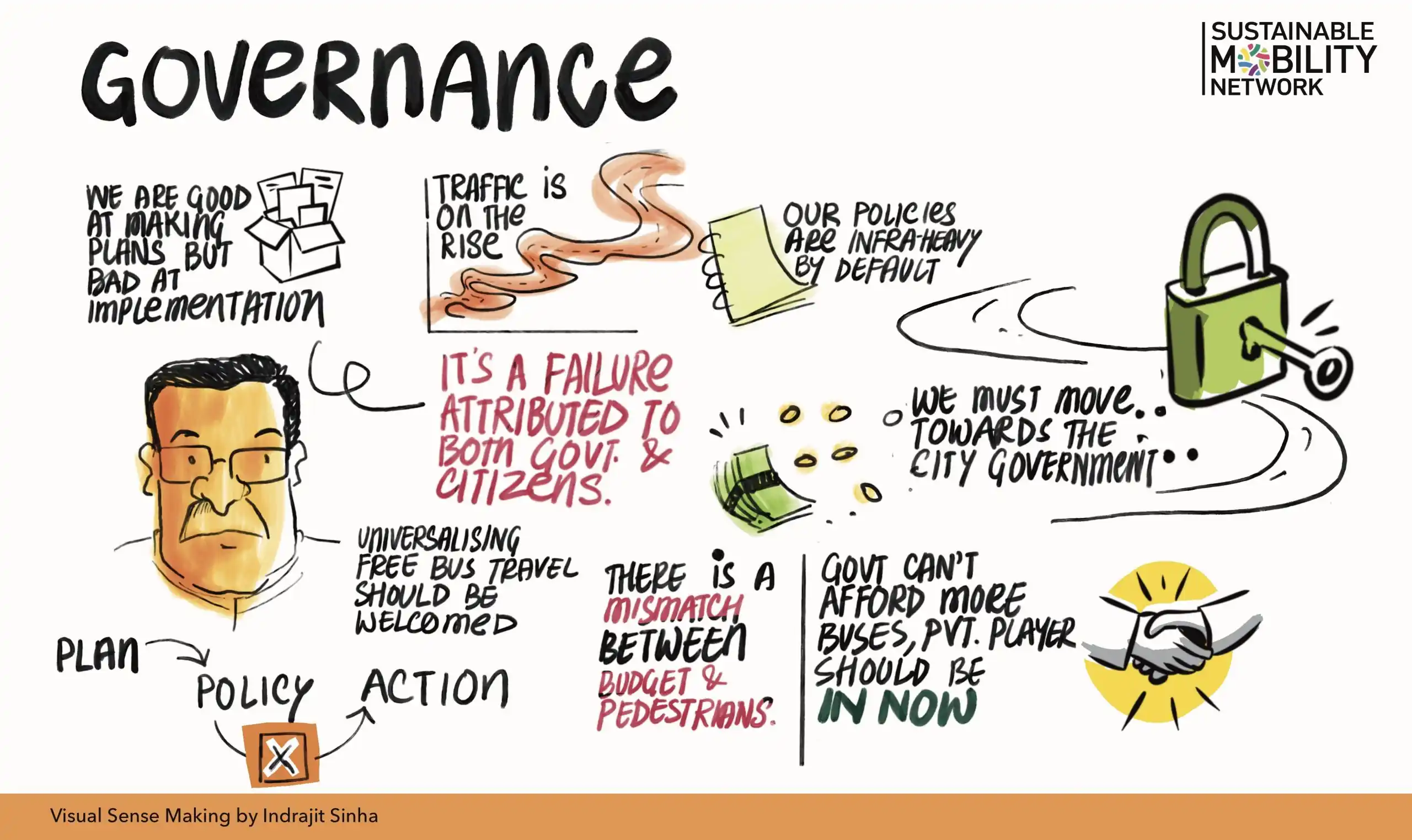
Having said that, it’s important to acknowledge that Tamil Nadu isn’t starting from scratch. Over the past decade and more, the state has taken meaningful steps: from making bus travel free for women and more recently, an electoral announcement on free public (bus) transport across genders, institutionalising and the active functioning of a Unified Metropolitan Transport Authority for Chennai, piloting pedestrian improvements in parts of Chennai, Madurai and Coimbatore, actively upgrading its electric vehicle policy amongst other initiatives. These moves have raised expectations and opened up new conversations, even as gaps remain.

And of course, layered onto all this are climate and public health. Transport contributes up to a third of emissions in major Tamil Nadu cities, with overall emissions rising sharply over the last decade. Pedestrians account for 40-50% of road crash fatalities in cities like Chennai and Coimbatore, making everyday walking one of the more unsafe ways to move around. In Chennai alone, more than fifty school-going children died in road crashes in a single year. When streets make it unsafe for children to walk short distances, mobility becomes a question of basic protection.

An imbalance we’re living with? 

The roundtable itself brought together a wide mix — communicators and storytellers, planners, disability rights advocates, researchers, RWAs, civil society groups, public and para-transit union representatives, and everyday commuters. What stayed through the exchange were not necessarily dramatic failures, but the accumulation of small ones. A senior citizen who has simply stopped walking short distances because footpaths appear and disappear. A wheelchair user injured because bus staff were unfamiliar with how to assist someone using a power chair. These, amongst other reflections together, spoke to why people withdraw from walking, cycling and from public transport

There’s also a paradox here. Across major Tamil Nadu cities, walking, cycling, and public transport (primarily buses) still account for roughly two-thirds of daily trips. Yet, a large share of public funding has gone towards road expansion and flyovers, even though sustainable modes carry most trips. In other words, funding priorities don’t always follow how people actually move.

Clean mobility: crucial but not in isolation

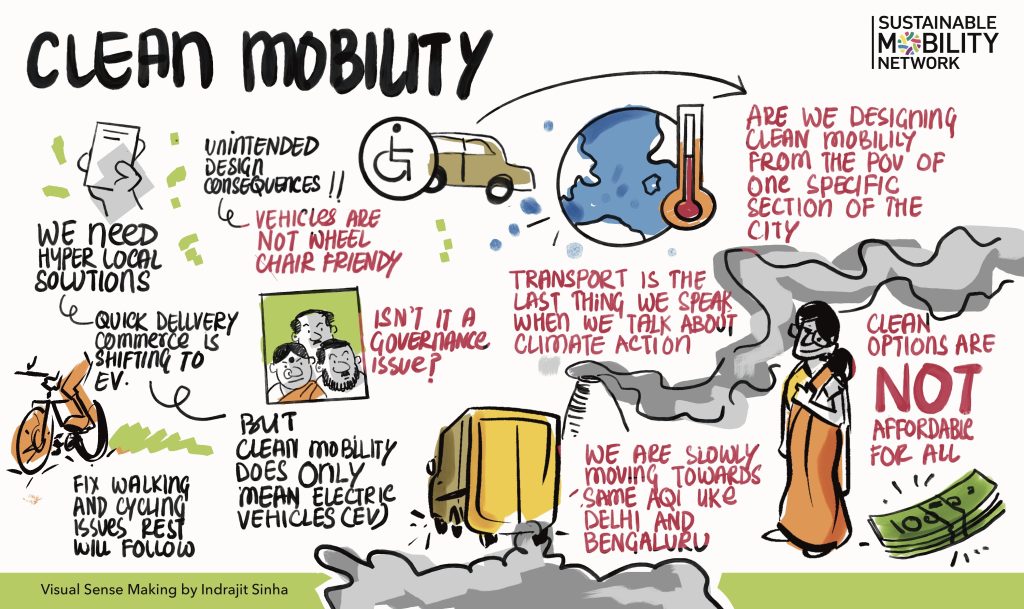
Transitioning to clean mobility, an area where Tamil Nadu has shown intent and action,  featured prominently in the discussion too. Electrifying buses, autos, two-wheelers, and urban freight is important -for energy security, air quality, public health, leveraging a fast evolving economic sector and of course, climate action. However, Electric vehicles on their own don’t automatically add up to good mobility. An electric bus that arrives unpredictably is still a problem. An electric car stuck in traffic occupies the same road space as any other car. Electrification matters but it sits alongside reliability, access, inclusion and integration, not above them.

What the charter is trying to hold together

Many of the challenges discussed also came back to fragmentation. This is not to deny efforts to improve coordination, but to underline how hard it is to make that coordination visible and felt on the street.Footpaths built by one agency and dug up by another. Stations upgraded without accessible approaches. Services expanded without coordination across modes. Over time, these small disconnects quietly erode trust in the system.

What the Charter tries to do is hold interconnected ideas together. That public transport has to be convenient and accessible enough for people to actually plan their lives around it, including the often-ignored first and last mile. That the transition to electric vehicles, for buses, autos, and urban freight, needs to accelerate, but in ways that serve people rather than just vehicles. That walking should be treated as real movement, and not leftover space between roads. And that governance, across levels and agencies, has to keep joining the dots.

These respond to very real constraints. Tamil Nadu’s major cities operate with far fewer buses than national benchmarks suggest, and in Chennai, a large share of residents still don’t live within comfortable walking distance of a bus stop. Even as we remember that buses, suburban rail, and the metro together alone carry close to 5 million passenger trips every single day in Chennai alone.

The Charter tries to hold this together as a shared reference point. It’s an effort to pollinate dialogue between political and elected representatives, planners, officials, civil society, RWAs and citizens, especially around issues that are often characterised by multiple and differing perspectives. 

If anything, the conversation reinforced a simple idea that mobility sits at the heart of how cities are experienced. How a city moves its people is ultimately, how it values them.

Why Budget Allocation Matters for Climate Literacy in Tamil Nadu

The recent budget allocation of Rs 24 crores for climate literacy in Tamil Nadu is more than just an item in the state budget. It is a powerful statement of intent. Without budget allocation, even well-meaning policies have the risk of being mere ink on paper, failing to reach classrooms, students, and communities that they could empower.

Take Kerala’s Pothuvidyabyasa Samrakshana Yajnam (Public Education Rejuvenation Campaign or Education Mission) for example. Backed by a substantial investment of Rs 500 crore in the 2016-17 budget, the campaign upgraded over 1,000 schools to international standards, sparking a surge in enrollment. An estimated 9.34 lakh children enrolled additionally in public schools from classes 1 to 10 during the 2021-22 academic year.

Similarly, Tamil Nadu too has shown that the investment in education yields results. The ₹200 crore allocated in 2021 to tackle Covid-induced learning loss paved the way for Illam Thedi Kalvi (Education at the Doorstep), reaching 3 million children across 2 lakh centres. The impact is undeniable: according to an assessment report of the scheme by the state planning commission, 85% of parents report improved learning outcomes, and 74.1% said their children are happier learners. The scheme also created  employment for 2 lakh women, 91% from SC, ST, BC, and MBC communities, who gained skills and recognition through training and honorariums. 

If Tamil Nadu’s climate literacy drive is to succeed, it will need this same budgetary commitment to turn policy on paper into action on the ground.

Why Does Climate Education Matter

Tamil Nadu has consistently demonstrated its commitment to tackling the climate crisis, with initiatives like the Tamil Nadu Climate Change Mission, the Green Tamil Nadu Mission, and the Tamil Nadu Wetland Mission. The state’s leadership in renewable energy is equally impressive, harnessing 800,000 MW of wind and over 47 MW of solar power.

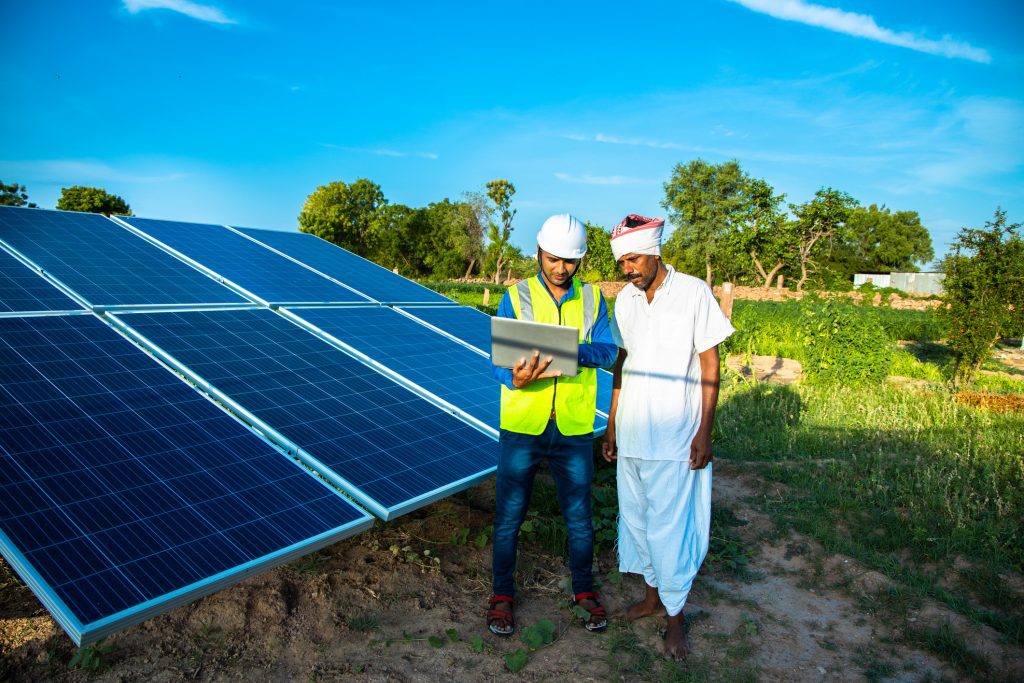
young male technician worker wearing green vests and helmet checks the maintenance of the solar panels and talking about installation of new solar panel with farmer at field, technology in agriculture

For all these policy level efforts to be fruitful, it’s important that they resonate with the common public. Climate education could act as a bridge between policy and action. According to UNESCO’s State of Education Report 2023, climate education is defined as a comprehensive, multidisciplinary approach that teaches students and youths about climate change, including its causes, impacts, solutions, and how to live sustainably and reduce environmental impacts. A robust climate education approach should equip students with the understanding of the climate crisis (knowledge), encourage them to reflect their own context (values), ask questions and ultimately empower them to engage with the communities and relevant officials to take collective actions (skills).

A baseline study by the Tamil Nadu Climate Change Mission found that while half of the students had heard of climate change, over 73% lacked a scientific understanding of the concept. Another survey revealed that while 82% of first-time voters recalled learning something new about climate change in school, much of this education was superficial, focusing on facts rather than solutions.

This is why the recent ₹24 crore budget allocation for climate literacy is significant. However, as it evolves the next step is to deepen, go beyond awareness and expand this into climate education. 

Challenges in Implementation

One key challenge is teachers’ capacity to teach climate change. Training needs to go beyond one-off workshops or sticking to textbooks. Teachers should be able to link climate change to their students’ local realities, weave it into topics like water, waste, energy, and social justice, and make it relevant across subjects. They should also help students move from awareness to action, building both knowledge and emotional resilience. This demands continuous, collaborative support.

Another challenge is bridging the gap between school and higher education, especially from a research perspective. Universities and research institutions produce valuable studies on climate risks and solutions, but this knowledge often remains in academic circles. Schools rarely tap into it. Bridging this gap could involve partnerships where researchers help teachers translate complex findings into engaging, hands-on projects.

For example, a project on water scarcity might combine science, social justice, and data analysis, making learning meaningful and rooted in students’ experiences.

The third challenge is coordination among  different departments. While the environment department allocated the budget, implementation involves SCERT, Samagra Shiksha and other directorates of the school education department. With the fund, a coordination committee can be formed with deputed staff from each department where they can meet regularly, co-plan and take decisions.

This Fund Helps Reimagine Climate Education

This fund creates an opportunity to seed a regional and a teacher-led ‘networked’ model for climate education. It can be used to  build a regional collective of diverse experts – school teachers, climate practitioners, NGOs, academics in science and social science, communicators, writers and storytellers – who could co-design resources and curriculum, pilot context-based curriculum in schools, and mentor teachers continuously. 

This network could help in addressing the three challenges: support teachers in building their expertise in climate change to interpret locally, integrate it across subjects and guide students; bridge the gap between school education and evolving climate knowledge from higher education institutions as the network itself should have academics from higher education institutions; and work across departments to coordinate efforts. 

For example, Nagapattinam, one of the most vulnerable districts on climate risks in the state as per the report by Anna University’s Climate Studio, could develop a student-led mangrove restoration project. Initially, a regional climate education network could be formed comprising school teachers, a representative from NGO/CSO working on environmental conservation, a professor from higher education space and a government official from TN Coastal Restoration Mission. The network could design the project to ensure it is relevant, place-based and fun for children. It would also monitor the project’s impact on children’s knowledge, skills and values, and mentor teachers on guiding them.  

The current budget allocation could establish this ‘collective’ into a vibrant ecosystem that not only builds capacity but also promotes innovation, collaboration, and long-term ownership, reimagining how climate change is taught and acted upon in Tamil Nadu schools.