Why is Jharkhand, a state with abundant natural resources, among the poorest in the nation? Is the state well equipped for an equitable transition when millions of people depend on these resources for their income and livelihood?
SAARTHI – Jharkhand Just Transition Network was formed to help community experiences inform inclusive and locally grounded transition pathways for the state. This process recognised key challenges that the state faces today: Declining forest-based livelihood systems, changing food systems, lack of awareness among stakeholders, and lack of diverse livelihood solutions.
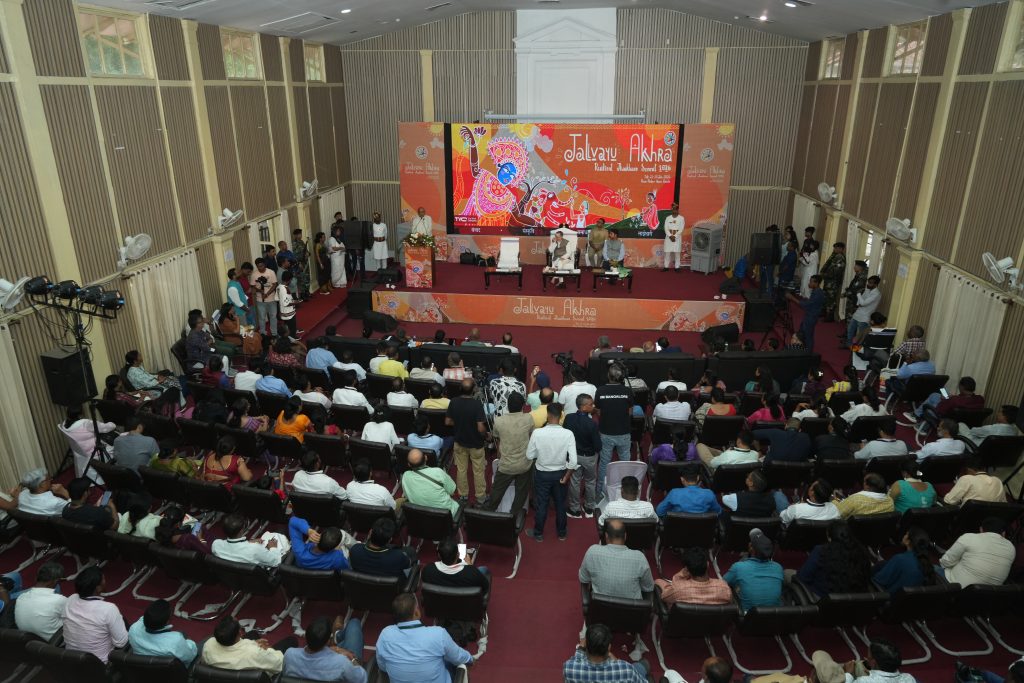
To further its goals, the SAARTHI Network organised the Jalvayu Akhra – Resilient Jharkhand Summit in July, providing community members, youths, policymakers and researchers a platform to voice their experiences and commitments towards a just transition for the state. It was a space where climate conversations moved out of meeting rooms and into the experiences and traditional rhythms of Jharkhand, from traditional art forms to conversations on gender, food security, employment, local governance, and energy security.
Presently, the SAARTHI Network has 43 CSO partners working towards this initiative of an inclusive and community-led Just Transition process.
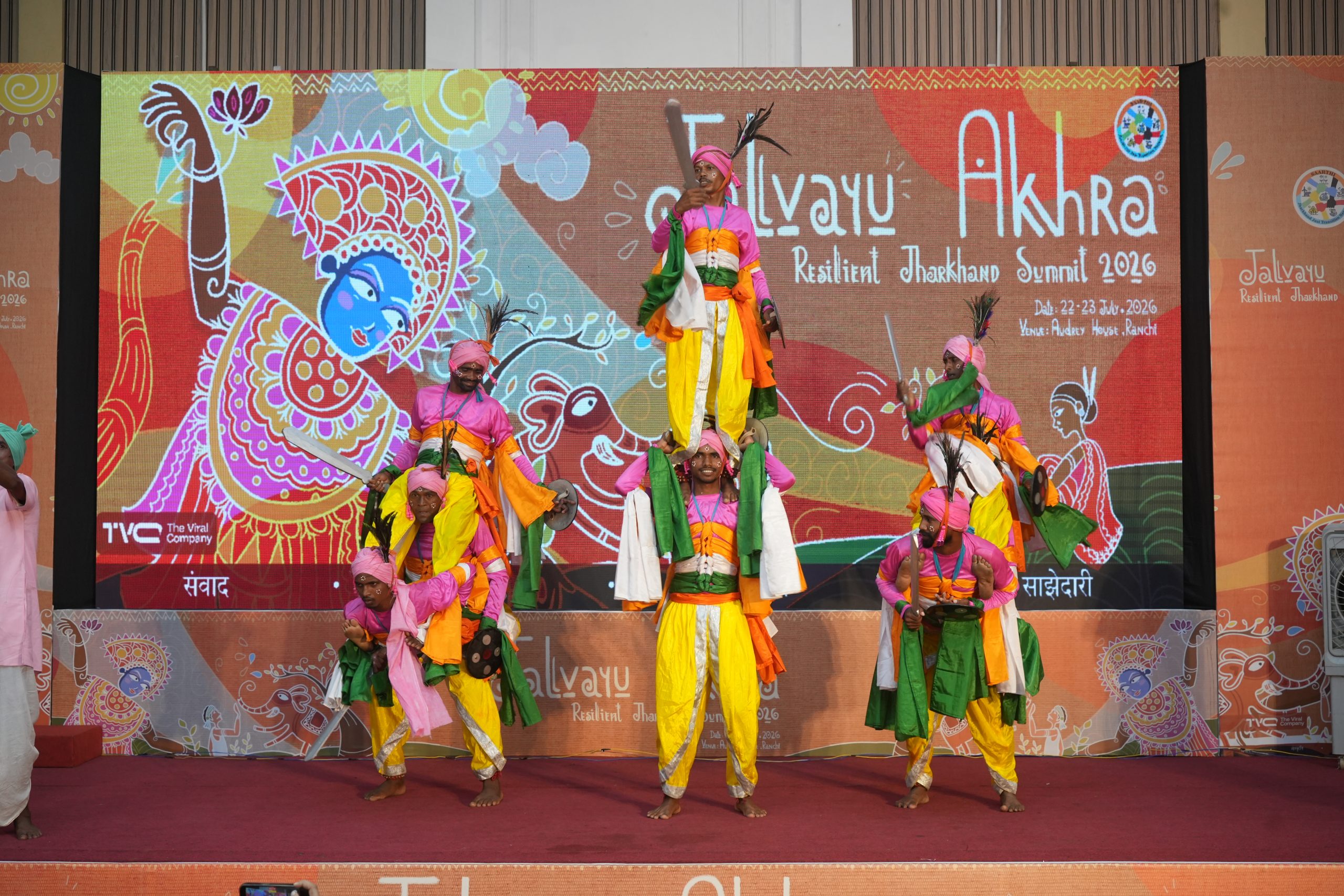
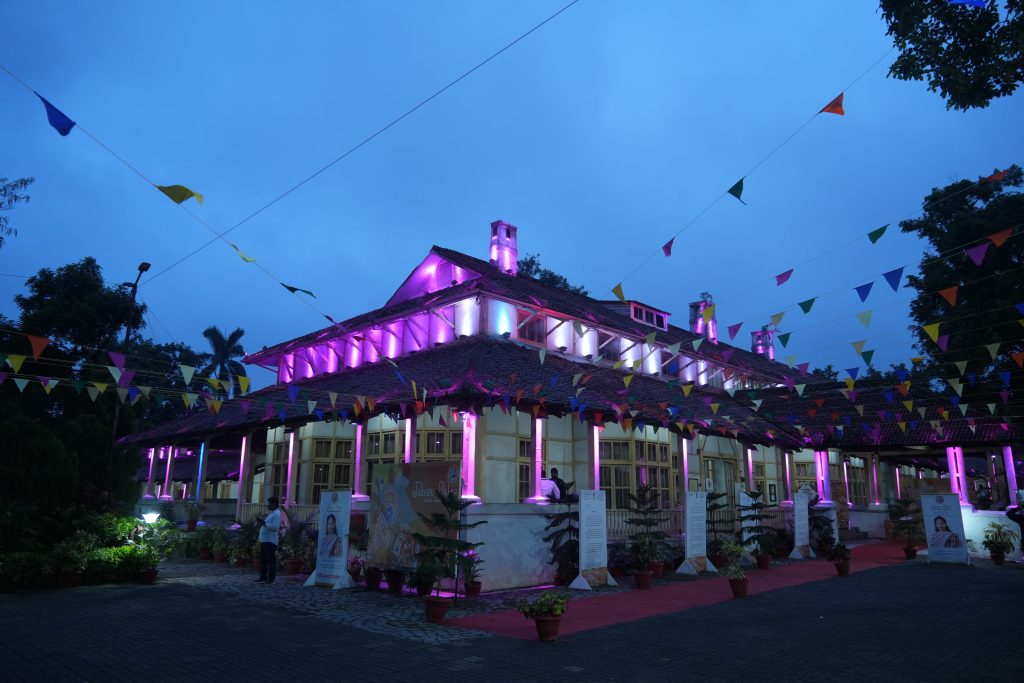
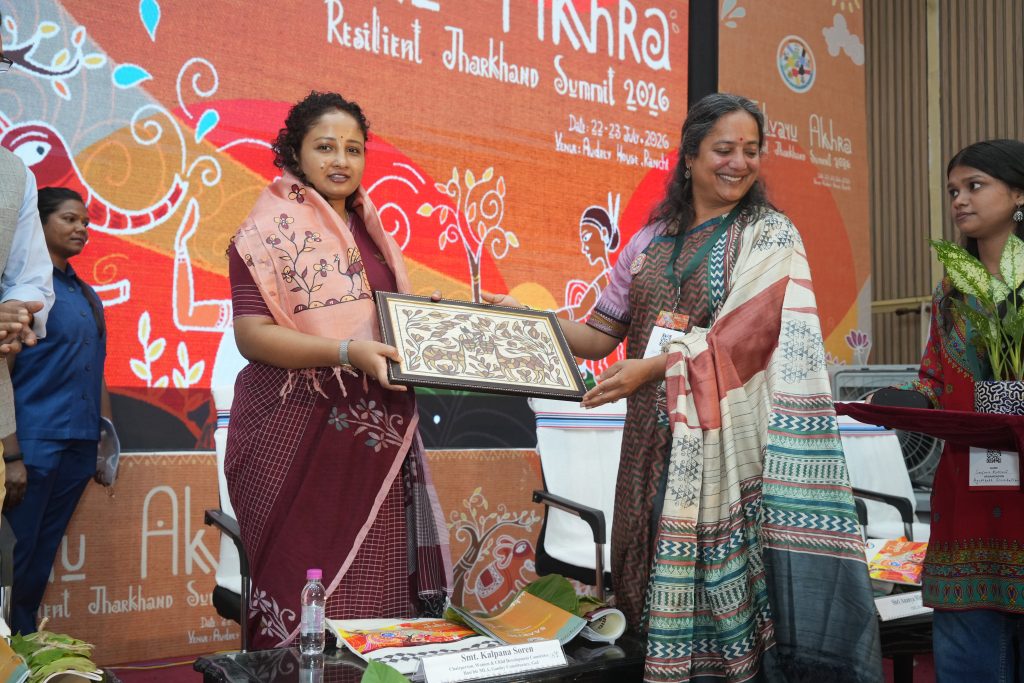
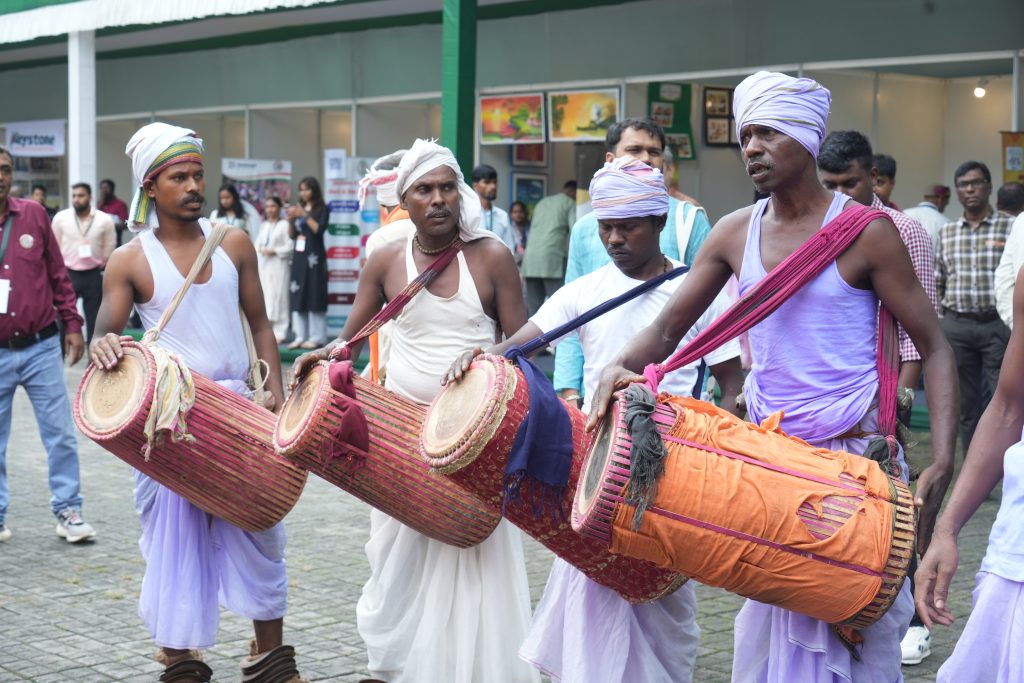
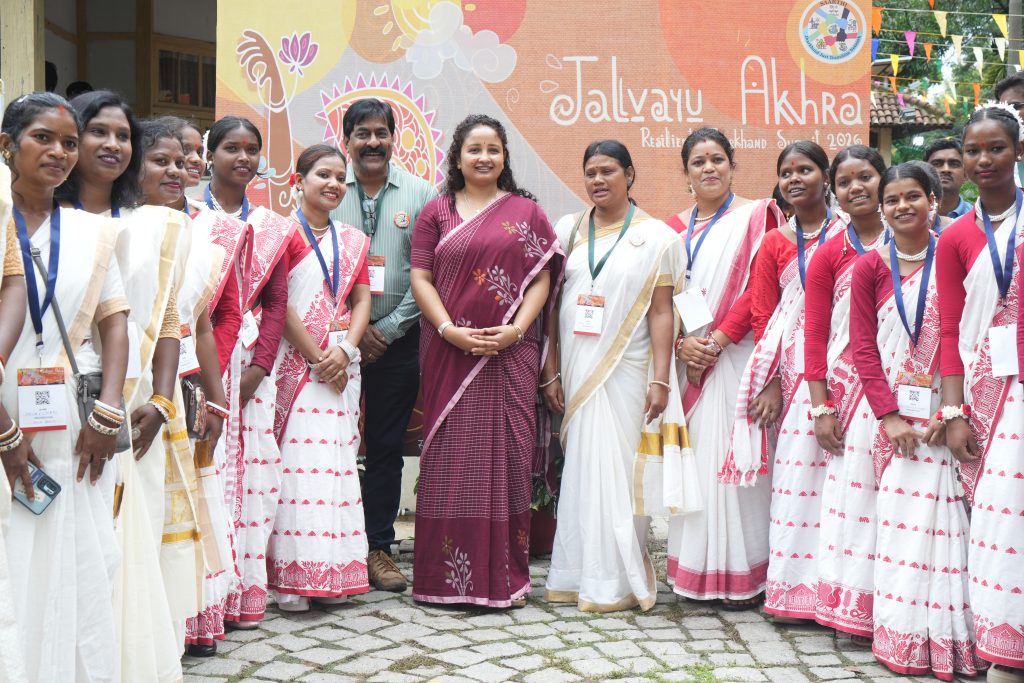
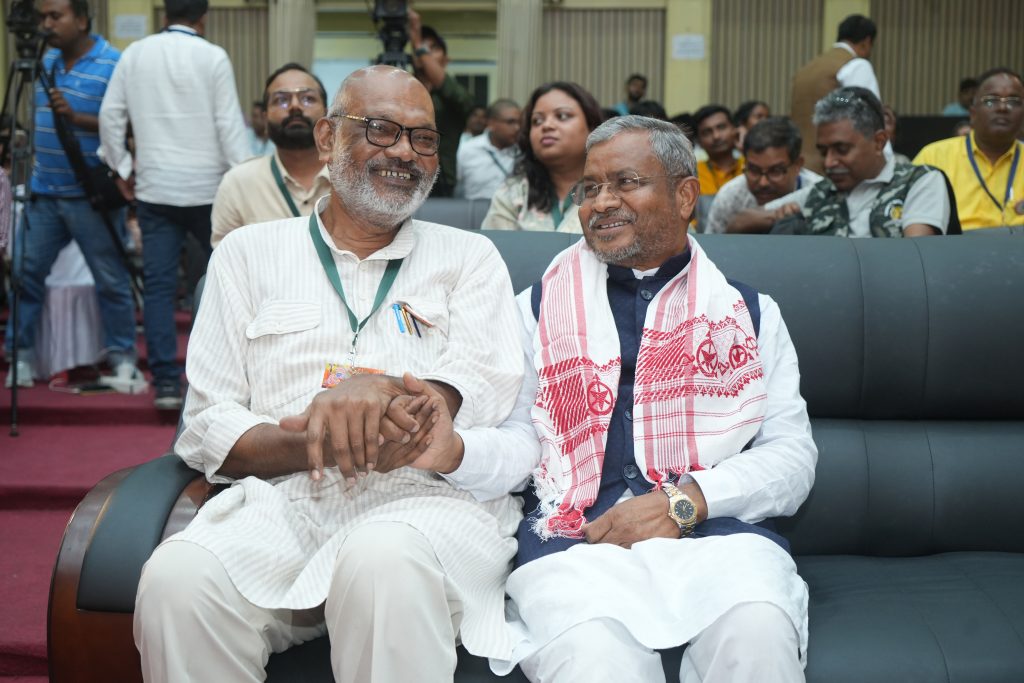
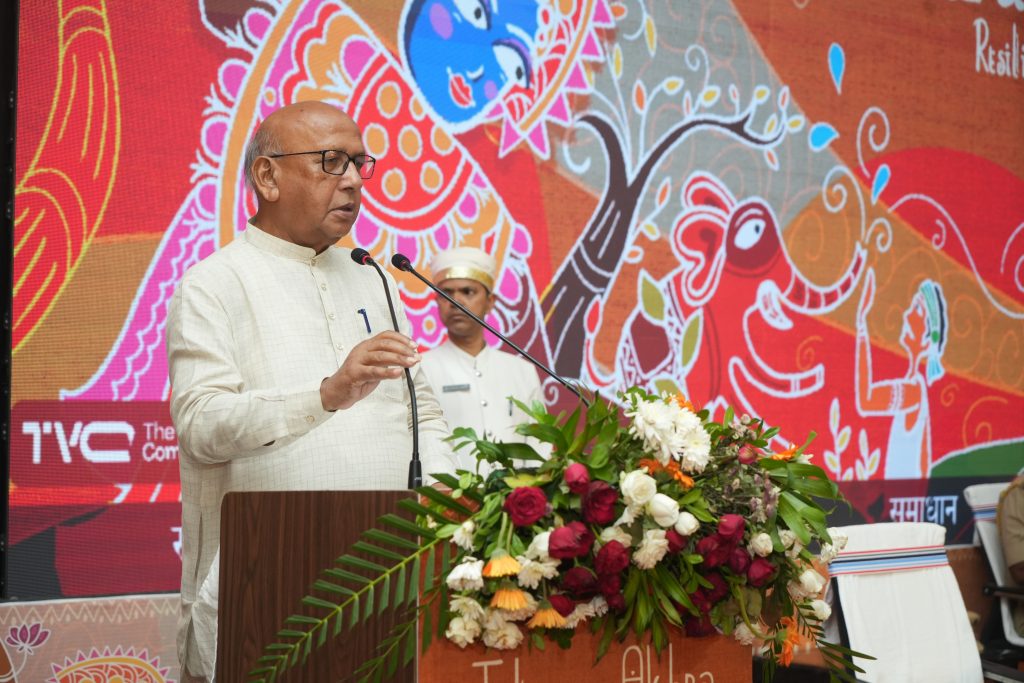
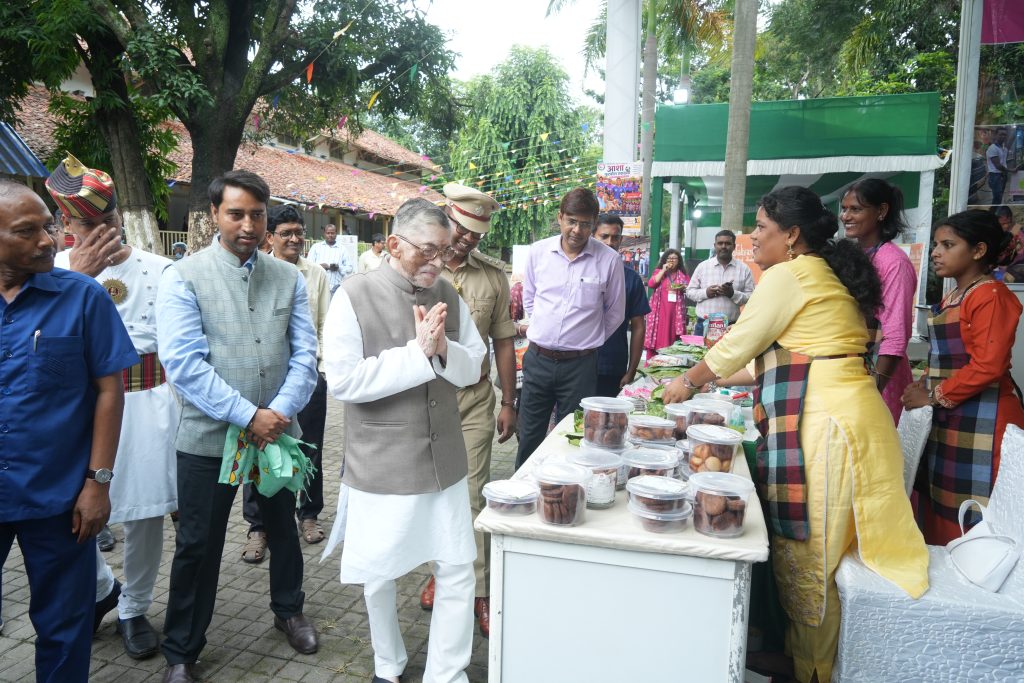
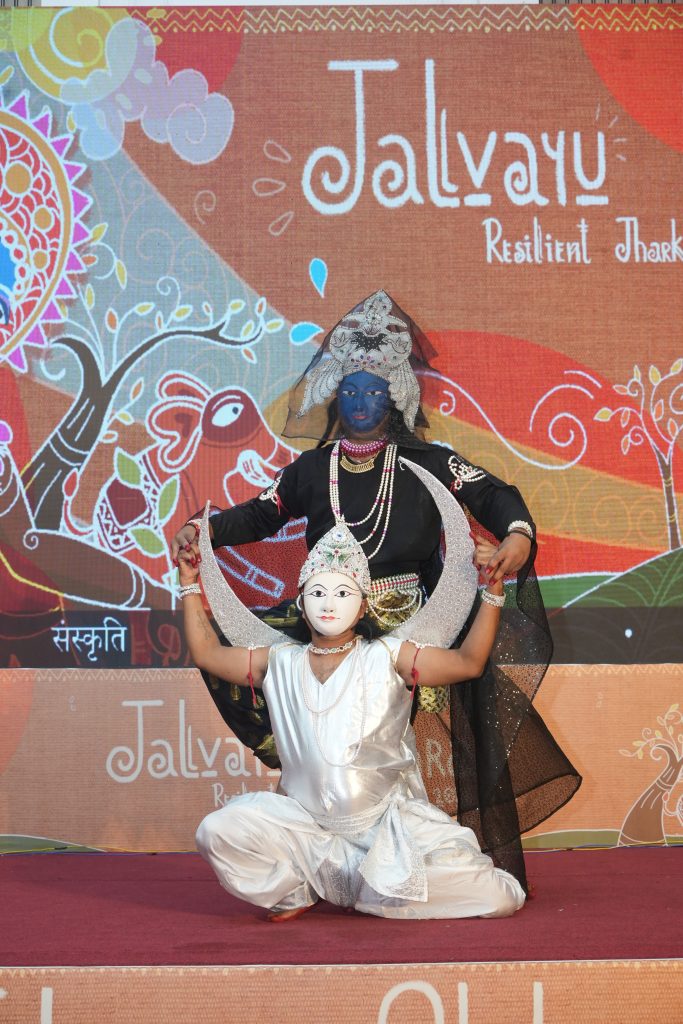
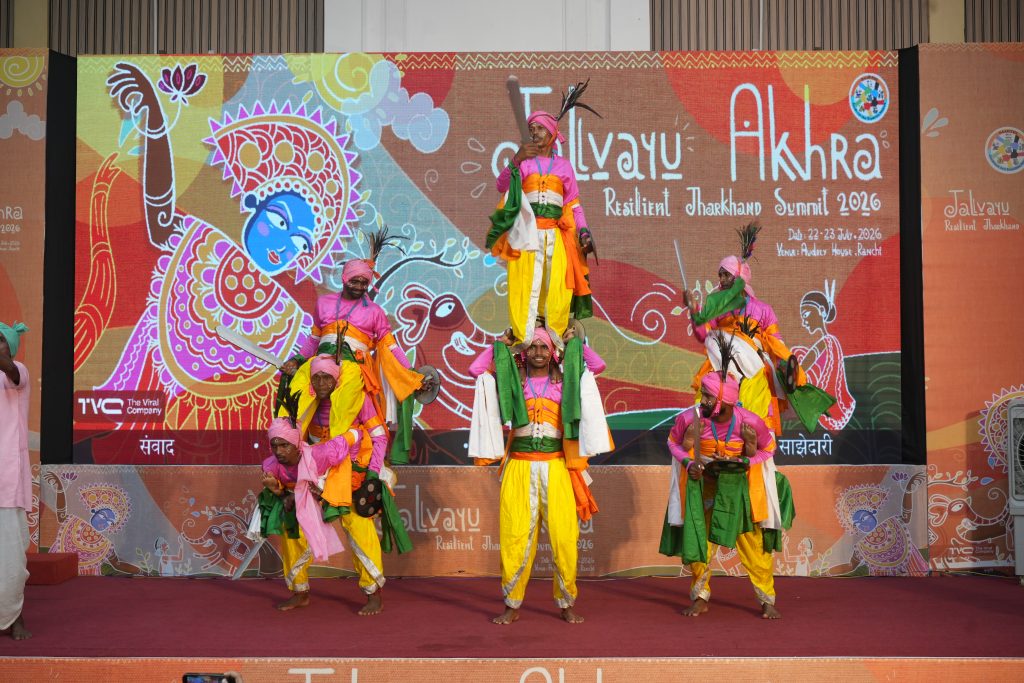
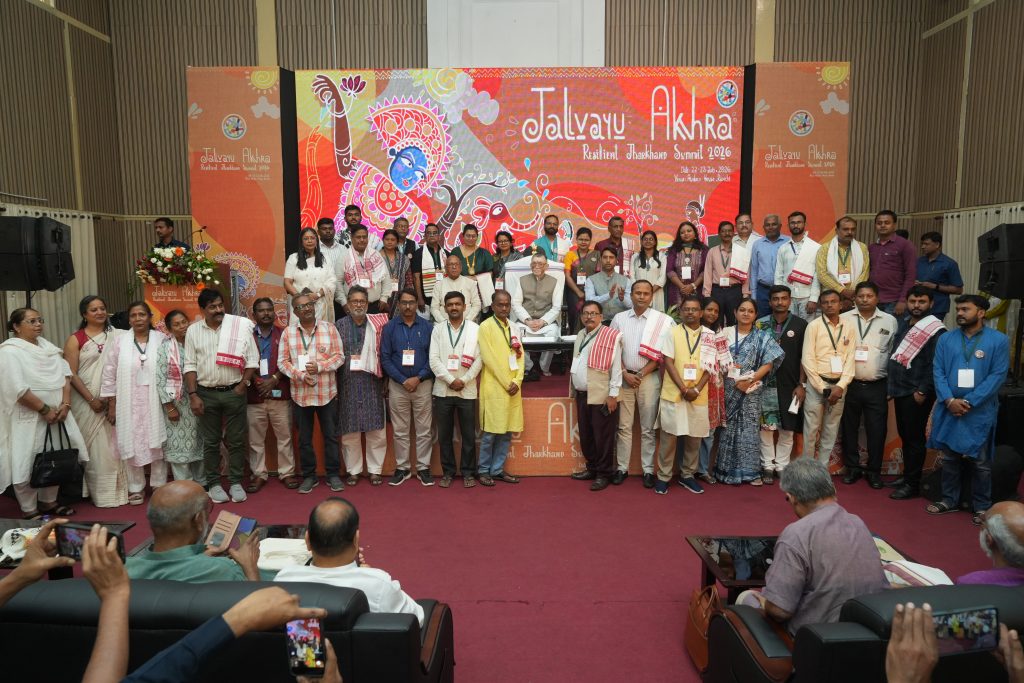
Jalvayu Akhra 2026 was hosted at the historic Audrey House in Ranchi. A 170-year-old heritage building, it is one of the oldest surviving structures in the city. Built in 1854 by former Captain John Hannyington and named after his daughter Audrey, the bungalow served as a British administrative residence and later hosted pivotal meetings during the Indian freedom struggle (including two presided over by Mahatma Gandhi in 1917).Vinuta Gopal, Asar’s CEO and co-founder, felicitated Jharkhand MLA Kalpana Soren with a traditional Sohrai Painting during the inaugural session of Jalvayu Akhra, 2026. Sohrai is an art form from Hazaribagh district that holds immense cultural importance for the Adivasis of Jharkhand, with several prominent landmarks including the Birsa Munda Airport and the Hazaribagh and Tatanagar railway stations decorated with vibrant Sohrai murals.Sounds of traditional mandars rang out while guests arrived at Audrey House. The mandar is a traditional clay hand drum that serves as the rhythmic soul and cultural identity of Jharkhand’s folk music. The instrument is widely played by the Santhal, Munda, Oraon, and Nagpuri communities.Kalpana Soren with a young cohort from ASHA (a SAARTHI network partner) dressed in traditional Nagpuri attire. For the women of the Chota Nagpur Plateau, the most distinctive indigenous outfit is the two-piece ensemble known as panchi and parhan. They are known by their pristine white or cream cotton base decorated with broad, thick red borders.Member of the Jharkhand Legislative Assembly, Babulal Marandi, shares a heartfelt moment with Mr. Ghyanshyam of the civil society group Samvad at Audrey House. Marandi served as the chief guest at Jalvayu Akhra.Jharkhand MLA Saryu Roy addressing the audience on the importance of collective participation for change on the second day of Jalvayu Akhra. Roy is renowned for leading public campaigns against industrial pollution, deforestation, and unregulated mining. Through his NGO Yugantar Bharati, he has spearheaded major conservation initiatives for regional rivers including the Damodar, which was a key point of discussion at the Akhra.Honorable Governor of Jharkhand, Santosh Kumar Gangwar (center), interacting with women-led organisations promoting traditional food items. Food security among the Adivasi communities in Jharkhand is marked by socioeconomic inequities, ecological vulnerabilities, and systemic gaps that the SAARTHI Network is trying to address.The Chhau Dance reminded us that protecting stories, traditional practices, and culture are equally important as technology and innovation for climate resilience. Chhau is a prominent semi-classical dance form arising from the martial, tribal, and folk traditions of eastern India. Seraikella in Jharkhand is the form’s epicenter.Climate action, much like the Paika dance, works best with a little trust, balance, and a whole lot of cooperation. The word Paika comes from the Sanskrit ‘padatika’, meaning foot soldier. Historically, Paikas were warriors who served medieval rulers and the dance dramatises battle techniques, combat readiness, courage, and valour.The Jalvayu Akhra brought experiences, learnings, and solutions from different perspectives under one roof for a just transition in Jharkhand.United We Stand: Representatives of the SAARTHI Network’s partner organisations take a photograph with the chief guest during the closing ceremony of the Jalvayu Akhra, 2026
बर्मामाइंस में धूल प्रदूषण स्थानीय लोगों के दैनिक जीवन और स्वास्थ्य को कैसे प्रभावित कर रहा था।
समुदाय की भागीदारी और स्थानीय वायु गुणवत्ता निगरानी ने इस मुद्दे को कैसे अधिक स्पष्ट बनाया।
क्यों स्वच्छ हवा सुनिश्चित करने के लिए केवल नियम नहीं, बल्कि लोगों की भागीदारी भी ज़रूरी है।
झारखंड का औद्योगिक शहर जमशेदपुर लंबे समय से उद्योगों, भारी वाहनों, निर्माण कार्यों और सड़क की धूल के कारण वायु प्रदूषण की चुनौती का सामना करता रहा है। बर्मामाइंस, जुगसलाई, मानगो और गोलमुरी जैसे क्षेत्रों में रहने वाले लोग वर्षों से धूल और खराब वायु गुणवत्ता की शिकायत करते रहे हैं। इन्हीं क्षेत्रों में वायु प्रदूषण को लेकर समुदाय के बीच जागरूकता बढ़ाने के उद्देश्य से आदर्श सेवा सदन और उसके युवा स्वयंसेवी नेटवर्क वायुवीर (Vayuveer) ने लगातार काम किया। समुदाय के साथ संवाद, वायु गुणवत्ता की निगरानी और स्थानीय समस्याओं को सामने लाने के प्रयासों ने लोगों को अपने पर्यावरण और स्वास्थ्य के प्रति अधिक सजग बनाया।
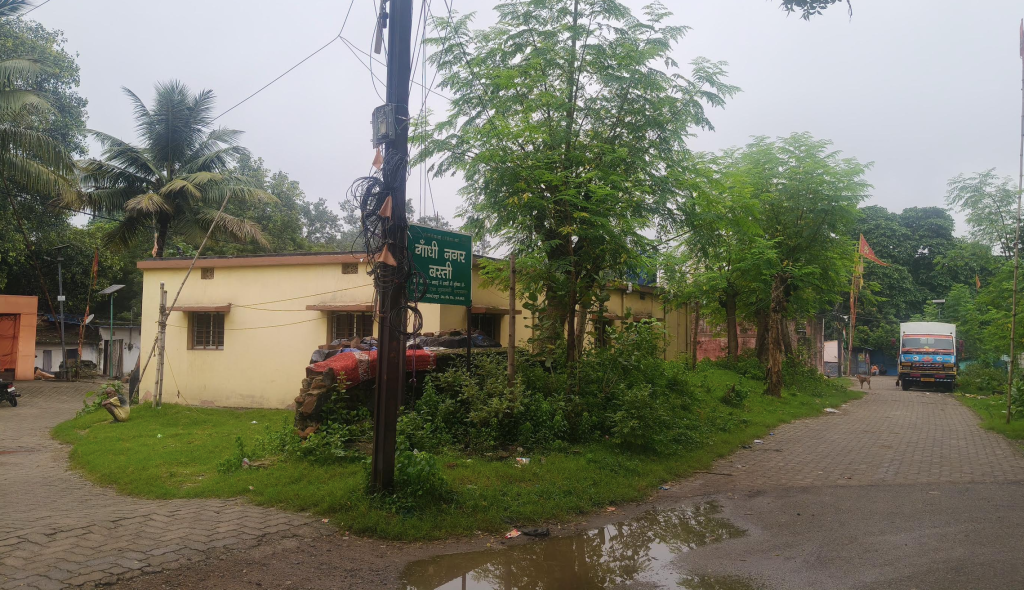
बर्मामाइंस स्थित एक बैचिंग प्लांट लंबे समय से स्थानीय लोगों के लिए चिंता का विषय बना हुआ था। स्थानीय निवासियों के अनुसार यहां सीमेंट, गिट्टी और अन्य निर्माण सामग्री मिलाकर तैयार मिश्रण विभिन्न निर्माण कार्यों में भेजा जाता था। इस प्रक्रिया के दौरान उड़ने वाली धूल आसपास की बस्ती, दुकानों और सड़कों तक पहुंच जाती थी। लोगों का कहना था कि कई बार घरों की खिड़कियां और दरवाजे बंद रखने पड़ते थे तथा हवा में महीन धूल लंबे समय तक बनी रहती थी।
असर और वायुवीर की टीम ने समुदाय के साथ बैठकों के दौरान लोगों से उनके अनुभव दर्ज किए और पोर्टेबल एयर क्वालिटी मॉनिटर (AQ Monitor) के माध्यम से स्थानीय स्तर पर वायु गुणवत्ता की निगरानी भी की। स्थानीय लोगों के अनुसार प्लांट के आसपास धूल का स्तर काफी अधिक महसूस होता था। यह डेटा और समुदाय की शिकायतें लोगों में इस मुद्दे के प्रति जागरूकता बढ़ाने का माध्यम बनीं।
बर्मामाइंस के ऑटो चालक रमेश बताते हैं कि पहले प्लांट के सामने से गुजरना भी मुश्किल हो जाता था। उनके अनुसार हवा में सीमेंट की धूल इतनी अधिक रहती थी कि सांस लेने में परेशानी होती थी और इसका असर आसपास रहने वाले लोगों के स्वास्थ्य पर भी दिखाई देता था। वहीं कई स्थानीय दुकानदारों ने बताया कि उनकी दुकानों पर दिन में कई बार धूल जम जाती थी। विशेष रूप से खाद्य सामग्री बेचने वालों को ग्राहकों की शिकायतों का सामना करना पड़ता था और कारोबार भी प्रभावित होता था।
इस प्रदूषण का असर बच्चों पर भी दिखाई देता था। रणवीर (16 वर्ष), जो खालसा उच्च विद्यालय का छात्र है, ने बताया कि स्कूल आते-जाते समय उसे प्लांट के पास से गुजरना पड़ता था, जहां धूल की मात्रा काफी अधिक रहती थी। उसके अनुसार कई बार खांसी, सांस लेने में परेशानी और तबीयत खराब होने के कारण पढ़ाई भी प्रभावित होती थी। अभिभावकों ने भी बच्चों के स्वास्थ्य को लेकर चिंता व्यक्त की।
इस दौरान असर और वायुवीर ने समुदाय के साथ नियमित संवाद, स्थानीय बैठकों और वायु प्रदूषण के प्रति जागरूकता कार्यक्रमों के माध्यम से लोगों को यह समझाने का प्रयास किया कि स्वच्छ हवा उनका अधिकार है और प्रदूषण संबंधी समस्याओं को प्रशासन तथा संबंधित संस्थाओं तक पहुंचाना आवश्यक है। इन प्रयासों से स्थानीय लोगों में अपने अनुभव साझा करने और पर्यावरणीय मुद्दों पर आवाज उठाने का विश्वास बढ़ा।
उपलब्ध जानकारी के अनुसार जनवरी 2025 में जिला प्रशासन और झारखंड राज्य प्रदूषण नियंत्रण बोर्ड ने शहर के विभिन्न औद्योगिक प्रतिष्ठानों का संयुक्त निरीक्षण किया। मार्च 2025 में प्रस्तुत रिपोर्ट में बर्मामाइंस स्थित बैचिंग प्लांट को स्थानीय धूल प्रदूषण के प्रमुख स्रोतों में शामिल करते हुए इसे आबादी वाले क्षेत्र से बाहर स्थानांतरित करने की अनुशंसा की गई। बाद में यह प्लांट बंद हो गया अथवा दूसरे स्थान पर स्थानांतरित कर दिया गया। इसके बाद स्थानीय लोगों ने क्षेत्र की वायु गुणवत्ता में स्पष्ट सुधार महसूस किया।
स्थानीय निवासियों का कहना है कि प्लांट बंद होने के बाद हवा में उड़ने वाली धूल काफी कम हो गई है। दुकानदारों को बार-बार सफाई करने की आवश्यकता पहले की तुलना में कम पड़ती है और राहगीरों को भी राहत महसूस हो रही है। हालांकि प्लांट के बंद होने का आधिकारिक कारण सार्वजनिक रूप से स्पष्ट नहीं है, लेकिन यह अनुभव दिखाता है कि समुदाय की सक्रिय भागीदारी, पर्यावरणीय निगरानी, संस्थागत जांच और वायु प्रदूषण के प्रति बढ़ी जागरूकता मिलकर सकारात्मक परिवर्तन ला सकती है।
बर्मामाइंस का यह अनुभव दिखाता है कि वायु प्रदूषण जैसी चुनौतियों से निपटने के लिए केवल नियम और संस्थागत कार्रवाई ही पर्याप्त नहीं होती। समुदाय की भागीदारी, स्थानीय अनुभवों का दस्तावेजीकरण और नियमित पर्यावरणीय निगरानी भी उतनी ही महत्वपूर्ण है। इसी सोच के साथ असर और उसके युवा स्वयंसेवी नेटवर्क वायुवीर ने स्थानीय लोगों के साथ मिलकर संवाद, जागरूकता और वायु गुणवत्ता की निगरानी जैसे प्रयास किए, ताकि समुदाय अपनी चिंताओं को बेहतर ढंग से सामने रख सके। यह अनुभव बताता है कि जब समुदाय, संस्थाएं और प्रशासन मिलकर काम करते हैं, तो स्वच्छ हवा और स्वस्थ वातावरण की दिशा में सार्थक बदलाव की संभावनाएं मजबूत होती हैं।
जमशेदपुर के रिंकू पाल (23) ‘वायुवीर’ हैं। वह ग्रैजुएट हैं। अन्य वायुवीरों के साथ मिलकर चौपाल और अन्य कार्यक्रमों से समुदाय में वायु प्रदूषण पर जागरूकता अभियान चलाते हैं। वे AI और नवीन तकनीक के माध्यम से पर्यावरण और वायु प्रदूषण पर प्रयास कर रहे हैं और लगातार नए युवाओं को वायुवीर नेटवर्क से जोड़ रहे हैं। पर्यावरण संरक्षण के लिए JSW-TOI अवॉर्ड्स 2026 में ‘यंग क्लाइमेट चैंपियन’ सम्मान वायुवीरों को मिला जिसका वह एक हिस्सा रहे हैं।
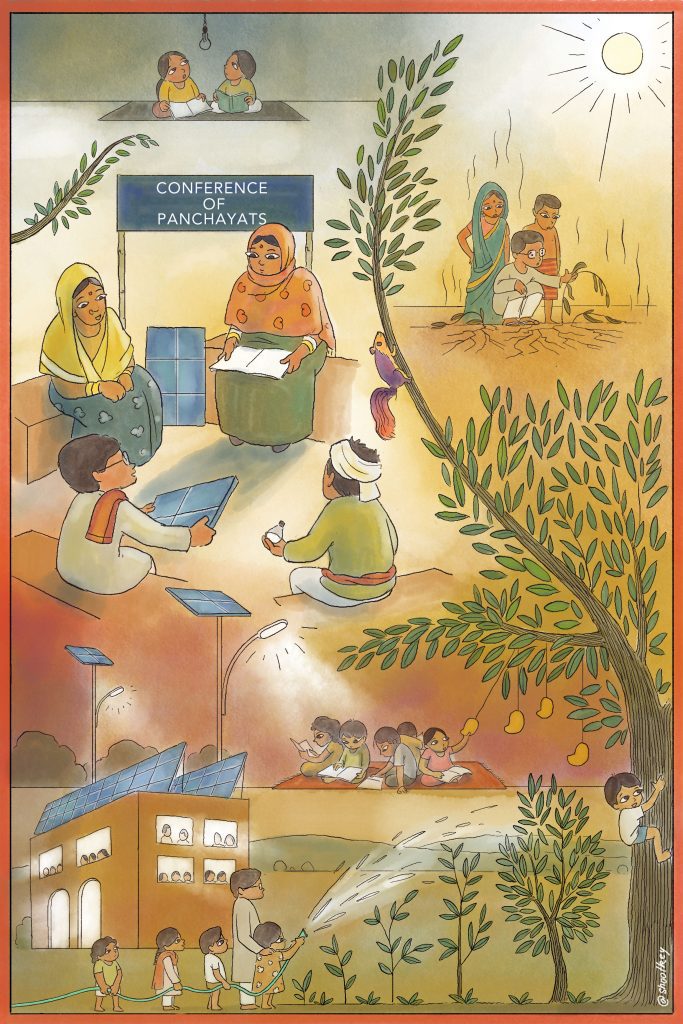
In the Siyari Panchayat of Bokaro’s Gomia block, climate change stopped being an abstract idea when daily life began to fray. Rainfall grew erratic, dry spells lengthened, and farming and forest-based livelihoods came under strain.The strain was most visible in Birhor Tanda, a settlement of the Birhor people, a Particularly Vulnerable Tribal Group, where frequent power cuts after sunset plunged the hamlet into darkness and disrupted children’s education.
For Mukhiya Ramvriksh Murmu, repeated conversations at the Conference of Panchayats helped connect these disruptions to a larger climate crisis and to the need for local, low-carbon responses.
Illustration by: Siddhant Puryakayastha
That realisation reshaped how the Panchayat approached development. With support from ONGC’s CSR programme, Siyari installed 72 solar streetlights, prioritising Birhor Tanda so children could study safely at night. Solar systems were added to schools and community buildings, and a solar-powered lift irrigation pump was set up at the main pond, reducing dependence on unreliable grid electricity and costly diesel. At the same time, the Panchayat mobilised villagers under the Birsa Mango Horticulture Mission, planting 2,880 mango saplings along with 800 other fruit and shade trees. Efforts to strengthen forest-based livelihoods and promote organic farming ran alongside these energy interventions, tying climate action directly to income and food security.
The changes are most visible after sunset. Children now read under solar lights in lanes that were once dark. Farmers have more reliable access to irrigation water, allowing steadier crop planning despite unpredictable rains. New orchards promise future income, while expanding tree cover is slowly improving the local microclimate. Forest-based enterprises, including value-added mahua products, are creating additional livelihood options.
“Conferences of Panchayats showed us that climate change is not tomorrow’s problem, it is today’s reality,” says Ramvriksh Murmu. “If village leaders act with sensitivity and vision, even a small Panchayat can cut carbon, protect livelihoods, and secure a better future for its children.”
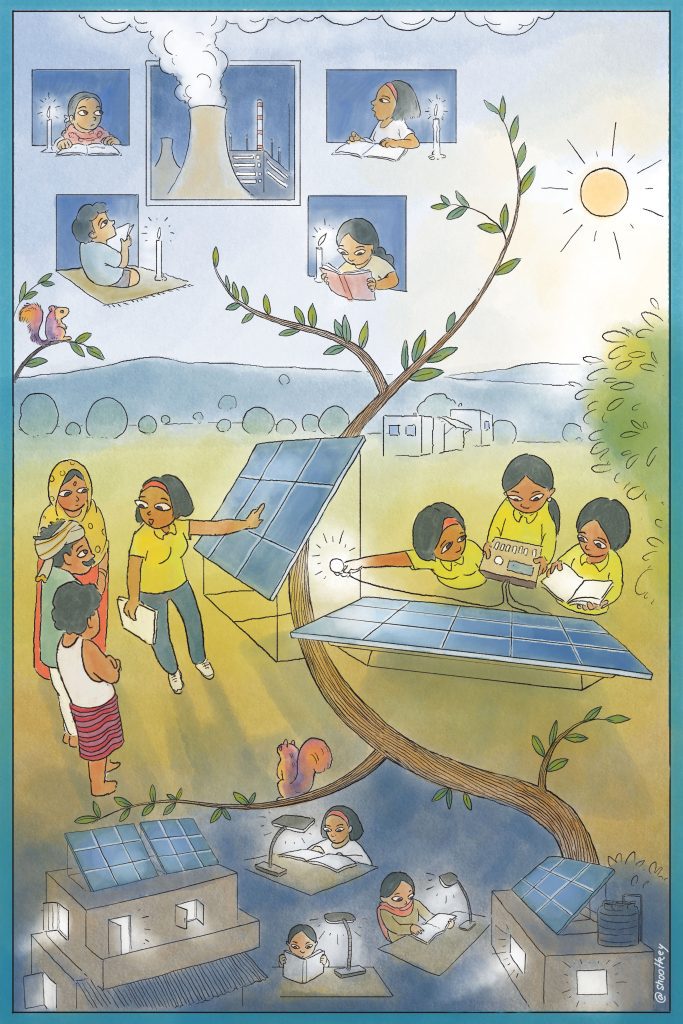
In Dantoo, a coal-belt village in Bokaro district, the climate crisis first revealed itself as darkness. During the 2021 lockdown, households received barely seven to eight hours of erratic electricity a day. Students prepared for online exams by candlelight, even as a coal-fired power plant loomed nearby. Rising heat, unpredictable rainfall and worsening air pollution only deepened the contradiction: a coal district that could not guarantee reliable, clean power to its own people.
For Aparna Kumari and a small group of teenage girls, this was a turning point. Lessons on climate change and “green skills” learned in school suddenly felt urgent and practical. If waiting for the grid meant remaining trapped between pollution and power cuts, the village would have to find its own solutions.
Illustration by: Siddhant Puryakayastha
The girls began by building confidence through vocational classes in electronics and hardware. They then connected with the National Youth Climate Consortium and a government-backed solar helper training programme at TPSDI Maithon. Returning as “solar-literate” youth, they went door to door, explaining climate change, solar energy and government schemes such as PM Surya Ghar and PM-KUSUM. With growing support from the panchayat, Aparna set an ambitious goal: to turn Dantoo into a solar village.
Today, over 30 women and young people have been trained as solar helpers. Households use solar lights and devices, reducing dependence on kerosene and candles. Several women have secured paid work with solar companies or begun repairing and assembling LED bulbs locally. Just as importantly, the initiative has shifted how the village sees its daughters, as skilled workers and climate leaders.
“Facing constant power cuts in our village, we realised waiting for the grid would not change anything,” says Aparna Kumari. “By learning solar, we are not just bringing light to our homes, we are also creating futures for our daughters.”