or share via social media

Air Quality
Maharashtra
Decentralising Waste Management in Nagpur: Assessing the Climate Impact of Dry Waste Collection Centres
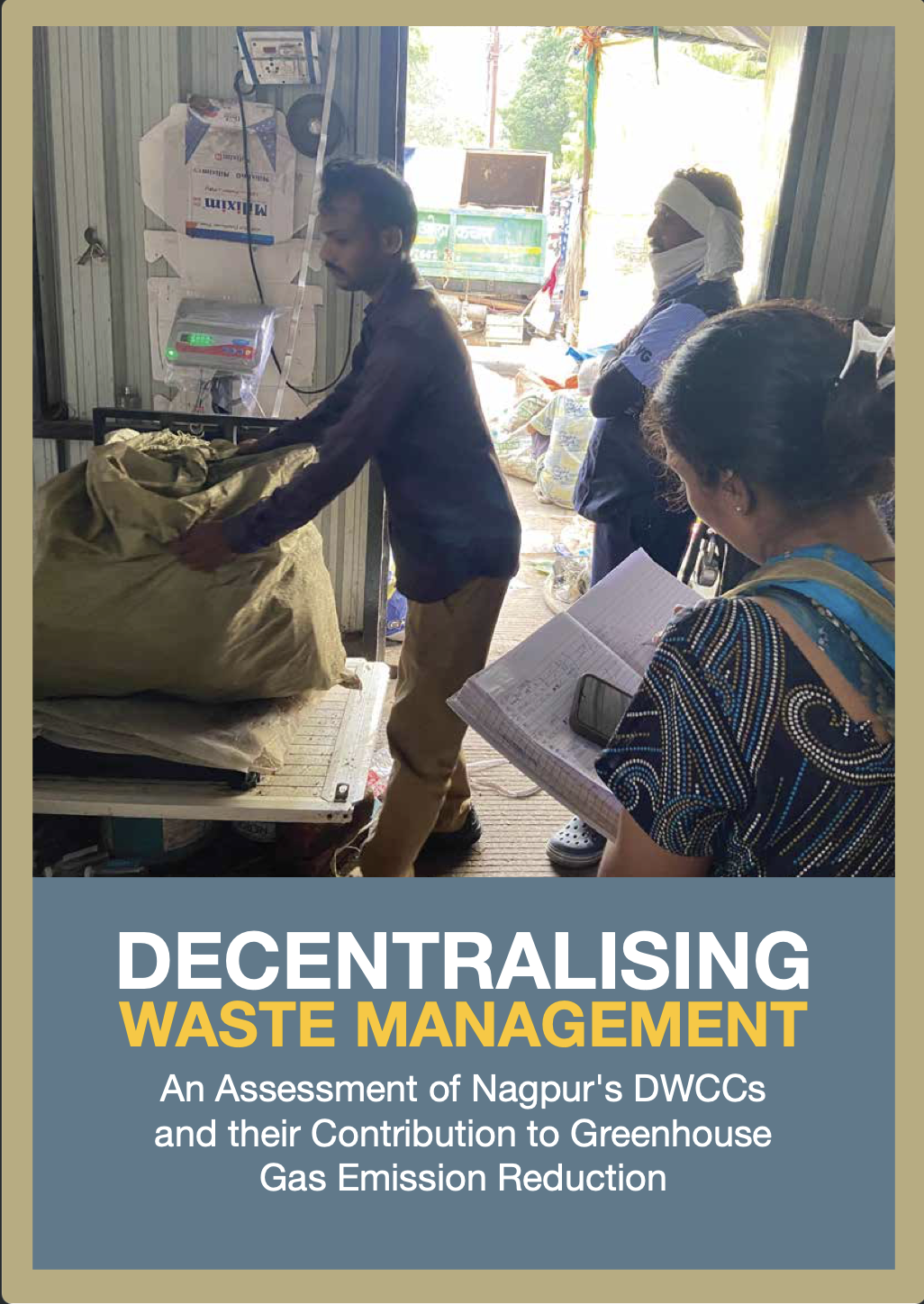
DownloadDecentralising Waste Management: An Assessment of Nagpur’s DWCCs and Their Contribution to Greenhouse Gas Emission Reduction examines the role of Dry Waste Collection Centres (DWCCs) in advancing effective waste management in Nagpur. As the city generates nearly 1,200 metric tonnes of waste daily and continues to rely on a centralised disposal system, the report explores how DWCCs offer a more sustainable alternative by improving resource recovery, reducing waste sent to dumping sites, and strengthening the circular economy.
Conducted by the Centre for Sustainable Development (CFSD) and Asar Social Impact Advisors Pvt. Ltd., the study assesses the workings of six operational DWCCs managed by women-led Self-Help Groups and waste workers. Drawing on field visits, stakeholder consultations, worker interviews, and waste-flow data, the report evaluates the centres’ infrastructure, operations, livelihood impacts, and contribution to greenhouse gas (GHG) emission reduction.
The data from four of the DWCCs demonstrates that they deliver tangible climate benefits, preventing an estimated 690 tonnes of CO₂-equivalent emissions annually through recycling and the avoidance of open burning. Beyond emissions reduction, the centres create livelihood opportunities, particularly for women, while supporting more inclusive urban waste management. The report highlights key operational challenges and presents recommendations to strengthen and scale the DWCCs, offering valuable insights for municipalities, practitioners, and policymakers working towards sustainable and climate-resilient cities.
Related Reports

Air Quality
Maharashtra

Gender & Climate
Maharashtra
Designing A Gender Transformative Drought Early Warning System – Perspective of Women Farmers from Dharashiv, Maharashtra
View