Popup Image

Share this powerful gallery of art and climate.

These paintings speak of survival, resistance, and care. Share this page with those who value community, creativity, and climate justice.

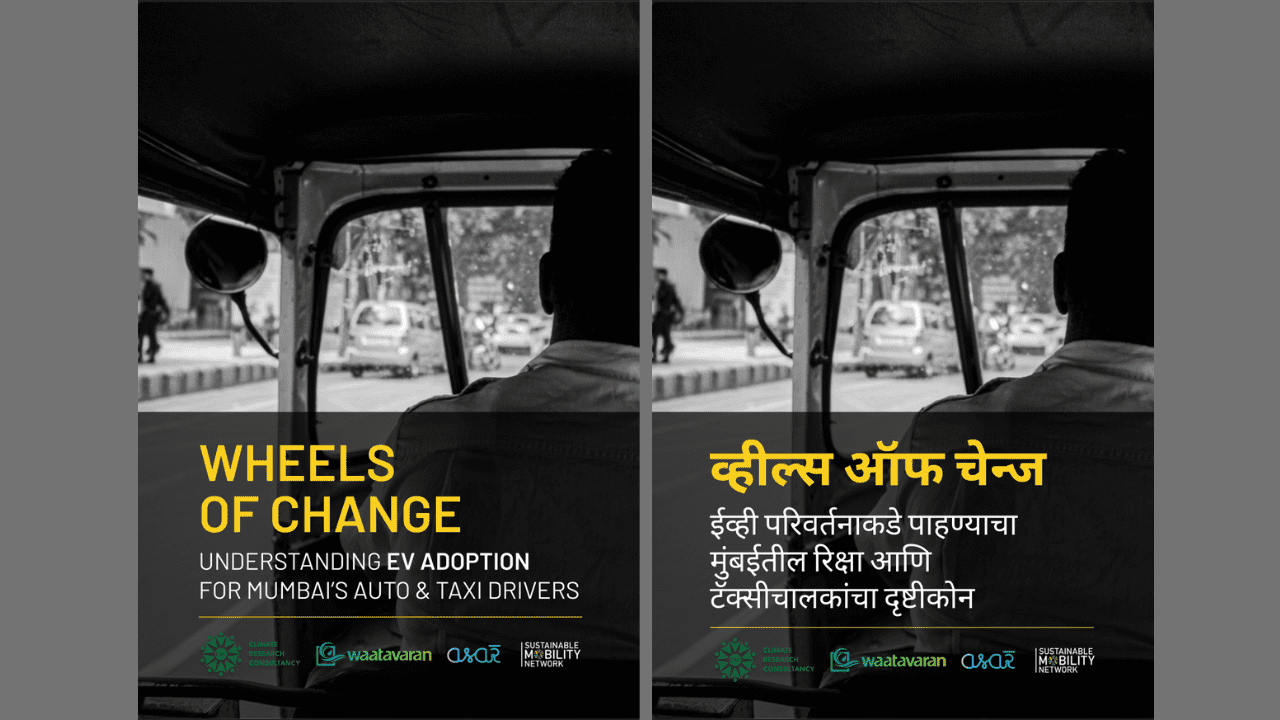
English | Wheels of Change – Understanding EV Adoption for Mumbai’s Auto & Taxi Drivers

This report captures key insights from a perception survey of 1,200 auto-rickshaw and taxi drivers across Mumbai, conducted by Waatavaran and Climate Research Consultancy in collaboration with Asar and the Sustainable Mobility Network. It brings together voices from the ground to understand drivers’ perspectives on transitioning to electric vehicles (EVs) and highlights the barriers, enablers, and pathways to building a just and sustainable mobility ecosystem for the city.

Key takeaways and highlights from the report:

  • Identifies major barriers to EV adoption among Mumbai’s auto and taxi drivers, including high upfront vehicle costs, limited charging infrastructure, and uncertainty around performance and maintenance.
  • Captures drivers’ perspectives on the economic, social, and health impacts of conventional fuel-based mobility, as well as their views on subsidies, financing, and infrastructure needed to support a shift to EVs.
  • Presents actionable recommendations for enabling EV adoption, such as building fast-charging and battery-swapping networks, creating dedicated EV parking and charging in high-demand areas, providing innovative financing solutions, and strengthening vehicle scrappage and recycling policies.
  • Highlights the role of awareness and training, with many drivers expressing interest in workshops and skill-building programs to better understand EV use, maintenance, and opportunities.
  • Documents policy evolution at the national and state level, including FAME, PM E-DRIVE, and Maharashtra’s EV policies, situating Mumbai’s transition within broader institutional and policy frameworks.
  • Introduces pathways for equitable electrification, emphasizing the need for inclusive solutions that address the realities of drivers living in informal settlements, and ensuring that the transition secures livelihoods while delivering environmental and health benefits.
  • Underscores the need for multi-stakeholder collaboration involving government, unions, industry, financiers, and civil society to create a supportive ecosystem for EV adoption.
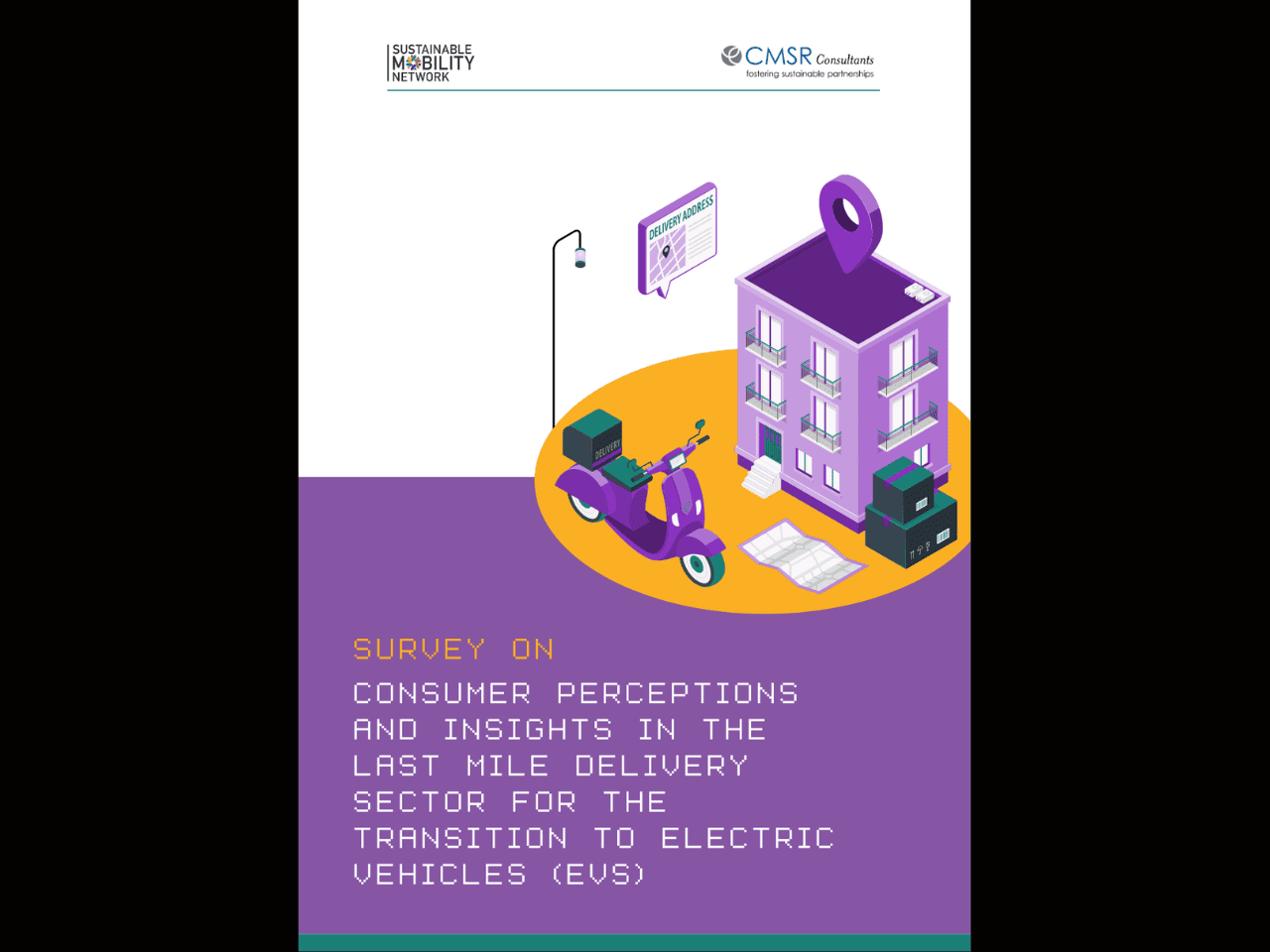
Survey on consumer Perceptions and Insights in the Last Mile Delivery Sector for the Transition to Electric Vehicles

A recent consumer survey revealed strong support for electric vehicle (EV) transition in the last-mile delivery sector across various Indian cities, including Bengaluru, Mumbai, Pune, and Kolkata. Over 80% of respondents in Bengaluru were willing to switch to brands with strong emission reduction commitments, while 98.1% pushed for EV transition of last-mile delivery fleets. This indicates a growing consumer demand for environmentally responsible delivery practices, with many expressing dissatisfaction with air pollution and a desire for more sustainable options.

Key Findings and Insights:

  • Strong Consumer Support: Consumers are increasingly aware of the environmental impact of last-mile delivery and are actively looking for brands that prioritize sustainability.
  • Willingness to Switch Brands: A significant portion of respondents are willing to switch to brands that have demonstrated commitment to reducing emissions, indicating that sustainability is a key factor in consumer decision-making.
  • Environmental Concerns: Consumers express dissatisfaction with air pollution levels and see the transition to EVs as a positive step towards addressing this issue.
  • Key Players Identified: Major delivery companies like Amazon, Flipkart, Zomato, Swiggy, and DHL were identified as key players in the sector’s potential shift to EVs.
  • Policy Support: The study also highlights the need for policy support to facilitate the transition to EVs in the last-mile delivery sector, including streamlining policies to ensure aggregators reduce emissions and providing incentives for EV adoption.
  • Specific City Data: The survey found varying levels of support across different cities, with Bengaluru, Mumbai, Pune, and Kolkata showing high levels of support for EV transition.
  • Emphasis on Air Pollution: Consumers in cities like Kolkata and Asansol, where air pollution levels are particularly high, expressed strong dissatisfaction and a desire for cleaner delivery practices.
  • Focus on Last-Mile Delivery: The survey specifically focused on the last-mile delivery sector, highlighting its significant contribution to emissions and the potential for EVs to reduce this impact.