Climate change exacerbates existing gender inequities, with women from vulnerable and marginalized groups facing a harsher reality of climate-induced challenges. The broader discourse on climate, often technocratic and top-down, tends to overlook women and gender diverse identities, focusing instead on macro-level conversations centered around emissions, mitigation, and policy strategies.This leaves a significant gap in understanding the lived experiences of those who face the differential impacts of climate change and cope with the crisis despite limited resources.
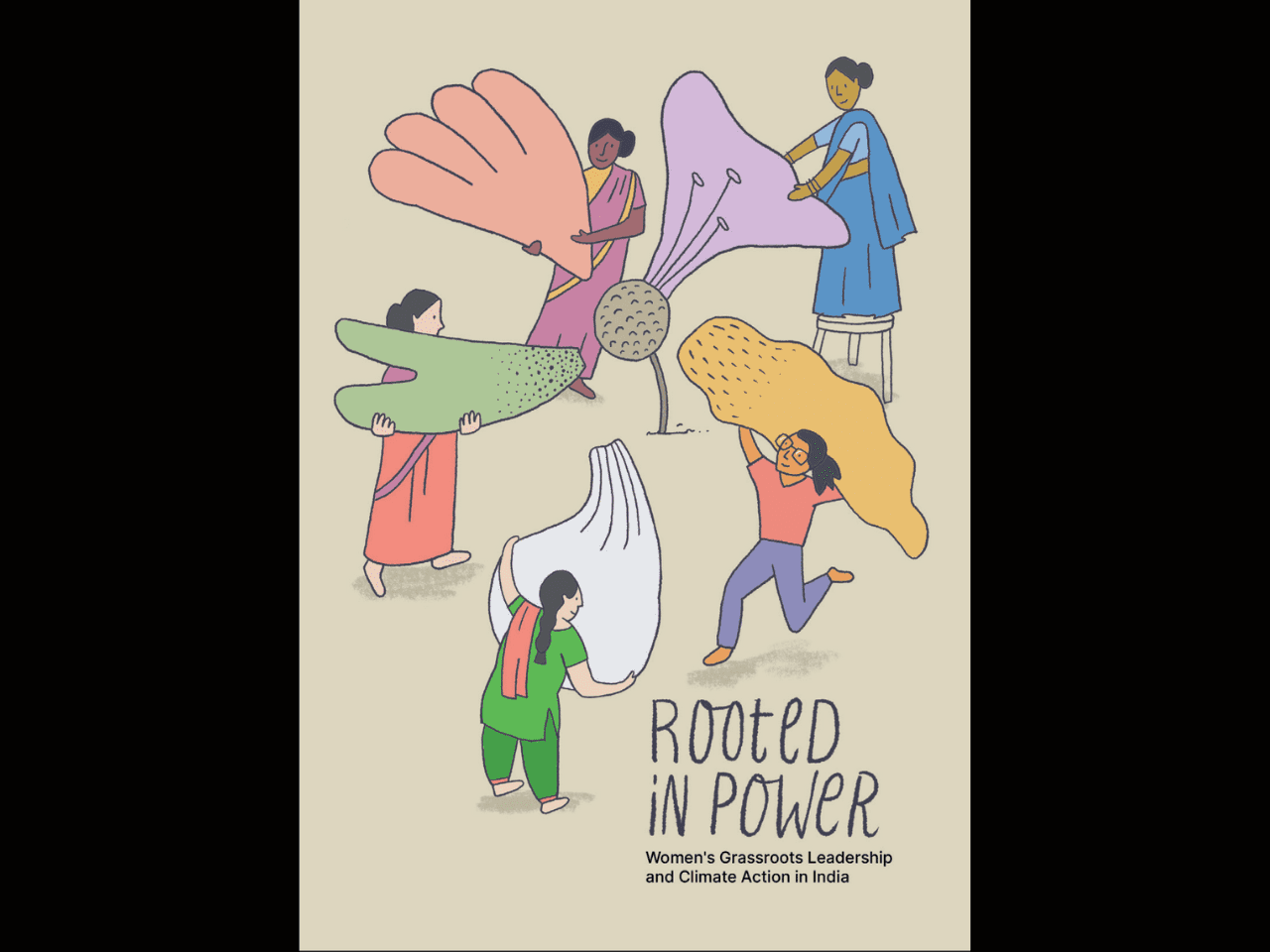
Women are frequently portrayed as victims of the climate crisis, seldom recognized as active agents in mitigation and adaptation efforts. However, in India, countless women confront climate change daily, driving local solutions and building community resilience through their leadership. Rooted in Power: Women’s Grassroots Leadership and Climate Action in India is a graphic narrative series that aims to uncover such powerful stories of hope, resilience, and transformative leadership at the frontlines of the climate crisis.
Our first series narrates the following stories:
In Karnataka, Geetha and the remarkable women working with Hasiru Dala exemplify the critical role of waste pickers in mitigating climate impacts. Their story traces the journey of waste from our homes to landfills, revealing how small efforts can alleviate the hardships faced by thousands of waste pickers while highlighting their indispensable contribution to climate resilience.
In the narrow alleys of New Delhi’s slums, Rama, a former ASHA worker, leads a campaign against household air pollution. She tirelessly advocates for the adoption of cleaner cooking stoves, addressing an issue that increases the drudgery of thousands of women forced to rely on biomass due to financial and social constraints.
Janet, a writer, researcher, and artist from Bangalore, embarked on a journey along the Malabar coast, documenting the challenges faced by coastal communities deeply impacted by climate change. Her narrative sheds light on the lived realities of those on the frontlines, offering a poignant glimpse into the human face of the crisis.
In Maharashtra’s Marathwada region, Malan Raut, a determined farmer, practices the one-acre farming model championed by Swayam Shikshan Prayog. Despite recurring droughts and agrarian crisis, Malan has managed to secure a steady income for her family through climate-resilient agriculture, embodying resilience and innovation in the face of adversity.
From Odisha’s Koraput district, we share the inspiring tale of Malati and her community. With the support of NGO SPREAD, these women have developed a model for generating livelihoods from common lands, protecting them from private interests and environmental degradation. Their collective effort demonstrates the power of community-driven solutions in the fight against climate change.
Through these compelling stories, this graphic narrative celebrates the resilience, ingenuity, and strength of women actively addressing the climate crisis but rarely finding space in mainstream discourses on climate change. Their journeys are a testament to the power of grassroots action and the indomitable spirit of those who dare to make a difference.
