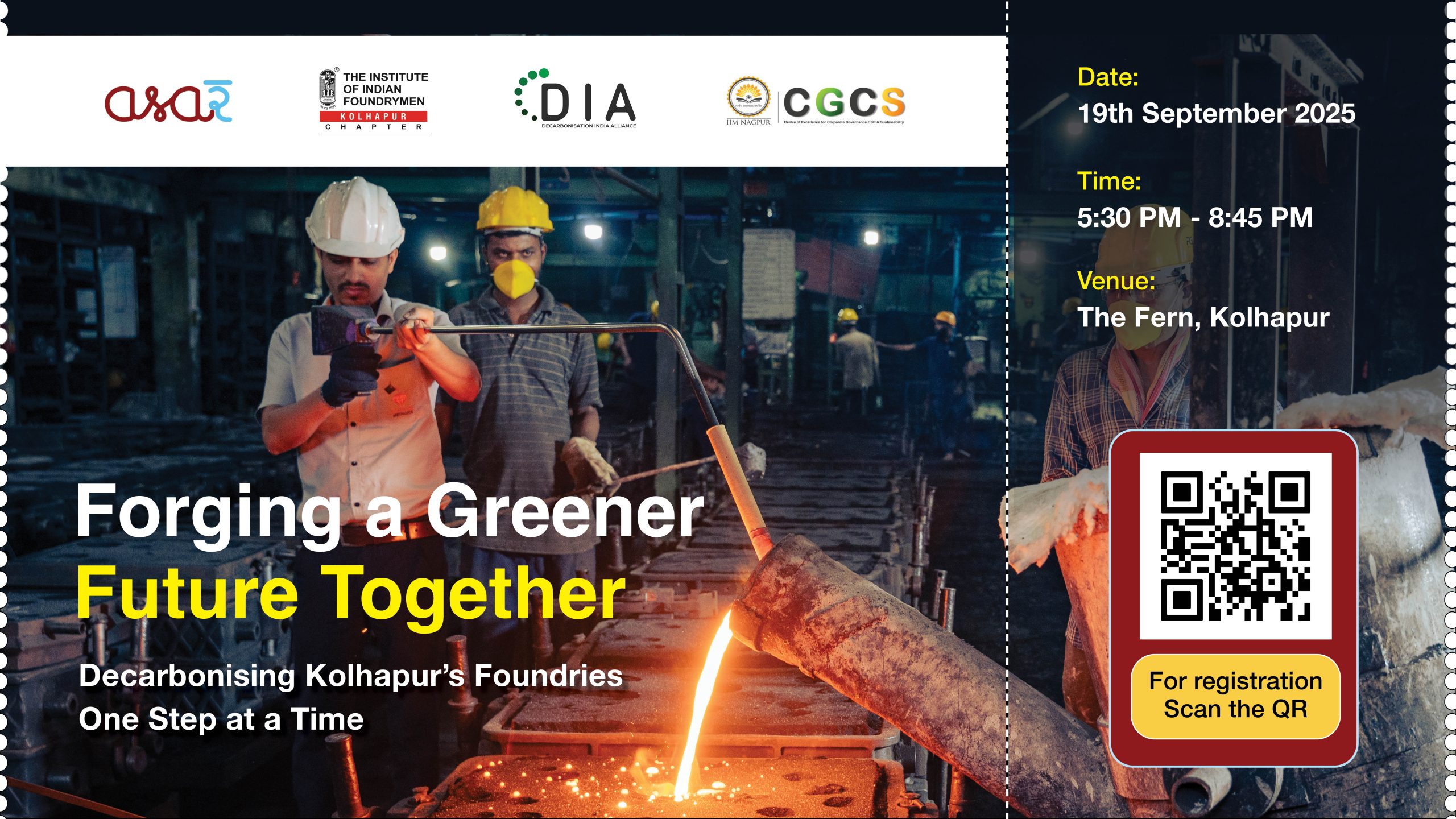
Forging a Greener Future Together: Decarbonising Kolhapur’s Foundries – One Step at a Time

On 19 September 2025, Asar Social Impact Advisors (Asar), under the Decarbonisation India Alliance (DIA), in collaboration with IIM Nagpur’s Centre of Excellence for Corporate Governance, CSR & Sustainability (CGCS) and the Institute of Indian Foundrymen (IIF), Kolhapur Chapter, will host a half-day convening at The Fern, Kolhapur.

Kolhapur’s foundries are central to both local livelihoods and global supply chains. As global markets tighten sustainability norms and mechanisms like the Carbon Border Adjustment Mechanism (CBAM) come into effect, the sector faces both pressing challenges and promising opportunities to transition towards low-carbon pathways.

The convening will include the launch of a report based on pilot energy and carbon assessments of Micro, Small, and Medium Enterprises (MSMEs), offering insights into practical decarbonisation strategies. Shri Amol Yedge, IAS, Collector & District Magistrate, Kolhapur, will join as Chief Guest.

Bringing together foundry owners, policymakers, financiers, and technical experts, the event will explore business opportunities, financing avenues, and actionable strategies to make Kolhapur’s foundries export-ready while advancing environmental responsibility.
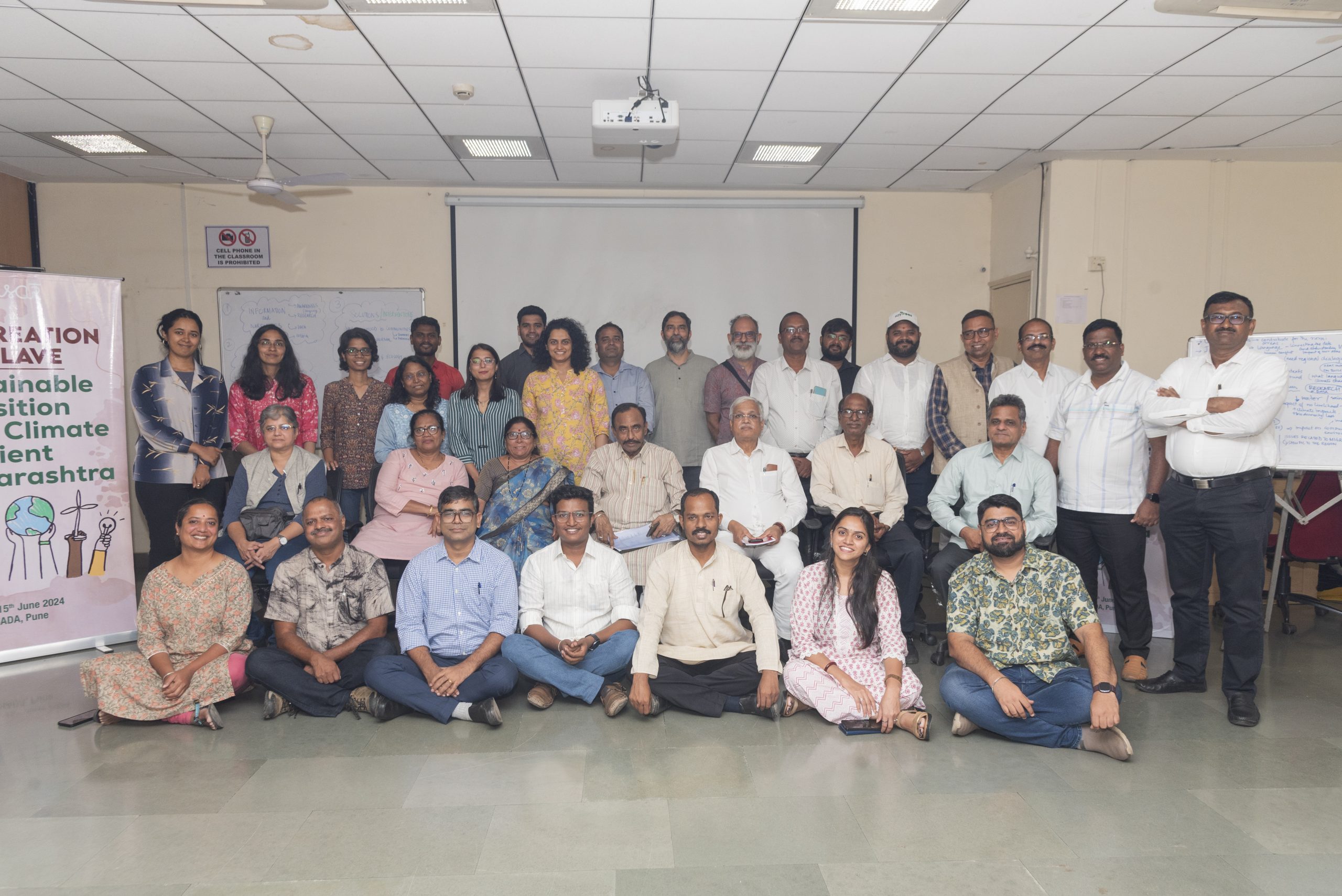
Conclave on Sustainable Transition for a Climate Resilient MH

Asar recently organised a co-creation conclave on ‘Sustainable Transition for a Climate Resilient Maharashtra’. The conclave brought together 25+ civil society and community-based organisations from across the state to lay the foundation for a common understanding of the just transition process. 

Mr Abhijit Ghorpade, Director of the State Climate Action Cell (Govt of Maharashtra) delivered the keynote address highlighting the significance of including community-level stakeholders in steering the transition.

Special remarks and panel discussions with experts from leading policy think tanks, academia, and grassroots organisations helped introduce, simplify and contextualise the concept of Just Transition to the participating organisations through the lenses of labour, migration, gender, and livelihoods.

Plenary sessions with the participating organisations included deliberations on the current understanding of climate resilience and just transition, the need for information and knowledge dissemination about risks and opportunities from the transition, the need for a regional focus within the state, opportunities across sectors for Maharashtra, and approaches for sustained engagement between local collaborators.

The meeting highlighted the need for more grassroots engagement on critical climate-related issues especially in villages and vulnerable urban clusters. It is an important step towards fostering greater local and state-wide multi-stakeholder collaborations to build climate resilience.