or share via social media

What does Tamil Nadu’s New Budget Mean for Climate Action?


Somewhere between home and work, the walk to a bus stop, crossing a street, a footpath that narrows or disappears without warning, or the approach to a suburban rail or metro station, you learn a lot about a city. You begin to see who moves with relative ease and who has to plan every step. These everyday signals sat at the centre of a conversation in Chennai, when a group of us came together to reflect on what it might actually take to make Tamil Nadu’s cities feel future-ready by 2031. This marked the launch of the Tamil Nadu Urban Mobility Charter, shaped through a roundtable anchored by the open collaborative, the Sustainable Mobility Network (SMN). Holding this space for the network were the Institute for Transportation and Development Policy (ITDP) India, Citizen Consumer and Civic Action Group (CAG), Poovulagin Nanbargal and Asar.
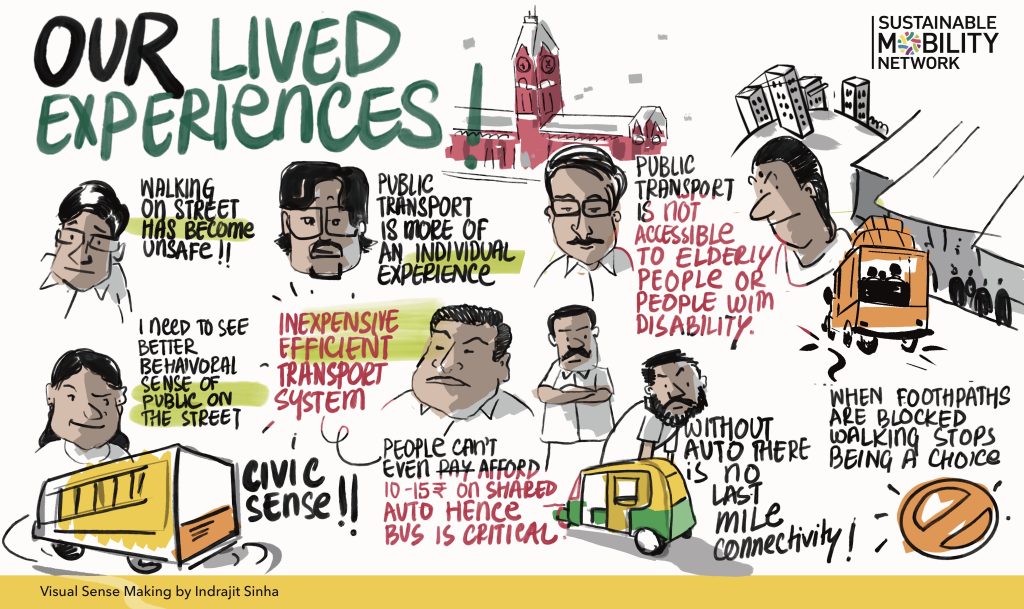
When Mobility Stops Being Technical
What became clear fairly early is that mobility in Tamil Nadu is not just a technical subject. It isn’t only about engineering, traffic management, climate emissions or policy design, important as all of those are. It has become something personal. When parents stop allowing children to walk or cycle short distances because streets feel unsafe, mobility becomes a safety issue. When people spend hours stitching together unreliable bus journeys, it becomes a question of dignity, inclusion, and livelihoods. When people quietly turn down jobs or educational opportunities because reaching them predictably is hard, mobility turns into an economic constraint. There was also a less discussed but increasingly visible thread emerging: amongst the relatively privileged amongst us, on how mobility shapes where people choose to live and work. For many professionals today, ease of commute sits alongside pay when deciding whether to stay in a city. Cities that steadily drain time, safety, and patience in daily travel tend to lose people over a period of time before they lose investment.
In that sense, mobility is no longer marginal or sectoral. It cuts across safety, livelihoods and the economy, health, climate and access and increasingly shapes how people perceive and judge their cities. For large sections of Tamil Nadu’s electorate, especially women, youth, and those dependent on public transport, climate action and daily mobility are already a lived political issue, whether it is named as one or not.
Having said that, it’s important to acknowledge that Tamil Nadu isn’t starting from scratch. Over the past decade and more, the state has taken meaningful steps: from making bus travel free for women and more recently, an electoral announcement on free public (bus) transport across genders, institutionalising and the active functioning of a Unified Metropolitan Transport Authority for Chennai, piloting pedestrian improvements in parts of Chennai, Madurai and Coimbatore, actively upgrading its electric vehicle policy amongst other initiatives. These moves have raised expectations and opened up new conversations, even as gaps remain.
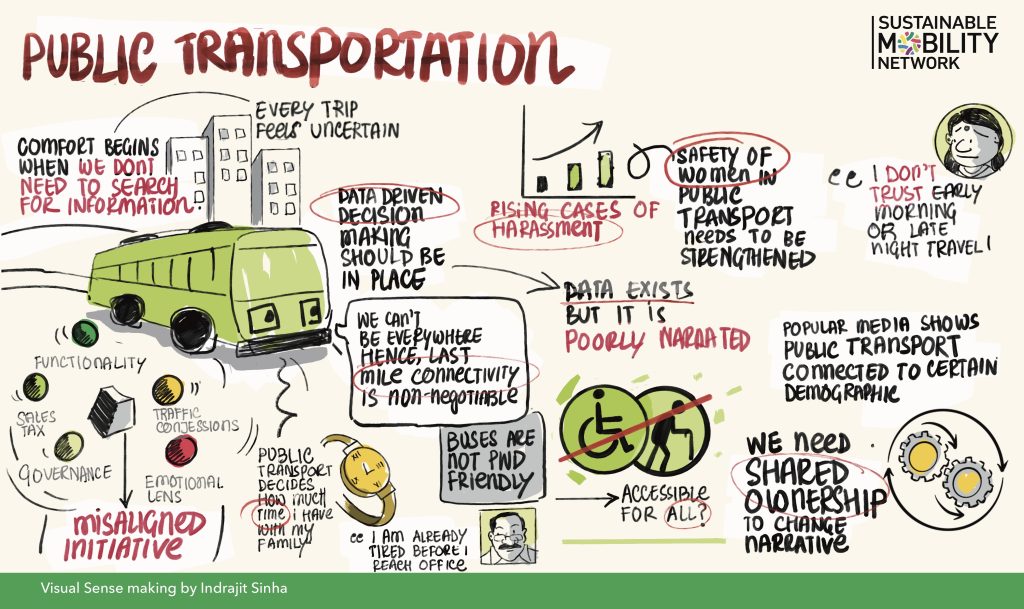
And of course, layered onto all this are climate and public health. Transport contributes up to a third of emissions in major Tamil Nadu cities, with overall emissions rising sharply over the last decade. Pedestrians account for 40-50% of road crash fatalities in cities like Chennai and Coimbatore, making everyday walking one of the more unsafe ways to move around. In Chennai alone, more than fifty school-going children died in road crashes in a single year. When streets make it unsafe for children to walk short distances, mobility becomes a question of basic protection.
An imbalance we’re living with?
The roundtable itself brought together a wide mix — communicators and storytellers, planners, disability rights advocates, researchers, RWAs, civil society groups, public and para-transit union representatives, and everyday commuters. What stayed through the exchange were not necessarily dramatic failures, but the accumulation of small ones. A senior citizen who has simply stopped walking short distances because footpaths appear and disappear. A wheelchair user injured because bus staff were unfamiliar with how to assist someone using a power chair. These, amongst other reflections together, spoke to why people withdraw from walking, cycling and from public transport
There’s also a paradox here. Across major Tamil Nadu cities, walking, cycling, and public transport (primarily buses) still account for roughly two-thirds of daily trips. Yet, a large share of public funding has gone towards road expansion and flyovers, even though sustainable modes carry most trips. In other words, funding priorities don’t always follow how people actually move.
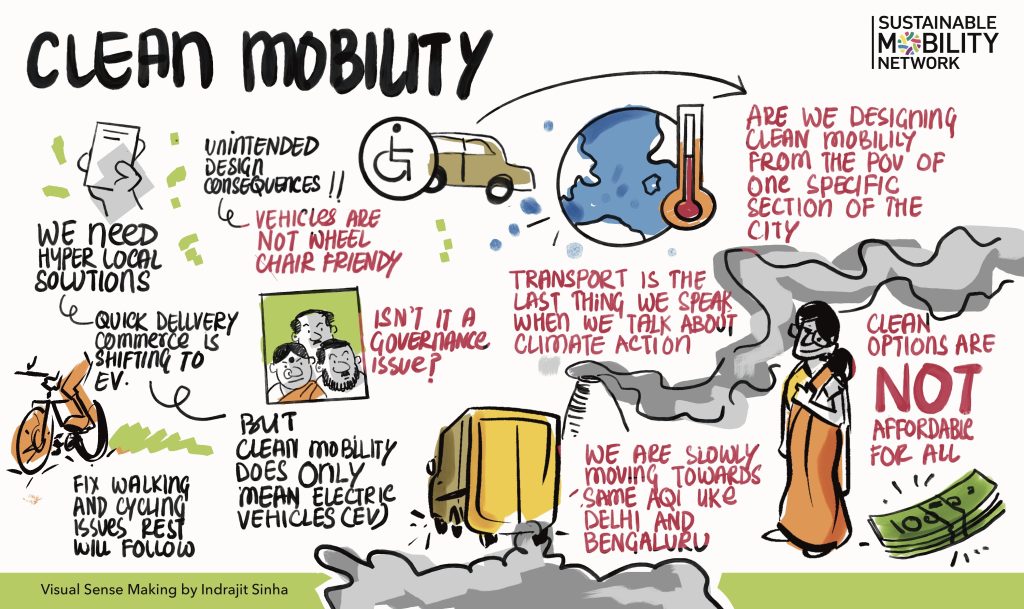
Clean mobility: crucial but not in isolation
Transitioning to clean mobility, an area where Tamil Nadu has shown intent and action, featured prominently in the discussion too. Electrifying buses, autos, two-wheelers, and urban freight is important -for energy security, air quality, public health, leveraging a fast evolving economic sector and of course, climate action. However, Electric vehicles on their own don’t automatically add up to good mobility. An electric bus that arrives unpredictably is still a problem. An electric car stuck in traffic occupies the same road space as any other car. Electrification matters but it sits alongside reliability, access, inclusion and integration, not above them.
What the charter is trying to hold together
Many of the challenges discussed also came back to fragmentation. This is not to deny efforts to improve coordination, but to underline how hard it is to make that coordination visible and felt on the street.Footpaths built by one agency and dug up by another. Stations upgraded without accessible approaches. Services expanded without coordination across modes. Over time, these small disconnects quietly erode trust in the system.
What the Charter tries to do is hold interconnected ideas together. That public transport has to be convenient and accessible enough for people to actually plan their lives around it, including the often-ignored first and last mile. That the transition to electric vehicles, for buses, autos, and urban freight, needs to accelerate, but in ways that serve people rather than just vehicles. That walking should be treated as real movement, and not leftover space between roads. And that governance, across levels and agencies, has to keep joining the dots.
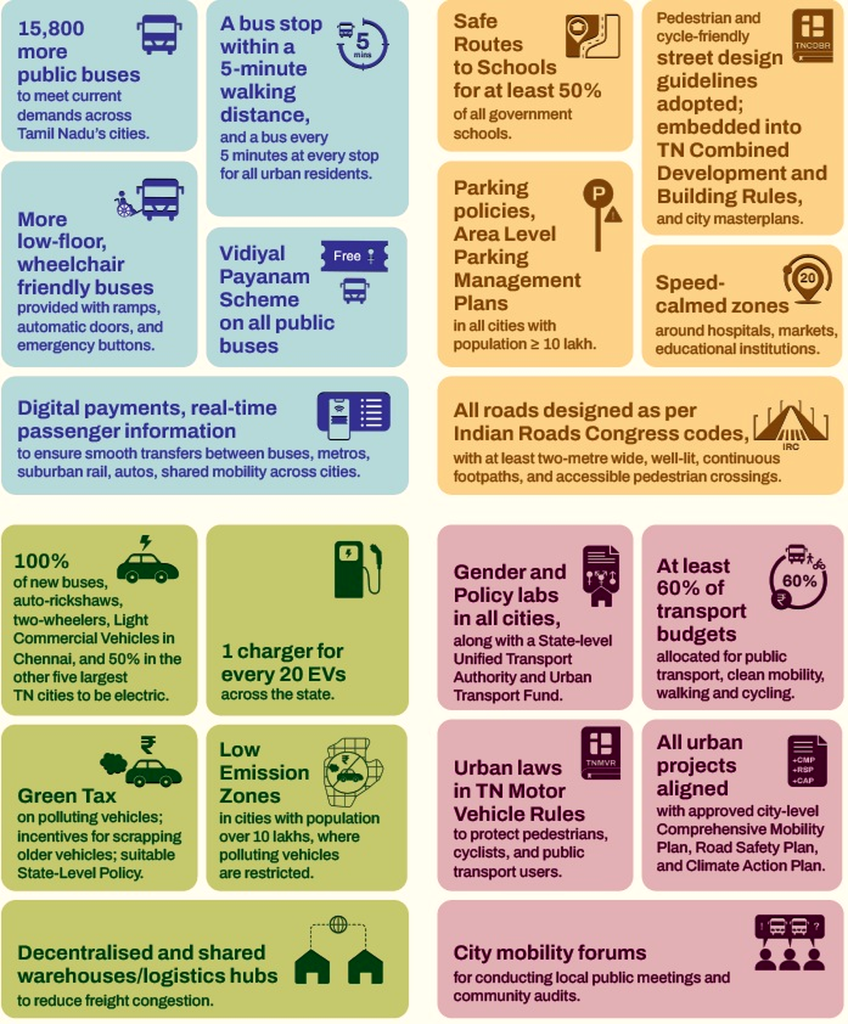
These respond to very real constraints. Tamil Nadu’s major cities operate with far fewer buses than national benchmarks suggest, and in Chennai, a large share of residents still don’t live within comfortable walking distance of a bus stop. Even as we remember that buses, suburban rail, and the metro together alone carry close to 5 million passenger trips every single day in Chennai alone.
The Charter tries to hold this together as a shared reference point. It’s an effort to pollinate dialogue between political and elected representatives, planners, officials, civil society, RWAs and citizens, especially around issues that are often characterised by multiple and differing perspectives.
If anything, the conversation reinforced a simple idea that mobility sits at the heart of how cities are experienced. How a city moves its people is ultimately, how it values them.

Be the first to hear about new initiatives, community voices, and grounded climate solutions.