Kolar district is a border district of Karnataka comprising six taluks and is a district that has more than 3000 lakes in Karnataka state. Being a region entirely dependent on rainfall, this district has seen groundwater levels drop to more than 1600 to 2000 feet over the last two decades due to excessive agricultural dependence and drought. As a result, there has been a severe impact on the health of the district’s people, soil erosion, and soil health has completely deteriorated due to excessive use of chemical fertilizers. The forest area, which was 33% in the 1980s, has now reached only 6%, which is a tragedy for our district.
In this context, while discussions on mitigating the effects of climate change are happening at the national and state levels, it is not enough. Our aspiration was to find solutions through Gram Panchayats, which are the grassroots institutions of the constitution, as village governments. In this regard, with the cooperation of Gramvikas and Asar organizations, taluk-level Panchayat Conferences were organized in all six taluks of Kolar district to gather recommendations that would put pressure on the government and district administration regarding the comprehensive development of Kolar district and the prevention of adverse effects of climate change.
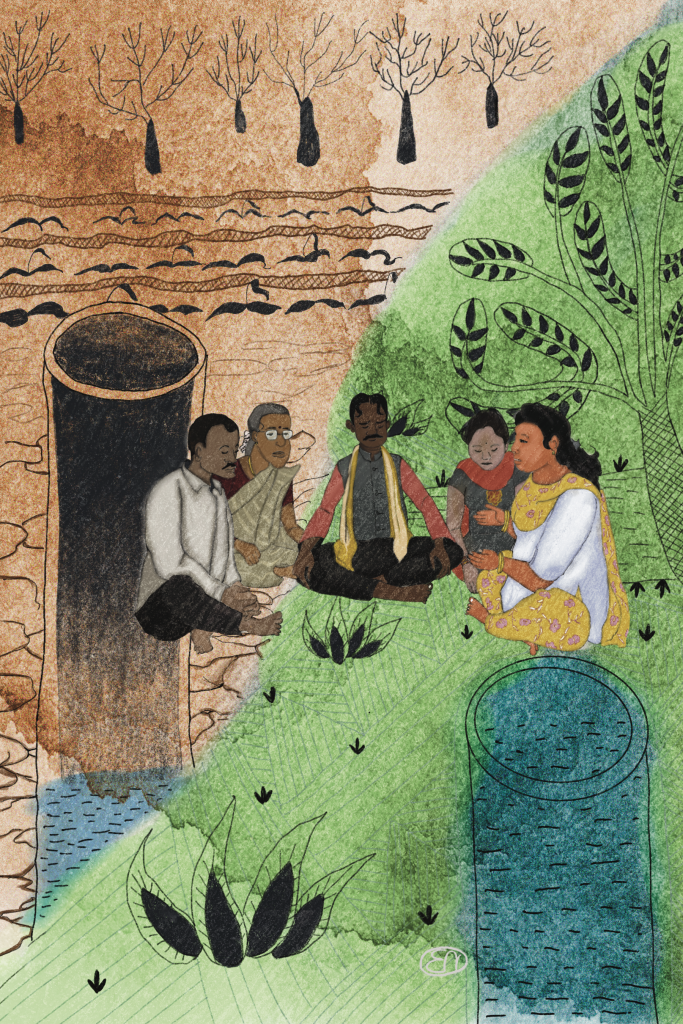
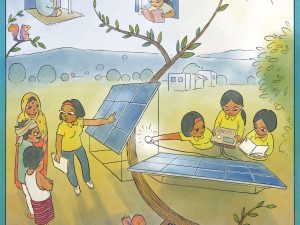
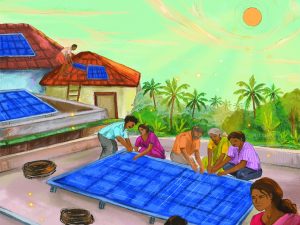
Illustration by: Eisha Nair
In these conferences, identified Gram Panchayat presidents, Panchayat Development Officers, secretaries, along with taluk-level officers and community representatives, listed the problems occurring in agriculture, community health, groundwater, and livelihood activities in that taluk due to climate change. At the same time, through group discussions, a list of activities was prepared regarding activities that the community should undertake at the panchayat level and activities that could be undertaken by higher-level departments covering Gram Panchayat, Taluk Panchayat, and Zilla Panchayat scope.
While considering real local problems, along with solutions that could be implemented at their level, guideline regulations that should be implemented at the government level were documented.
Along with this, workshops were conducted for media representatives working in the district to understand the adverse effects of climate change, and their opinions were collected.
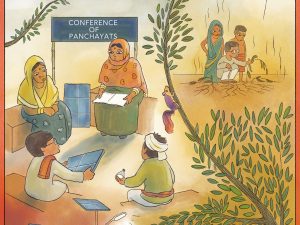
Thus, the recommendations collected from the six taluk workshops and media workshops were compiled, and a report of the district-level Panchayat Conference (Conference of Panchayats) held in the presence of the Chief Executive Officer of the Zilla Panchayat was presented with 13 major recommendations and resolutions.
Based on these resolutions, to implement projects in the Kolar district in 2026-27 that emphasize increasing forest area, conservation of water sources, organic farming to improve soil health, conservation of biodiversity and native varieties, and promoting agriculture-based activities, we have started a pressure-building process through 154 Gram Panchayats under the guidance of Asar and Gramvikas organizations on the district administration.