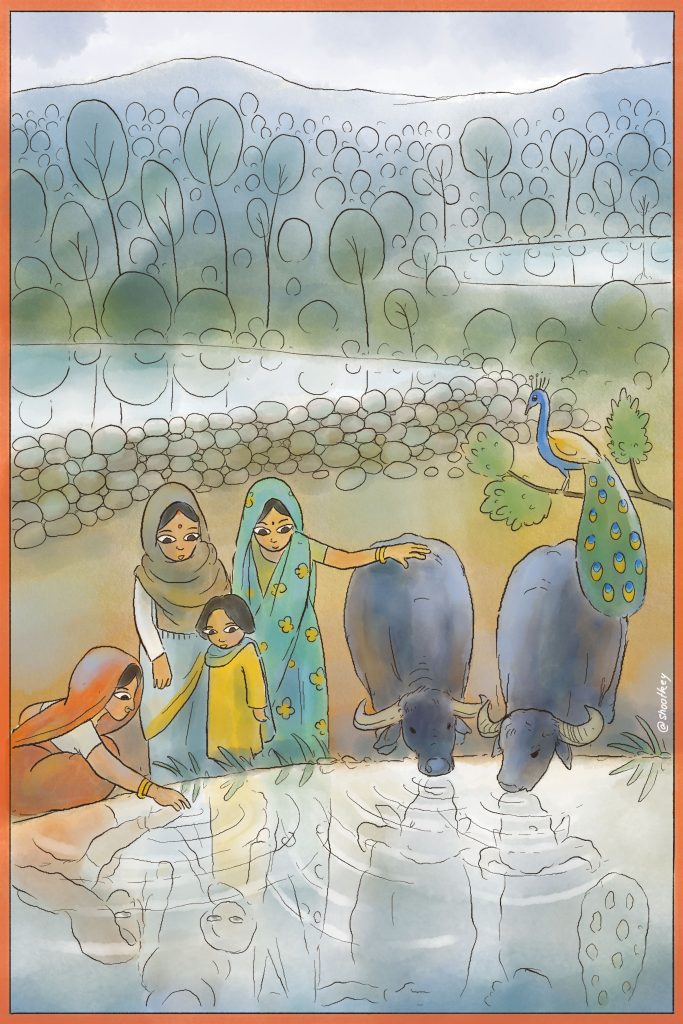
In the Garhi forests of Bihar, climate stress first showed up as thirst. By the end of November each year, ponds and streams inside the forests would run dry. For forest-dwelling communities, especially women collecting non-timber forest produce, this meant carrying water for days at a time during their stays in the forest. Health and sanitation suffered, particularly for women and children. As soils eroded and rainfall grew more erratic, farming became increasingly risky, while flash floods during intense monsoon spells damaged fields and settlements.
Water scarcity also disrupted fragile ecological balances. With undergrowth disappearing and forest water sources drying up, wild animals began straying into villages and orchards in search of food and water. Communities reported injured cattle, crop damage and even dead wildlife during extreme heat, a sharp break from generations of coexistence.
Illustration by: Siddhant Puryakayastha
These concerns surfaced during community listening exercises under the Climate Resilient Panchayat Campaign, led largely by women. With campaign support, they took the issue to the Gram Panchayat Mukhiya and built relationships with forest officials, even collecting and handing over forest tree seeds as a gesture of trust. The problems and solutions were documented in the Climate Resilient Panchayat Action Plan. Community members raised their demands directly with senior forest officials and the state environment minister during the Garhi Birds Festival, and later helped identify sites and volunteer during construction.
Working together, the Forest Department and the community built 45 mud check dams, 90 boulder check dams and three ponds inside the forests. These structures have extended water availability well into the dry season, reduced soil erosion and softened the impact of flash floods. Forest produce has improved, women’s drudgery has eased, and wildlife now finds water and food within the forest again.
“Responding to our application for construction of ponds in the forest areas, the Forest Department has constructed many such structures,” says Pushpa Khairawar, an indigenous community leader. “The water availability has helped trees and plants to grow better and fruit in a healthy way. Forest animals are getting enough food and water inside the forest, and we no longer need to carry water during our stay for collecting forest produce.”
Receive Insights That Matter
Be the first to hear about new initiatives, community voices, and grounded climate solutions.