If you ask most people when India’s air quality crisis hits hardest, they’ll say winter — and they’ll say it happens in Delhi, or maybe Mumbai. For the “Orange City,” that script just got flipped.
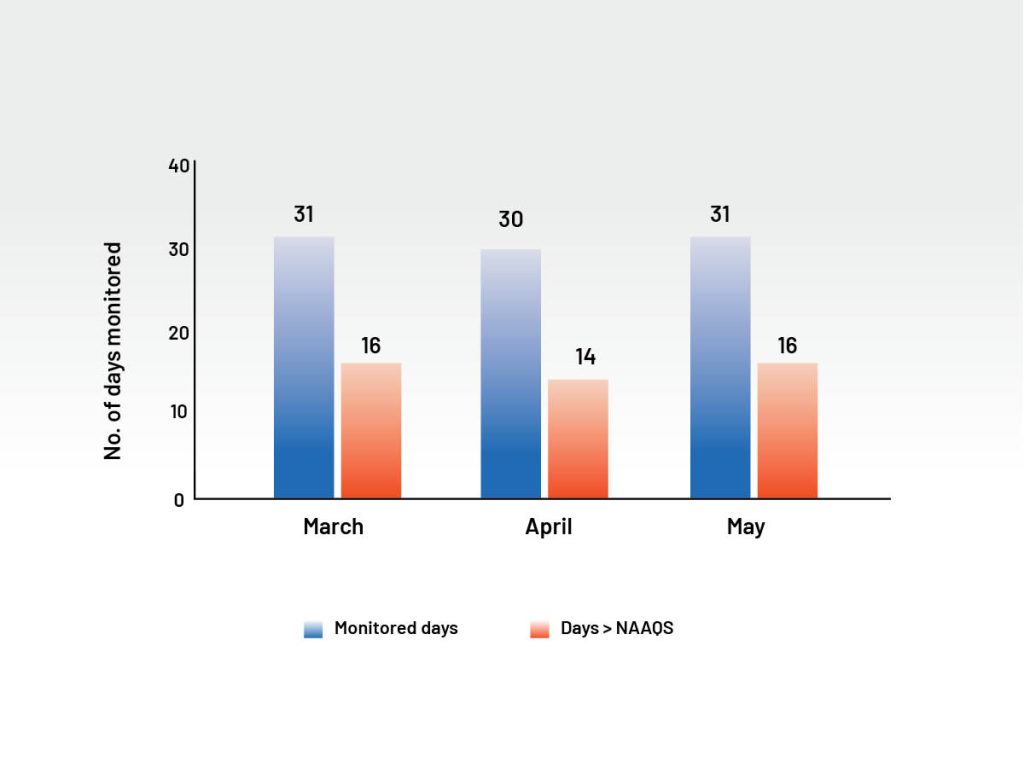
New Central Pollution Control Board (CPCB) data retrieved and analysed by Centre for Research on Energy and Clean Air (CREA) shows that Nagpur breached the national PM10 safety standard of 60µg/m3 on 46 of the 92 days between March and May 2026. Exactly half the summer. That’s not a stray bad week. It’s a city that was supposed to catch its breath after a brutal winter, and didn’t.
Nagpur, the largest city in central India and one of 130 non-attainment cities under the National Clean Air Programme (NCAP), had already logged elevated pollution through the winter of 2025–26. The expectation, as always, was that summer’s stronger winds and warmer air would clear things out. Instead, the numbers tell a different story: one that challenges two assumptions most of us carry about air pollution in India: that it’s a winter problem, and that it’s a big-metro problem.
This finding is significant because summer is generally expected to be a cleaner season. Stronger atmospheric mixing and the absence of winter inversion conditions typically help disperse pollutants more effectively. Yet Nagpur continued to record unhealthy PM10 levels throughout the season.
PM10 refers to inhalable particulate matter with a diameter of 10 micrometres or less, small enough to enter the respiratory system and affect human health. The annual standard for PM₁₀ in India is 60 μ g/m³, which is lenient than the annual WHO standard of 15 μ g/m³. Studies have shown that even acute exposure to PM concentrations has been linked to respiratory and cardiovascular health impacts, making sustained exceedances a matter of public health concern.
How Does Nagpur Compare?
It gets more striking when you put Nagpur next to its counterparts cities like Mumbai and Pune. While several major metropolitan areas enjoyed relatively cleaner summers, Nagpur kept racking up PM10 exceedances.
During the same 92-day monitoring period, Mumbai and Pune exceeded PM10 standards on only five to six days, compared to Nagpur’s 46 days. That gap is the real story here — it suggests Nagpur’s pollution problem isn’t seasonal at all, but baked into local, year-round emission sources.
Nagpur didn’t just lag behind Mumbai and Pune. It ranked among the most polluted urban centres in Maharashtra all summer, emerging as the second most polluted city in the state in May after Chandrapur and the fifth most polluted in April after Chandrapur, Belapur, Nanded and Parbhani.
What Could Be Driving Nagpur’s PM10 Problem?
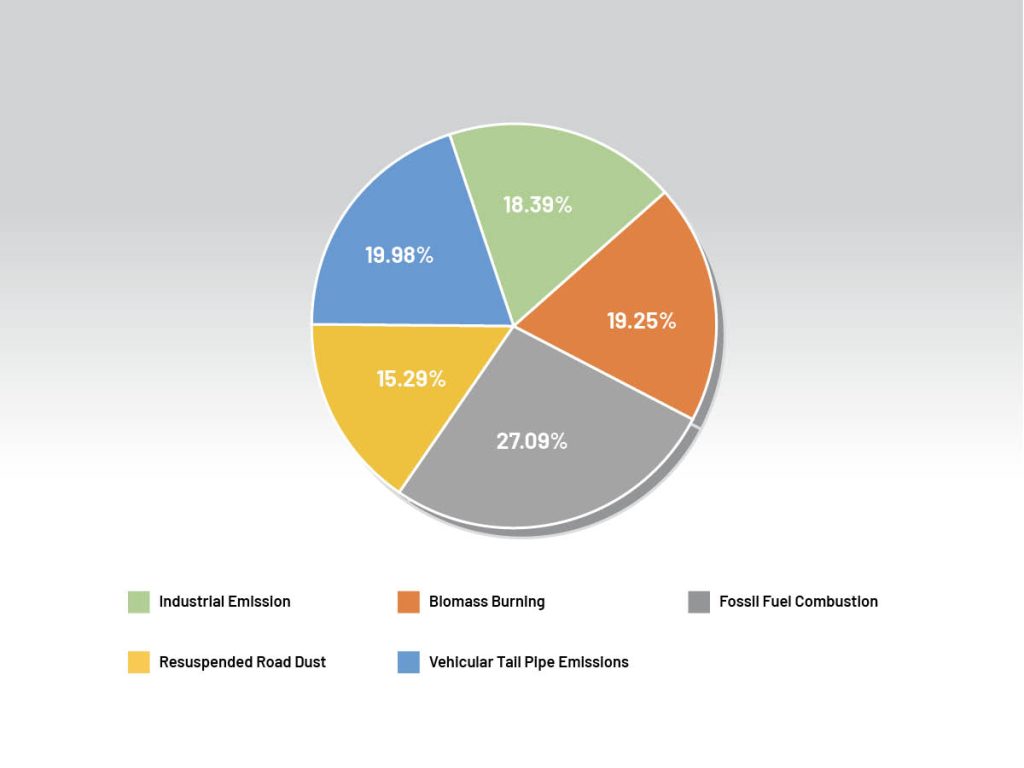
So what’s actually behind this? An updated source apportionment study for Nagpur is currently underway, but previous assessments and media reports have consistently pointed towards the usual suspects:
Extensive construction activity across the city
Traffic-related emissions and road dust
Construction and demolition debris
Open burning of waste
Emissions from thermal power plants (TPPs)- 2 TPPs in Nagpur
The common thread: none of these sources take a summer break. Unlike winter’s weather-driven inversion, they keep pumping PM10 into the air no matter the season.
Hotspots Within the City
A closer look at station-level data makes the trend even clearer. Among the city’s monitoring locations, the GPO Civil Lines and Mahal CAAQM stations consistently recorded PM₁₀ levels above permissible limits throughout the summer months. This highlights the value of examining local, on-ground activities that may be contributing to elevated pollution levels in these areas. At the same time, Nagpur’s monitoring network remains at only four CAAQM stations currently being operational. Urban emission estimates suggest that a city of this scale requires at least 22 stations for comprehensive and reliable air quality monitoring.
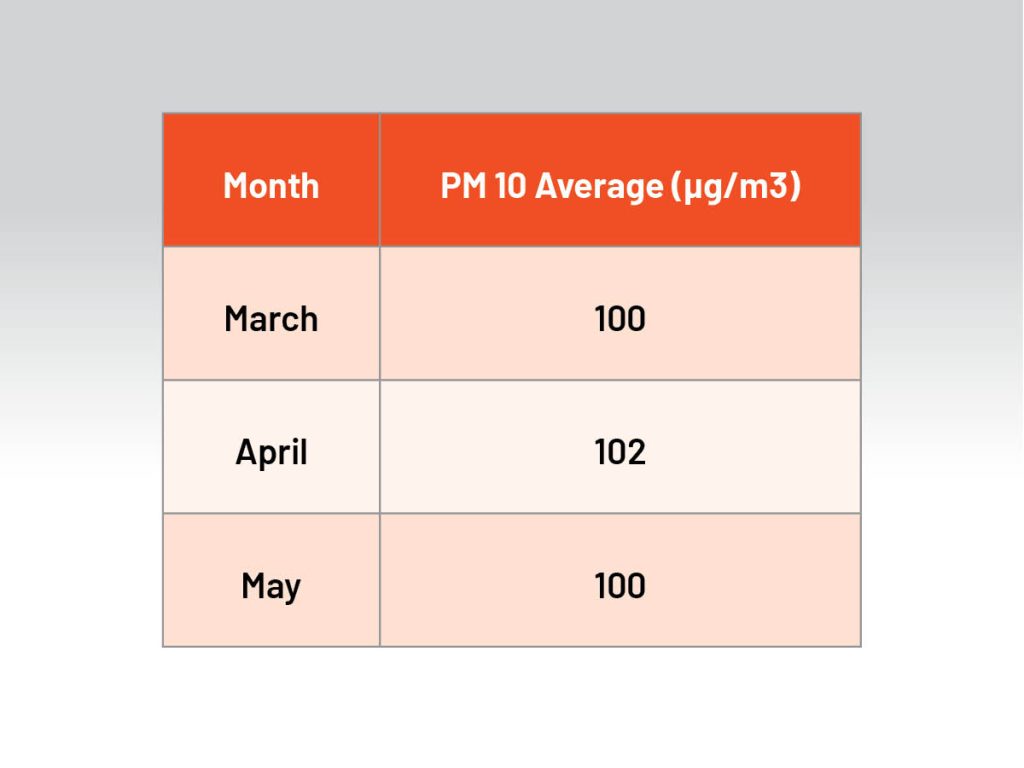
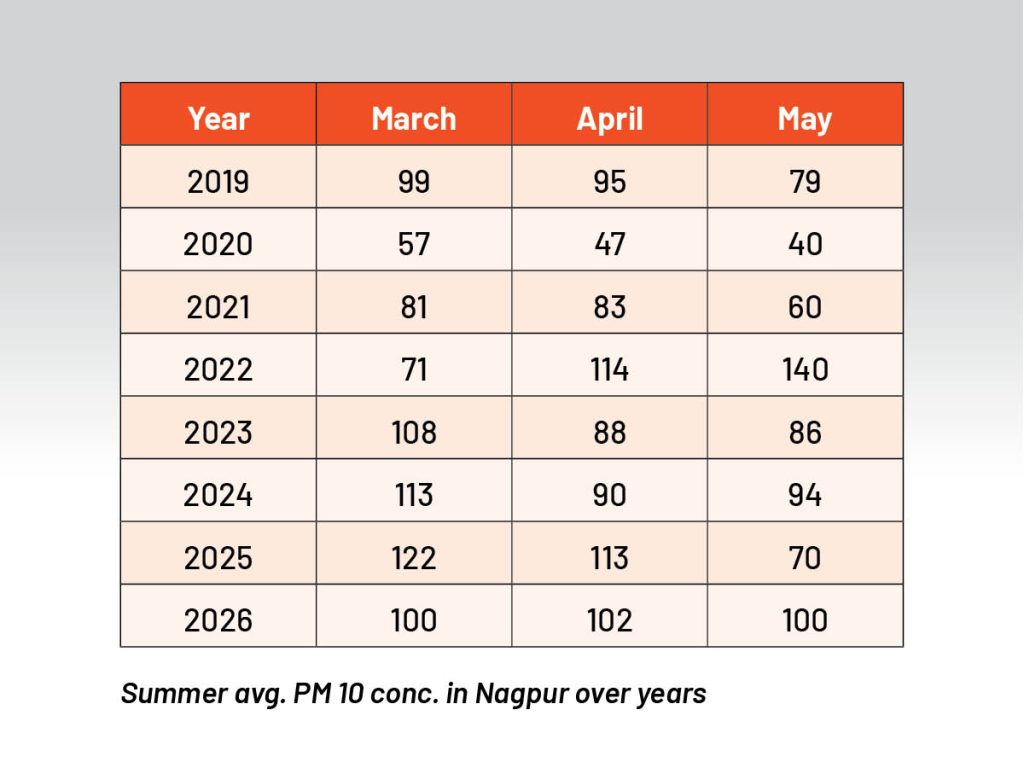
And here’s the headline number: the average PM10 concentration recorded in May 2026 was approximately 100 µg/m³, making it the second most polluted May in the last eight years, surpassed only by May 2022.
Look at the table, and the pattern is hard to miss: elevated PM10 levels in Nagpur aren’t a one-off. They keep coming back.
NCAP Fund Utilisation & What Needs to Happen Next?
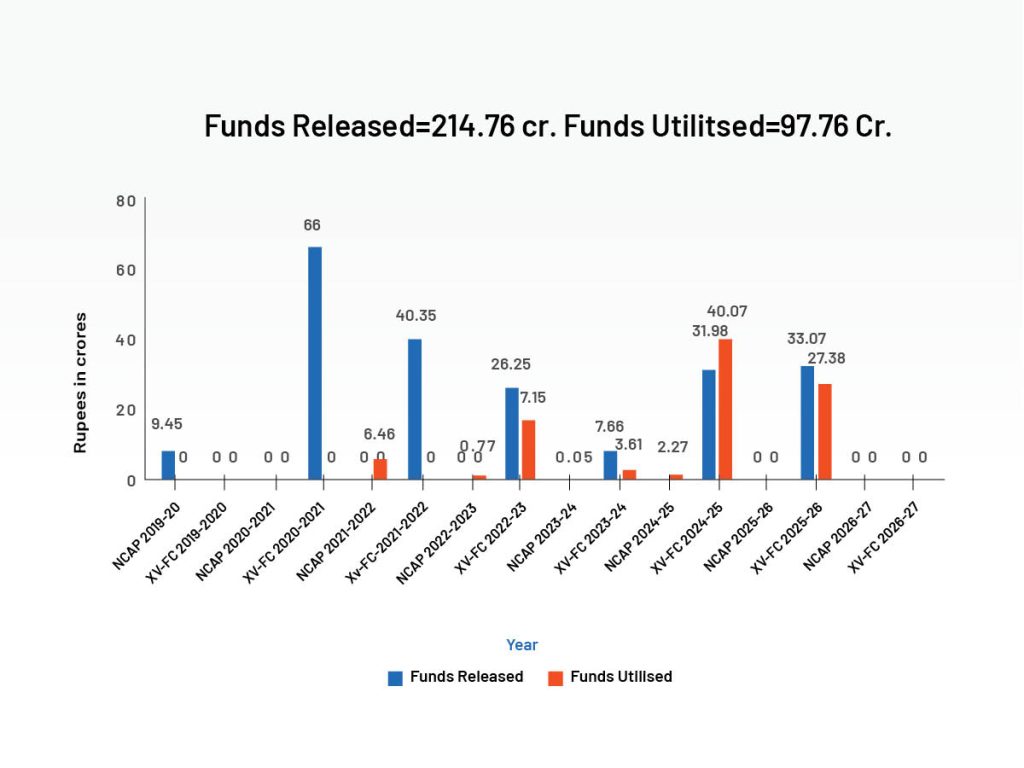
Here’s where it gets harder to explain away: Nagpur has received ₹214.76 crore under the National Clean Air Programme. Only ₹97.76 crore of it has reportedly been spent so far — less than half.
That leaves an uncomfortable question hanging: given how persistent the PM10 problem is, why has implementation been so slow? Funding allocation is a critical first step, but translating these resources into on-ground interventions is what actually moves the needle on air quality. Moreover, there is lesser transparency on where the funds are being utilised as well which should be addressed.
The city’s continued struggle with PM10 suggests that local emission sources – particularly industrial, road dust, biomass burning, fossil fuel combustion and vehicular emissions require sustained attention throughout the year.
Nagpur has taken some positive steps towards improving waste management through the establishment and support of Dry Waste Collection Centres and other waste-processing facilities.
Construction and demolition activities, road dust resuspension, and traffic emissions are likely contributors that require stronger monitoring and enforcement. At the same time, potential under-recognised sources such as MSMEs (327,633 registered MSMEs), crematoria (50% of the surveyed crematoriums in 2023 exclusively used wood), bakeries, brick kilns, and other small-scale industries must also be assessed for their contribution to the city’s pollution burden.
Addressing Nagpur’s air pollution requires a few critical steps:
First, an updated source apportionment study is essential to clearly identify the major contributors to pollution.
Equally important is greater transparency around the sectoral interventions that have been implemented so far.
These measures must go beyond surface-level actions and target emissions at their source- such as controlling biomass burning, reducing vehicular emissions, and curbing pollution from thermal power plants – rather than relying predominantly on short-term dust control practices like water sprinkling.
The larger lesson from Nagpur is hard to ignore. Cities that treat air pollution as a winter-only problem are missing half the picture — literally half, in Nagpur’s case. Summer, it turns out, may no longer be the clean season we assumed it was.
And remember, this is what the winter of 2025-2026 already looked like. Nagpur needs to get ahead of this before the next one arrives, so its citizens can finally breathe easy.